





Townsend's Warbler
Setophaga townsendi
Townsend's Warbler is a small, colorful bird with bright yellow and black feathers. They love to sing and can often be found hopping around in trees looking for tasty insects.
Habitat: Forests
The Townsend's Warbler has a vibrant yellow face with a distinctive black ear patch and throat. Its olive-green back is streaked with black, contrasting with a white belly and two prominent white wing bars.
Category
BirdsRarity
Common
Danger
1/5 · Very low
Snaps
6
Males puff up their yellow chest feathers to attract a mate.
These birds often sing their cheerful melody even while migrating!
They sometimes join mixed-species feeding flocks in winter.
Townsend's Warblers build cup-shaped nests high in conifer branches.
Townsend's Warbler can expertly forage high in conifer trees because of its agility and small size, helping them find insects.
Townsend's Warbler has incredible stamina that helps them fly thousands of kilometers between breeding and wintering grounds.
Townsend's Warbler can use specific calls to warn others of predators or communicate its presence.
This tiny bird primarily eats insects and spiders it finds on conifer needles and bark.
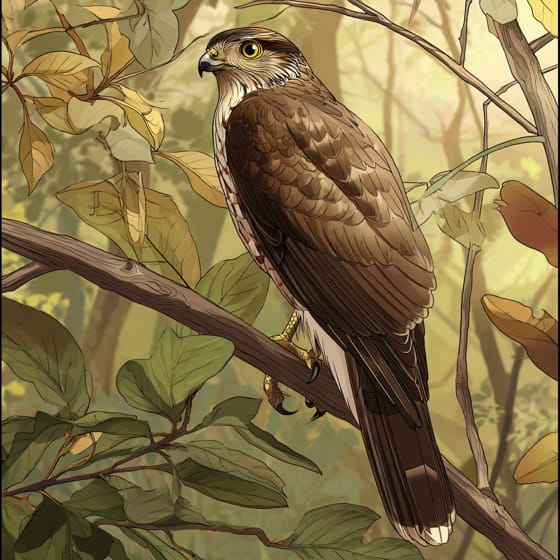
Accipiter cooperii
This hawk preys on many small birds, including warblers.
Choristoneura fumiferana
Warblers help control populations of these conifer-damaging caterpillars.
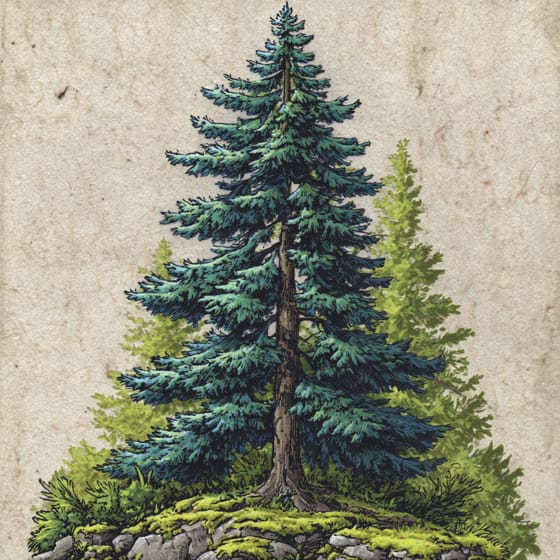
Picea sitchensis
This warbler relies on conifer trees for nesting and foraging habitat.
Feathered describes animals, primarily birds, possessing a covering of feathers.
Singing animals produce complex vocalizations, often for purposes of attracting mates, defending territory, or communicating within their species.
Arboreal animals live primarily in trees, utilizing them for shelter, food, and protection from predators.
Colorful describes organisms or objects displaying a wide range of bright and distinct colors.

This trait identifies organisms whose diet primarily consists of insects and other small invertebrates.

Forest habitats are terrestrial environments dominated by dense tree cover, supporting a high diversity of plant and animal life.

Diurnal animals are primarily active during daylight hours, typically resting or sleeping at night.

Migratory animals undertake seasonal movements from one region to another, typically in response to changes in climate or food availability.
No aliases listed yet.
Danger
1/5 · Very low
Always watch birds from a distance and don't try to touch them.
The easiest way to identify Townsend's Warbler is to use the Snappit nature identifier app.
11-13 cm
19-21 cm
0.008-0.012 kg
3-7 years
40 km/h
This tiny bird primarily eats insects and spiders it finds on conifer needles and bark.
Forests
Zoom in to split clusters and explore where this object has been snapped.

US
You might spot Bald Eagle, Common Raven, and Salmonberry.
View guide →

Alaska, US
You might spot Bald Eagle, Salmonberry, and Ochre Sea Star.
View guide →

US
You might spot Variable Carpet Moth, Bald Eagle, and Red Huckleberry.
View guide →

Texas, US
You might spot Greater Earless Lizard and Tree Cholla.
View guide →

US
You might spot Common Raven, Bald Eagle, and Salmonberry.
View guide →

California, US
You might spot Pipevine Swallowtail and Anna's Hummingbird.
View guide →
Take the discovery with you
Snap it with Snappit to identify it, learn what makes it special, and add the discovery to your collection.




.jpg&width=800)






