





Twinflower
Linnaea borealis
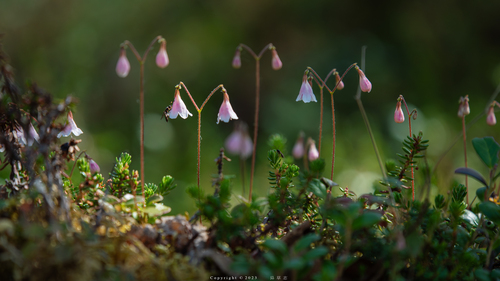
The Twinflower is a tiny, pink flower that grows in pairs on a delicate stem. It loves to hide in cool, shady forests and is known for its sweet fragrance.
Habitat: Forests
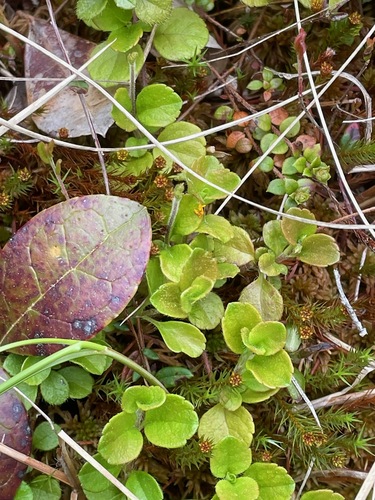
The Twinflower has delicate, bell-shaped flowers that hang in pairs from slender stalks. Each flower is pale pink to white, often streaked with darker pink inside, and has small, oval, evergreen leaves along its creeping stems.
Category
PlantsRarity
Common
Danger
1/5 · Very low
Snaps
6
Carl Linnaeus, the famous botanist, loved this flower so much he named himself after it!
It's a 'circumboreal' plant, growing all the way around the top of the world!
Its tiny, bell-shaped flowers are sweetly scented, attracting buzzing insects from afar!
Some First Nations people used parts of Twinflower as a traditional medicine.
Twinflower has creeping stems that spread across the ground, helping it find new places to grow and form cozy carpets.
Twinflower always blooms with two perfect flowers on a single stalk, making it easy for pollinators to find them.
Twinflower keeps its small, round leaves green all winter, letting it make food when other plants are dormant.
Bombus bohemicus
This bumblebee visits Twinflower for its nectar and pollen.
Apis mellifera
Commonly visited by honey bees for nectar and pollen.

Alces alces
Provides a minor food source for moose and other browsers.
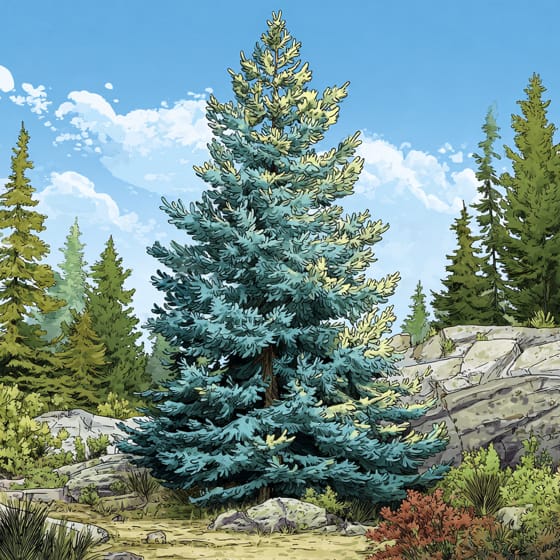
Picea glauca
Often grows beneath the shade of white spruce trees in boreal forests.
Aromatic plants produce and emit fragrant volatile organic compounds, often for defense or to attract pollinators.
Bell-shaped flowers possess petals fused or arranged to form a cup-like or campanulate structure resembling a bell.
Flowering plants are any plants that produce flowers as part of their reproductive cycle.
Cluster flowers are inflorescences where individual flowers are arranged closely together on a common stem.

Shade tolerant plants are adapted to grow and thrive in areas with low light levels, requiring less direct sunlight.

Spring blooming plants produce their flowers during the spring season, often signifying the end of winter and the start of new growth.

Summer blooming plants produce their flowers during the summer season, often providing vibrant color when many other plants have finished.

Fragrant flowers emit a pleasant aroma, often to attract pollinators or for defense.

Describes plants that are particularly attractive and beneficial to a wide range of pollinating organisms.

Forest habitats are terrestrial environments dominated by dense tree cover, supporting a high diversity of plant and animal life.

Endangered status indicates a species is at a very high risk of extinction in the wild in the near future.
No aliases listed yet.
Danger
1/5 · Very low
Always look but don't touch flowers in the wild to keep them safe.
The easiest way to identify Twinflower is to use the Snappit nature identifier app.
5-15 cm
10-50 cm
1-1.5 cm
Summer
No
None
Perennial
Zoom in to split clusters and explore where this object has been snapped.
May 29, 2026
Plainfield Village Historic DistrictPhoto attribution
(c) Tom Scavo, some rights reserved (CC BY)
License: CC BY 4.0 ↗
Image may be shown cropped inside the card frame.

British Columbia, CA
You might spot White Pasqueflower and Columbian Ground Squirrel.
View guide →
British Columbia, CA
You might spot Twinflower and Western Rattlesnake Plantain.
View guide →

British Columbia, CA
You might spot Green Comma, Mourning Cloak, and Hoary Comma.
View guide →

Washington, US
You might spot Cascade Oregon-Grape, Douglas Fir, and Salal.
View guide →

British Columbia, CA
You might spot Western Rattlesnake Plantain and Shinyleaf Meadowsweet.
View guide →

New Hampshire, US
You might spot Common Shiner, Tree Lungwort, and Creek Chub.
View guide →
Take the discovery with you
Snap it with Snappit to identify it, learn what makes it special, and add the discovery to your collection.






.jpg&width=800)


_001.jpg&width=800)



