.jpg&width=800)





Umber Skipper
Lon melane
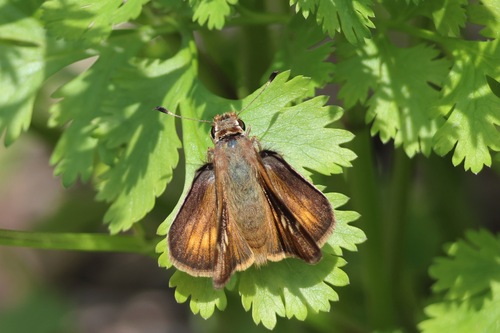
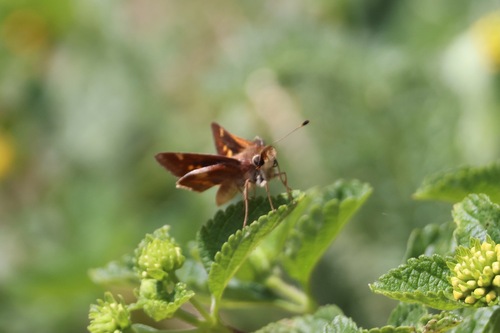
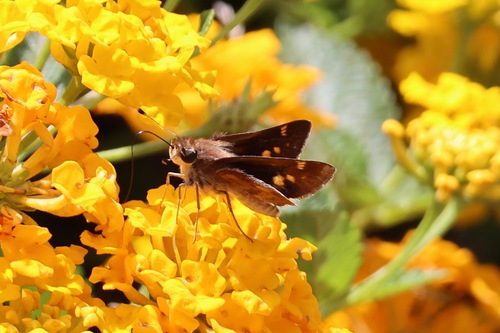
The Umber Skipper is a small butterfly with brown wings and orange spots. They love to flutter around flowers, sipping sweet nectar and spreading joy in gardens and fields.
Habitat: Grasslands
The Umber Skipper has stout, fuzzy dark brown to blackish wings, sometimes with a faint orange-brown flush or small translucent spots. Its robust body and relatively small wings distinguish it from typical butterflies, giving it a somewhat moth-like appearance.
Category
InsectsRarity
Common
Danger
1/5 · Very low
Snaps
9
Skippers have antennae with a hooked club at the end, making them unique from other butterflies!
Their tiny eggs are carefully laid one by one on specific grass plants for their hungry babies.
They often rest with their front and back wings held at different angles, ready for a quick escape!
Umber Skippers are named for their rapid, skipping, and darting flight motion!
Umber Skipper can fly in super-fast, zig-zagging bursts because of powerful wing muscles that help them escape predators.
Umber Skipper has a long, straw-like proboscis that helps them drink sweet nectar from deep inside flowers.
Umber Skipper can disappear into shadows because its dark, mottled wings help them camouflage against bark and leaves.
Adults drink flower nectar, while caterpillars munch on grass!
Age differences: Larvae eat specific grasses, while adults drink flower nectar.
Marked with spots or patches of a different color.
Solitary animals live alone for most of their lives, only interacting with others for mating or parental care.
Camouflaged describes organisms that possess coloring or patterns that allow them to blend into their environment.
Grassland habitats are terrestrial biomes dominated by grasses and herbaceous plants, supporting a variety of grazing animals.

This trait characterizes organisms whose diet consists entirely or primarily of plant material.

Describes plants that are particularly attractive and beneficial to a wide range of pollinating organisms.

Diurnal animals are primarily active during daylight hours, typically resting or sleeping at night.

Pertaining to species that are significantly smaller than typical or average for their kind.

Describes organisms that transfer pollen, enabling the fertilization and reproduction of plants.
No aliases listed yet.
Danger
1/5 · Very low
Always watch butterflies from a distance and don't try to catch them.
The easiest way to identify Umber Skipper is to use the Snappit nature identifier app.
30-45 mm
15-25 mm
15-30 days
20 km/h
Adults drink flower nectar, while caterpillars munch on grass!
Grasslands
Foraging
Zoom in to split clusters and explore where this object has been snapped.
Jun 6, 2026
San Diego Botanic GardenPhoto attribution
(c) Rachel Lee Harper, some rights reserved (CC BY)
License: CC BY 4.0 ↗
Image may be shown cropped inside the card frame.
Jun 6, 2026
San Diego Botanic GardenPhoto attribution
(c) Rachel Lee Harper, some rights reserved (CC BY)
License: CC BY 4.0 ↗
Image may be shown cropped inside the card frame.
Jun 6, 2026
San Diego Botanic GardenPhoto attribution
(c) Rachel Lee Harper, some rights reserved (CC BY)
License: CC BY 4.0 ↗
Image may be shown cropped inside the card frame.

California, US
You might spot Mule Deer, Turkey, and Duck.
View guide →

California, US
You might spot Jaguar, Varecia Variegata Subcincta, and Red Ruffed Lemur.
View guide →
California, US
You might spot Giraffes, African Lion, and Tiger.
View guide →

California, US
You might spot Eastern Fox Squirrel, Monarch, and Turkey.
View guide →

California, US
You might spot Red-Tailed Hawk, Duck, and Canada Goose.
View guide →

California, US
You might spot Red-Tailed Hawk, Duck, and House Sparrow.
View guide →
Take the discovery with you
Snap it with Snappit to identify it, learn what makes it special, and add the discovery to your collection.







.jpg&width=800)




