





Virginia bluebells
Mertensia virginica
Virginia bluebells are beautiful flowers that bloom in spring. They have lovely blue, bell-shaped petals and grow in clusters, making them look like a little blue carpet in the woods.
Habitat: Woodlands
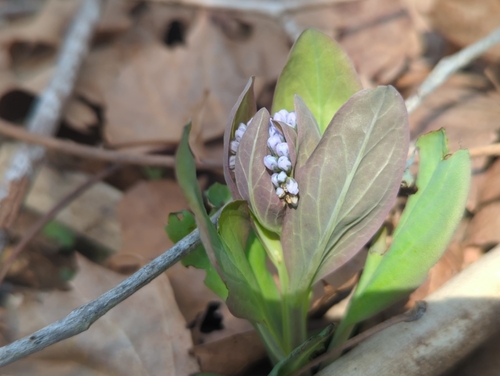
The Virginia bluebells has nodding, bell-shaped flowers that emerge pink, then famously turn a vibrant sky-blue. Its smooth, oval green leaves grow along slender stems, making a delightful spring carpet in woodlands.
Category
PlantsRarity
Common
Danger
1/5 · Very low
Snaps
36
Native bees visit its bell-shaped flowers for their first big meal of spring.
Sometimes a pure white flower appears among the blue, like a secret treasure!
This plant is a "spring ephemeral," appearing, blooming, and vanishing quickly!
True blue flowers are rare in nature, making these blossoms extra special!
Virginia bluebells can change flower color from pink buds to blue blooms, signaling to pollinators they are ready.
It grows and blooms quickly in early spring, soaking up sunlight before taller trees block it.
This plant performs a 'magic trick,' disappearing completely by early summer, going dormant until next spring!
Apis mellifera
Collects nectar and pollen from flowers.

Bombus impatiens
Important early spring pollinator for nectar and pollen.
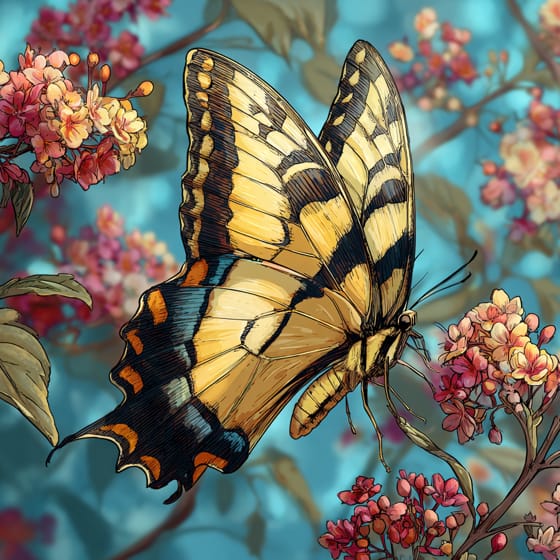
Papilio glaucus
Sips nectar from the open blooms.
Bell-shaped flowers possess petals fused or arranged to form a cup-like or campanulate structure resembling a bell.
Flowering plants are any plants that produce flowers as part of their reproductive cycle.
Cluster flowers are inflorescences where individual flowers are arranged closely together on a common stem.
Shade tolerant plants are adapted to grow and thrive in areas with low light levels, requiring less direct sunlight.

Spring blooming plants produce their flowers during the spring season, often signifying the end of winter and the start of new growth.

Colorful describes organisms or objects displaying a wide range of bright and distinct colors.

Describes plants that are particularly attractive and beneficial to a wide range of pollinating organisms.

Forest habitats are terrestrial environments dominated by dense tree cover, supporting a high diversity of plant and animal life.
No aliases listed yet.
Danger
1/5 · Very low
Do not eat any flowers or plants without asking an adult.
The easiest way to identify Virginia bluebells is to use the Snappit nature identifier app.
30-60 cm
30-45 cm
1-2.5 cm
Spring
No
None
Perennial
Zoom in to split clusters and explore where this object has been snapped.
Mar 14, 2026
Hedgesville Historic DistrictPhoto attribution
(c) Tom Field, some rights reserved (CC BY)
License: CC BY 4.0 ↗
Image may be shown cropped inside the card frame.

Ohio, US
You might spot Blue-Fronted Dancer, American Rubyspot, and Fowler's Toad.
View guide →

Virginia, US
You might spot Garlic Mustard, Spotted Lanternfly, and Bloodroot.
View guide →

West Virginia, US
You might spot Spotted Lanternfly and Eastern Box Turtle.
View guide →

Illinois, US
You might spot Eastern Red-Backed Salamander and Blanchard's Cricket Frog.
View guide →

Virginia, US
You might spot White-Tailed Deer and Eastern Gray Squirrel.
View guide →

Illinois, US
You might spot Osage-Orange, Cutleaf Teasel, and Red Clover.
View guide →
Take the discovery with you
Snap it with Snappit to identify it, learn what makes it special, and add the discovery to your collection.






.jpg&width=800)



_001.jpg&width=800)



