





Waved Sphinx
Ceratomia undulosa
The Waved Sphinx is a special moth that looks like a tiny dragon! It has beautiful wavy patterns on its wings and loves to fly around flowers at night.
Habitat: Urban areas
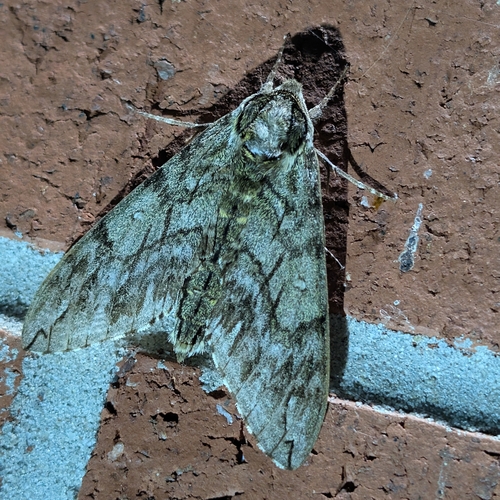
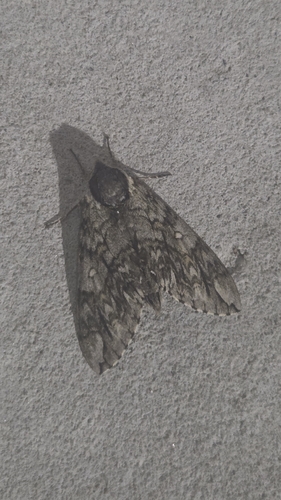
The Waved Sphinx is a large, gray moth with intricate wavy black lines across its forewings, perfectly mimicking tree bark. Its robust body is also gray, contrasting with plain gray hindwings. This excellent camouflage helps it blend seamlessly into its environment.
Category
InsectsRarity
Common
Danger
1/5 · Very low
Snaps
12
Adult Waved Sphinx moths never eat solid food!
Its large green caterpillar has a unique pointy horn on its rear!
The caterpillar burrows underground to transform into a moth!
This amazing moth can even fly backwards, just like a hummingbird!
Waved Sphinx can disappear against tree bark because its wavy gray patterns perfectly mimic tree textures, helping it hide from predators.
Waved Sphinx has a long, coiled proboscis that helps it reach sweet nectar deep inside flowers while hovering like a tiny helicopter.
Waved Sphinx can find flowers and mates in the dark using its keen sense of smell and large eyes, allowing it to be active at night.
Caterpillars munch on tree leaves; adult moths sip sweet flower nectar.
Age differences: Caterpillars eat tree and shrub leaves, while adult moths only drink flower nectar.
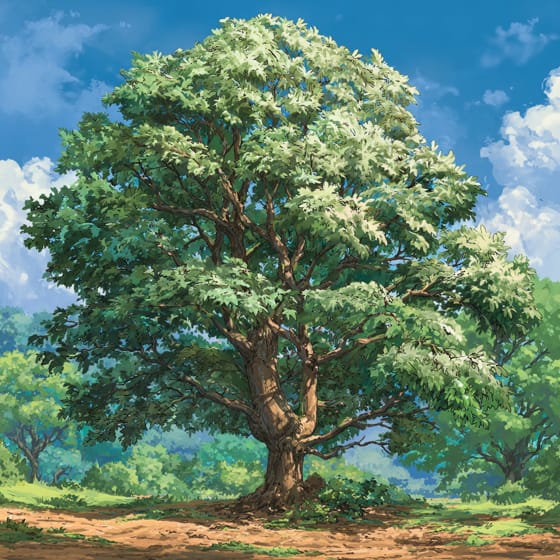
Fraxinus americana
Caterpillars feed on its leaves.

Syringa vulgaris
Caterpillars feed on its leaves.
Cotesia congregata
Wasps lay eggs on caterpillars.
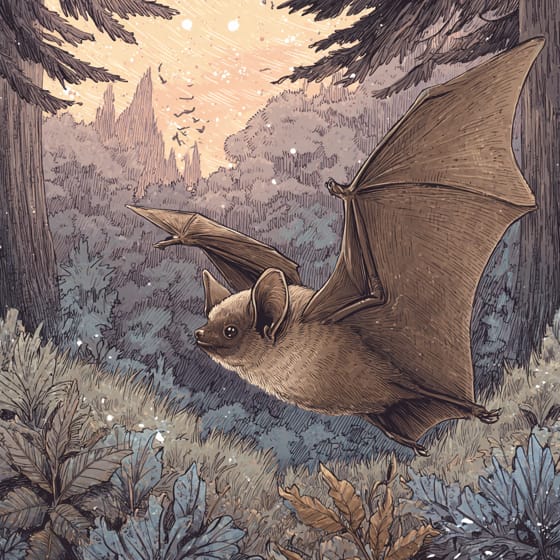
Myotis lucifugus
Bats hunt adult moths at night.
Solitary animals live alone for most of their lives, only interacting with others for mating or parental care.
Camouflaged describes organisms that possess coloring or patterns that allow them to blend into their environment.
Colorful describes organisms or objects displaying a wide range of bright and distinct colors.
This trait characterizes organisms whose diet consists entirely or primarily of plant material.

Describes plants that are particularly attractive and beneficial to a wide range of pollinating organisms.

This trait identifies organisms that exhibit exceptional swiftness in movement for hunting, escape, or travel.

This habitat trait indicates species that can coexist with humans in urban and suburban environments, utilizing man-made structures and green spaces.

Nocturnal animals are primarily active during the nighttime hours, typically resting or sleeping during the day.

Describes organisms that transfer pollen, enabling the fertilization and reproduction of plants.
No aliases listed yet.
Danger
1/5 · Very low
Moths are usually harmless, but it's best to watch them from a distance.
The easiest way to identify Waved Sphinx is to use the Snappit nature identifier app.
80-120 mm
30-45 mm
7-14 days
35 km/h
Caterpillars munch on tree leaves; adult moths sip sweet flower nectar.
Urban areas
Foraging
Zoom in to split clusters and explore where this object has been snapped.
Jun 6, 2026
The State Botanical Garden of GeorgiaPhoto attribution
(c) Leila Dasher, some rights reserved (CC BY)
License: CC BY 4.0 ↗
Image may be shown cropped inside the card frame.
Jun 5, 2026
Oak Ridge Historic DistrictPhoto attribution
no rights reserved
License: CC0 1.0 ↗
Image may be shown cropped inside the card frame.

Ontario, CA
You might spot Painted Turtle, Common Watersnake, and Pickerelweed.
View guide →

Illinois, US
You might spot Northern Cardinal, Eastern Pondhawk, and Common Watersnake.
View guide →

Tennessee, US
You might spot Monarch and Eastern Tiger Swallowtail.
View guide →
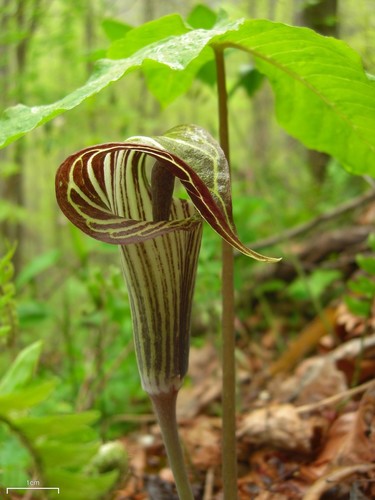
Kentucky, US
You might spot Jack-In-The-Pulpit and Prairie Trillium.
View guide →

Georgia, US
You might spot Asian Lady Beetle, Anole, and Joro Spider.
View guide →

Illinois, US
You might spot Cliff Swallow, Baldcypress, and Indian Heliotrope.
View guide →
Take the discovery with you
Snap it with Snappit to identify it, learn what makes it special, and add the discovery to your collection.








.jpg&width=800)



