


Whiskerbrush
leptosiphon ciliatus
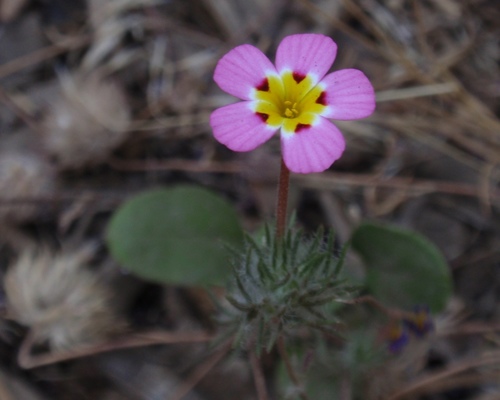
Whiskerbrush is a charming, delicate spring-blooming annual wildflower native to the mountains, chaparral, and dry woodlands of western North America, particularly California. Belonging to the phlox family, this diminutive plant makes a striking appearance in spring when it blankets sunny, rocky slopes with dense clusters of pink, white, or bicolored tubular flowers. Its common name is a nod to the dense, brush-like arrangement of bristly, hairy bracts that surround its flowers, giving the plant a whiskered appearance. While easily overlooked when not in bloom due to its slender, needle-like leaves and modest size, it plays an important ecological role by providing early-season nectar to native insects and stabilizing soils on open slopes. In the wild, Whiskerbrush thrives in harsh, nutrient-poor conditions where other plants struggle, showcasing its resilience and evolutionary specialization. Its fleeting life cycle allows it to complete its growth, bloom, and disperse seeds before the scorching heat of the summer drought arrives.
Habitat: Found in open, sandy or gravelly areas, chaparral, grasslands, and montane pine forests.
Whiskerbrush is a small annual herb growing between 5 to 30 centimeters tall, with upright, reddish-brown stems covered in fine, bristly hairs. The narrow, needle-like leaves are arranged in opposite pairs or whorls along the stem. The inflorescence consists of a dense, head-like cluster of flowers surrounded by prominent, green, highly ciliated bracts that resemble whiskers. The individual flowers are funnel-shaped, featuring a long, slender purple or pink tube that flares into five distinct petals. These petals are typically bright pink, lavender, or white, often accented by a bright yellow or white throat at the center, creating a stark visual contrast that attracts insect pollinators.
Category
PlantsRarity
Common
Danger
1/5 · Very low
Snaps
Be the first to snap!
Its long and narrow floral tube is an evolutionary adaptation designed specifically to cater to butterflies and long-tongued bees, excluding shorter-tongued competitors.
The common name 'Whiskerbrush' refers directly to the prominently hairy, whisker-like bracts situated just below the colorful flower clusters.
The species belongs to the family Polemoniaceae, which is renowned for containing some of the most colorful and geographically specialized wildflowers of Western North America.
The dense, bristly hairs on its bracts help reduce wind-driven moisture loss and deter crawling herbivorous insects from reaching the delicate flowers.
Its exceptionally long, narrow flower tubes limit nectar access to specialized long-tongued pollinators, ensuring targeted and efficient pollination.
As an ephemeral annual, it germinates, grows, flowers, and sets seed rapidly in the spring, allowing it to survive extreme summer droughts as resilient seeds.
As a photoautotrophic plant, Whiskerbrush produces its own organic nutrients using sunlight, carbon dioxide, and water via photosynthesis.

Euphydryas chalcedona
Pollinated by long-tongued insects, which feed on its nectar in exchange for pollen transport.

Odocoileus hemionus
Provides forage for native browsers during its peak green growth period in spring.
Bromus tectorum
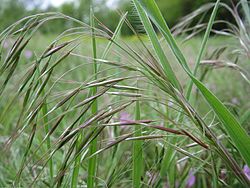
Competes for water and space on sunny, rocky hillsides.
No trait badges are assigned for this object yet.
No aliases listed yet.
Collections for this object will appear here as more themes are added.
Danger
1/5 · Very low
No special safety notes yet.
Start with the whole plant, then compare leaf arrangement, leaf edges, stems and any flowers or fruit. Opposite leaves grow in pairs; alternate leaves come one at a time along the stem. These details tell you far more together than a single green leaf does. Plant Identifier: upload a photo and compare the visible details.
5-30 cm
0.001-0.01 kg
1 years
As a photoautotrophic plant, Whiskerbrush produces its own organic nutrients using sunlight, carbon dioxide, and water via photosynthesis.
Found in open, sandy or gravelly areas, chaparral, grasslands, and montane pine forests.
Zoom in to split clusters and explore where this object has been snapped.
Recent snaps will appear here as new observations are added.
California, US
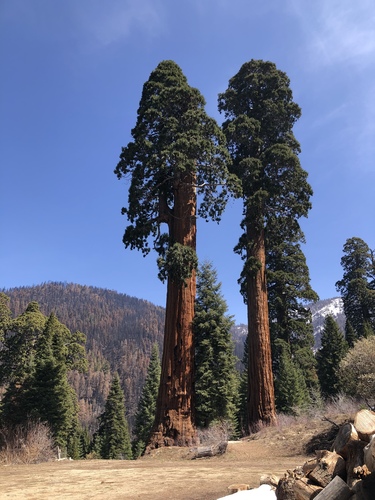
You might spot Sequoia, Mountain Misery, and Black Bear.
View guide →
California, US
You might spot Sequoia, Whiskerbrush, and Black Bear.
View guide →

California, US
You might spot Sequoia, Mule Deer, and Black Bear.
View guide →

California, US
You might spot Sequoia, Mule Deer, and Black Bear.
View guide →
Take the discovery with you
Snap it with Snappit to identify it, learn what makes it special, and add the discovery to your collection.

















