





White-headed Woodpecker
Leuconotopicus albolarvatus
The White-headed Woodpecker is a striking bird with a white head and black body. It loves to peck on trees to find yummy insects and make its home in the forest.
Habitat: Forests
The White-headed Woodpecker has a striking appearance with an entirely black body contrasting sharply with its pure white head. Males also boast a distinctive red patch on the back of their neck. White wing patches are visible during flight.
Category
BirdsRarity
Common
Danger
1/5 · Very low
Snaps
6
These birds prefer to live in tall, fire-scorched pine forests in the mountains.
They often get sticky pine pitch on their white faces from digging into cones for food.
This woodpecker loves pine seeds so much, it hardly pecks for insects like other woodpeckers!
Young White-headed Woodpeckers sport a cool red cap on their heads that disappears with age.
White-headed Woodpecker has a strong, wedge-tipped beak to extract nutritious pine seeds directly from tight cones.
White-headed Woodpecker has stiff tail feathers that act like a prop, helping them brace securely against tree trunks while climbing.
White-headed Woodpecker can extend a long, barbed tongue covered in sticky saliva to snatch hidden insects from bark crevices.
They munch on tasty pine seeds and dig out hidden insects from tree bark and wood.
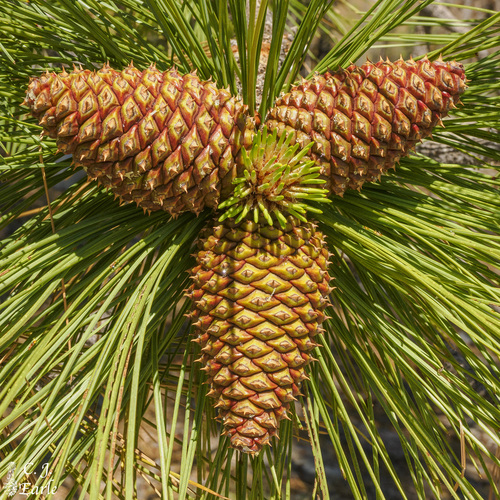
Pinus ponderosa
for seeds, nesting cavities, and insect prey found in its bark.
Dendroctonus ponderosae
as a primary food source, extracting them from beneath pine bark.
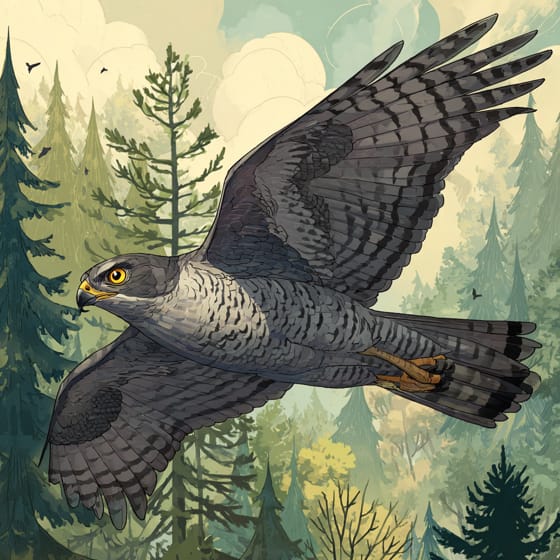
Accipiter gentilis
as a potential avian predator in its forested habitat.

Glaucomys sabrinus
by using abandoned woodpecker cavities for nesting and roosting.
Feathered describes animals, primarily birds, possessing a covering of feathers.
Solitary animals live alone for most of their lives, only interacting with others for mating or parental care.
Arboreal animals live primarily in trees, utilizing them for shelter, food, and protection from predators.
This trait identifies organisms whose diet primarily consists of insects and other small invertebrates.

This trait describes organisms that manipulate external objects to achieve a specific goal.

Forest habitats are terrestrial environments dominated by dense tree cover, supporting a high diversity of plant and animal life.

Diurnal animals are primarily active during daylight hours, typically resting or sleeping at night.

Describes a species whose presence and role have a disproportionately large effect on its environment.
No aliases listed yet.
Danger
1/5 · Very low
Always watch birds from a distance and don't try to touch them.
The easiest way to identify White-headed Woodpecker is to use the Snappit nature identifier app.
21-25 cm
43-48 cm
0.05-0.07 kg
4-9 years
45 km/h
They munch on tasty pine seeds and dig out hidden insects from tree bark and wood.
Forests
Zoom in to split clusters and explore where this object has been snapped.
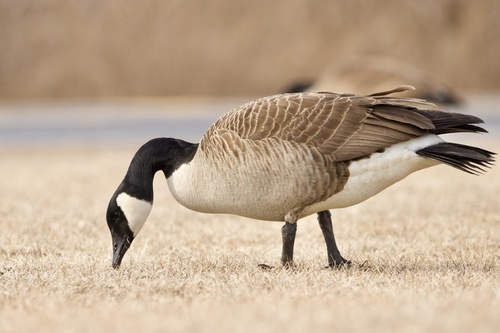
Nevada, US
You might spot Canada Goose, Antelope Bitterbrush, and Steller's Jay.
View guide →
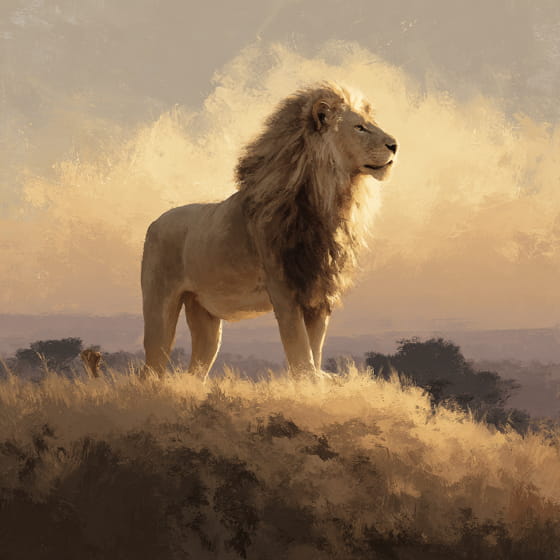
Nevada, US
You might spot African Lion, Tiger, and Zebra.
View guide →
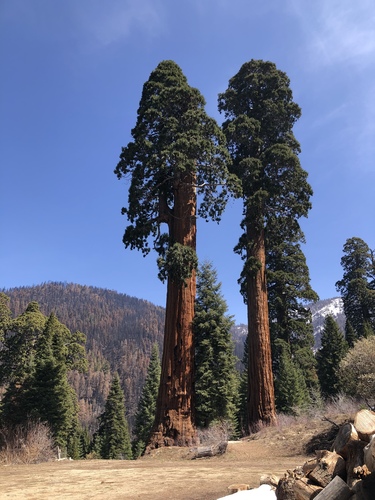
California, US
You might spot Sequoia, Mountain Misery, and Black Bear.
View guide →

California, US
You might spot Snowplant and Douglas's Squirrel.
View guide →
California, US
You might spot Jeffrey Pine and Pandora Pinemoth.
View guide →
Take the discovery with you
Snap it with Snappit to identify it, learn what makes it special, and add the discovery to your collection.




.jpg&width=800)








