_Raphanus_raphanistrum_-_flowers.jpg&width=800)





Wild radish
Raphanus raphanistrum
Wild radish is a fun plant with bright yellow flowers and crunchy seed pods. It grows in many places and is loved by bees and butterflies!
Habitat: Grasslands
The Wild radish has rough, hairy leaves and slender stems, often branching. Its small, four-petaled flowers are typically pale yellow or white with noticeable purple veins, sometimes appearing entirely purple. These distinctive flowers help differentiate it from other yellow wildflowers.
Category
PlantsRarity
Common
Danger
1/5 · Very low
Snaps
6
Even its young leaves and flowers can be added to salads for a peppery kick!
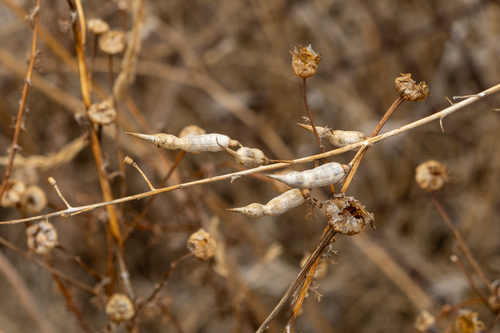
Its long, lumpy seed pods look like bumpy fingers or necklaces!
This plant is considered a tricky weed in many farm fields because it grows so fast!
Wild radish is a close wild cousin to the crunchy radishes you eat!
Wild radish can produce many long, bumpy seed pods that break apart easily, helping it spread its seeds far and wide to colonize new areas.
Wild radish has special chemicals called glucosinolates, which give it a peppery taste and can deter some hungry animals from eating its leaves.
Wild radish flowers can change color as they age, often starting yellow and fading to white or purple, which might signal different things to pollinators.
Apis mellifera
Feeds on nectar and collects pollen
Pieris rapae
Larvae feed on leaves
Plutella xylostella
Larvae feed on foliage

Helix aspersa
Consumes leaves and stems
Flowering plants are any plants that produce flowers as part of their reproductive cycle.
Biennial plants complete their life cycle over two growing seasons, typically forming foliage in the first year and flowering/seeding in the second.
Summer blooming plants produce their flowers during the summer season, often providing vibrant color when many other plants have finished.
Edible plants are those parts of a plant that are considered safe for human consumption.

Grassland habitats are terrestrial biomes dominated by grasses and herbaceous plants, supporting a variety of grazing animals.

Describes plants that are particularly attractive and beneficial to a wide range of pollinating organisms.

Rapid growing plants exhibit accelerated growth rates, quickly increasing in size and biomass within a short period.

Describes organisms that transfer pollen, enabling the fertilization and reproduction of plants.
No aliases listed yet.
Danger
1/5 · Very low
Always check with an adult before eating any wild plants.
The easiest way to identify Wild radish is to use the Snappit nature identifier app.
30-100 cm
15-45 cm
1-2 cm
Spring_to_fall
Yes
Mild
Annual
Zoom in to split clusters and explore where this object has been snapped.
Jun 6, 2026
Venice Canal Historic DistrictPhoto attribution
(c) Roberto Daniel Avila, some rights reserved (CC BY)
License: CC BY 4.0 ↗
Image may be shown cropped inside the card frame.

California, US
You might spot Western Fence Lizard, Duck, and Canada Goose.
View guide →

California, US
You might spot Slender Banana Slug, Western Gull, and Red-Tailed Hawk.
View guide →

Oregon, US
You might spot Duck, Wood Duck, and Douglas Fir.
View guide →

US
You might spot Button's Banana Slug, Ochre Sea Star, and Bat Star.
View guide →

California, US
You might spot Western Gull, Snowy Egret, and Willet.
View guide →

Rhode Island, US
You might spot Atlantic Horseshoe Crab and American Herring Gull.
View guide →
Take the discovery with you
Snap it with Snappit to identify it, learn what makes it special, and add the discovery to your collection.








.jpg&width=800)



_001.jpg&width=800)



