





Wood Lily
Lilium philadelphicum
The Wood Lily is a beautiful flower that grows in the wild. It has bright orange petals with dark spots and loves to bloom in sunny places during the summer.
Habitat: Forests
The Wood Lily has striking, upward-facing, reddish-orange flowers often speckled with dark maroon spots. Its bell-shaped petals curve back slightly, giving it a vibrant, cup-like appearance that stands out against green foliage.
Category
PlantsRarity
Common
Danger
1/5 · Very low
Snaps
11
Each plant can proudly display up to six brilliant, upward-facing flowers at once!
Its flowers are often dotted with tiny, mysterious speckles, like nature's own polka dots!
This tough flower can actually sprout and thrive even after a wildfire burns through its habitat!
Wood Lily bulbs were traditionally eaten by Indigenous peoples as a nutritious treat!
Wood Lily has dark spots on its petals that guide insects directly to the flower's nectar and pollen, ensuring successful pollination.
Wood Lily possesses an underground bulb that stores nutrients, allowing it to survive harsh winters and re-emerge year after year.
Bombus impatiens
gathers nectar and pollen
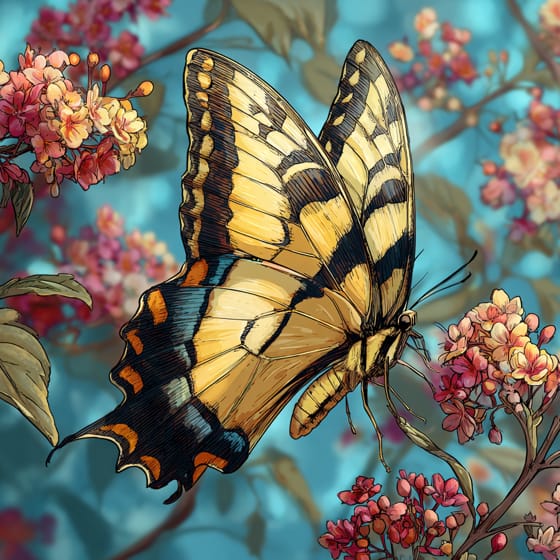
Papilio glaucus
sips nectar from the flowers

Odocoileus virginianus
grazes on foliage and flowers
Microtus pennsylvanicus
eats underground bulbs
Marked with spots or patches of a different color.
Aromatic plants produce and emit fragrant volatile organic compounds, often for defense or to attract pollinators.
Flowering plants are any plants that produce flowers as part of their reproductive cycle.
Summer blooming plants produce their flowers during the summer season, often providing vibrant color when many other plants have finished.

Fragrant flowers emit a pleasant aroma, often to attract pollinators or for defense.

Colorful describes organisms or objects displaying a wide range of bright and distinct colors.

Describes plants that are particularly attractive and beneficial to a wide range of pollinating organisms.

Forest habitats are terrestrial environments dominated by dense tree cover, supporting a high diversity of plant and animal life.
No aliases listed yet.
Danger
1/5 · Very low
Do not pick flowers without asking an adult first, so they can keep growing.
The easiest way to identify Wood Lily is to use the Snappit nature identifier app.
30-90 cm
15-30 cm
5-8 cm
Summer
Yes
None
Perennial
Zoom in to split clusters and explore where this object has been snapped.

New York, US
You might spot Sundial Lupine, Spotted Horsemint, and New Jersey Tea.
View guide →

Iowa, US
You might spot Common Eastern Bumble Bee and Eastern Cottontail.
View guide →

Illinois, US
You might spot Viceroy, Common Wood-Nymph, and Acadian Hairstreak.
View guide →

Michigan, US
You might spot Bladder Campion, Bearberry, and Common Milkweed.
View guide →

Wisconsin, US
You might spot Green Comet Milkweed, Wood Lily, and Flowering Spurge.
View guide →
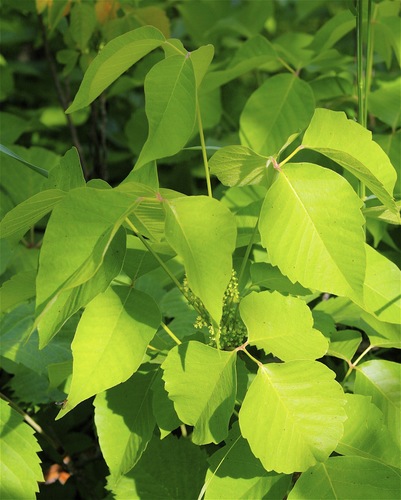
North Dakota, US
You might spot Western Poison Ivy, Wild Licorice, and Leadplant.
View guide →
Take the discovery with you
Snap it with Snappit to identify it, learn what makes it special, and add the discovery to your collection.







.jpg&width=800)


_001.jpg&width=800)




