





Yellow-Throated Vireo
vireo flavifrons
The Yellow-Throated Vireo is a cheerful little bird that loves to sing sweet songs in the trees. With its bright yellow throat and greenish body, it can be fun to spot while out exploring nature!
Habitat: Yellow-Throated Vireos can be found in wooded areas, especially near streams and gardens.
The Yellow-Throated Vireo has a bright yellow throat and spectacles that stand out against its olive-green back. Its underside is white, and it sports two noticeable white wing bars on its dark wings, making it quite distinctive.
Category
BirdsRarity
Common
Danger
0/5 · No known danger
Snaps
6
Did you know they can migrate thousands of miles, often flying over the vast Gulf of Mexico?
Their nests are often decorated with bits of lichen and spider silk, helping them blend in perfectly.
These sneaky birds prefer to forage high in the forest canopy, making them quite a challenge to spot!
Unlike many birds, they often sing a slow, deliberate song even while they are busy looking for food!
Yellow-Throated Vireo has a rich, varied song that helps them attract mates and define their forest territory.
Yellow-Throated Vireo can expertly find tiny insects high in trees using its keen eyesight and patient searching.
Yellow-Throated Vireo can build a cup-shaped nest, weaving it securely onto tree branches with spider silk for protection.
This bird mostly munches on insects and caterpillars, sometimes enjoying juicy berries too!
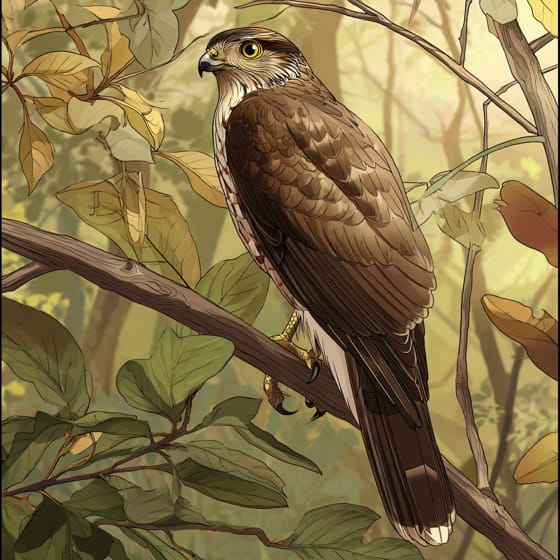
Accipiter cooperii
Young vireos and adults are prey for these swift raptors.
Malacosoma americanum
These caterpillars are a favorite food source during breeding season.

Quercus rubra
Often builds its nest suspended from branches of oak trees.
Thamnophis sirtalis
Snakes can raid nests for eggs or young vireos.
Social animals live in organized groups, cooperating for survival benefits such as foraging, defense, and raising offspring.
Arboreal animals live primarily in trees, utilizing them for shelter, food, and protection from predators.
Colorful describes organisms or objects displaying a wide range of bright and distinct colors.
Diurnal animals are primarily active during daylight hours, typically resting or sleeping at night.

Migratory animals undertake seasonal movements from one region to another, typically in response to changes in climate or food availability.
Danger
0/5 · No known danger
No special safety notes yet.
The easiest way to identify Yellow-Throated Vireo is to use the Snappit nature identifier app.
12-14 cm
20-23 cm
0.013-0.017 kg
3-7 years
35 km/h
This bird mostly munches on insects and caterpillars, sometimes enjoying juicy berries too!
Yellow-Throated Vireos can be found in wooded areas, especially near streams and gardens.
Zoom in to split clusters and explore where this object has been snapped.

Minnesota, US
You might spot Rue Anemone, Bloodroot, and White-Tailed Deer.
View guide →

Indiana, US
You might spot Painted Turtle and Virginia Springbeauty.
View guide →

Michigan, US
You might spot Whooping Crane, Wild Teasel, and Redside Dace.
View guide →

Indiana, US
You might spot Eastern Box Turtle, American Beech, and Common Coral Slime.
View guide →

California, US
You might spot Western Gull, Western Fence Lizard, and Brown Pelican.
View guide →

Illinois, US
You might spot Spring Blue-Eyed Mary and Dutchman's Breeches.
View guide →
Take the discovery with you
Snap it with Snappit to identify it, learn what makes it special, and add the discovery to your collection.




.jpg&width=800)








