





Christmas fern
Polystichum acrostichoides
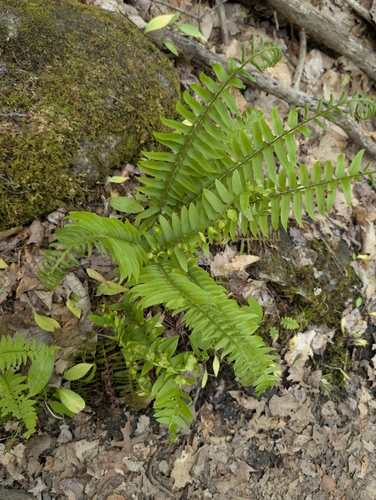
The Christmas fern is a lovely green plant that stays green all winter! It has long, feathery leaves that look like little hands reaching out. This fern is a great friend to many forest animals.
Habitat: Forests
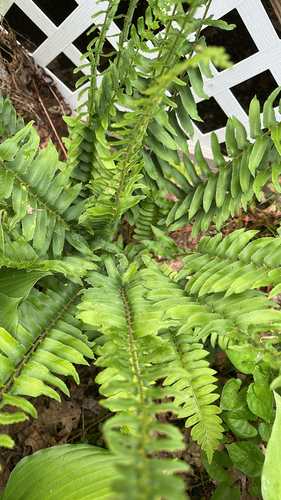
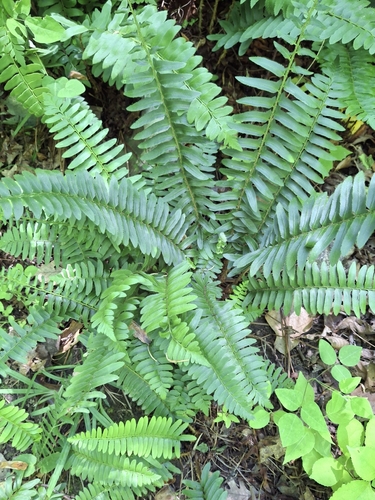
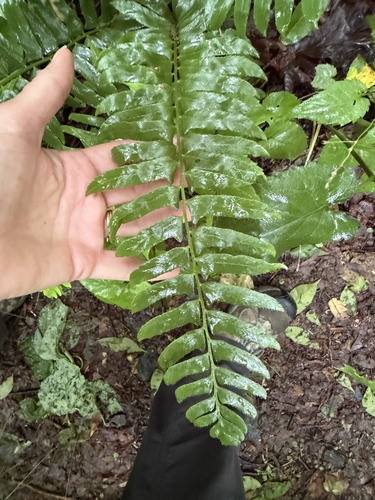
The Christmas fern has glossy, dark green fronds that remain evergreen through winter, unlike many deciduous ferns. Its unique leaflets are earlobe-shaped, often said to resemble tiny Christmas stockings. These leathery fronds grow in a vase-like cluster.
Category
PlantsRarity
Common
Danger
1/5 · Very low
Snaps
129
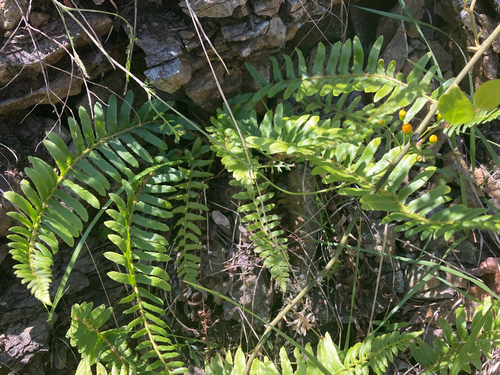
Christmas ferns can grow directly on rocks, using small crevices to anchor their roots.
Each frond can live over a year, slowly replaced by new ones for constant green.
Its fronds resemble miniature Christmas stockings, giving this fern its festive name!
This fern is a living relic, with ancestors dating back hundreds of millions of years!
Its new fronds emerge as tightly coiled 'fiddleheads' that slowly unroll into mature, elegant leaves.
Instead of seeds, Christmas ferns reproduce using tiny spores found on the undersides of their fronds.
This fern helps protect forest soil from erosion with its dense network of roots and fronds, especially on slopes.
Ornamental plants are cultivated primarily for their aesthetic appeal, enhancing landscapes and gardens with their attractive foliage, flowers, or form.
Shade tolerant plants are adapted to grow and thrive in areas with low light levels, requiring less direct sunlight.
Cold hardy plants are able to withstand low temperatures and freezing conditions without significant damage.
Evergreen plants retain their foliage throughout the year, never shedding all their leaves at once.

Medicinal plants possess chemical compounds that can be used for therapeutic purposes to treat illnesses or maintain health.

Forest habitats are terrestrial environments dominated by dense tree cover, supporting a high diversity of plant and animal life.
No aliases listed yet.
Danger
1/5 · Very low
Don't eat any plants without asking an adult first.
The easiest way to identify Christmas fern is to use the Snappit nature identifier app.
30-75 cm
30-60 cm
Yes
None
Perennial
Forests
Zoom in to split clusters and explore where this object has been snapped.
Jun 6, 2026
Days Ferry Historic DistrictPhoto attribution
(c) Doug Suitor, some rights reserved (CC BY)
License: CC BY 4.0 ↗
Image may be shown cropped inside the card frame.
Jun 4, 2026
Delaware and Raritan CanalPhoto attribution
(c) John Keisers, some rights reserved (CC BY)
License: CC BY 4.0 ↗
Image may be shown cropped inside the card frame.
Jun 2, 2026
Plumpton Park ZooPhoto attribution
(c) tkr421, some rights reserved (CC BY)
License: CC BY 4.0 ↗
Image may be shown cropped inside the card frame.
May 27, 2026
Lyme Common Historic DistrictPhoto attribution
(c) Nick Kleinschmidt, some rights reserved (CC BY)
License: CC BY 4.0 ↗
Image may be shown cropped inside the card frame.
May 24, 2026
Andrews GeyserPhoto attribution
(c) Terry Loeb, some rights reserved (CC BY)
License: CC BY 4.0 ↗
Image may be shown cropped inside the card frame.

New Jersey, US
You might spot Garlic Mustard, Sensitive Fern, and Common Mugwort.
View guide →

South Carolina, US
You might spot Anole, Green Treefrog, and Eastern Gray Squirrel.
View guide →

Massachusetts, US
You might spot Eastern Cottontail and American Robin.
View guide →

Tennessee, US
You might spot Black Bear, Yellow Wakerobin, and Pipevine Swallowtail.
View guide →

Alabama, US
You might spot Anole, Eastern Gray Squirrel, and Asian Lady Beetle.
View guide →

Pennsylvania, US
You might spot Mountain Laurel, Ghost Pipe, and Sweetfern.
View guide →
Take the discovery with you
Snap it with Snappit to identify it, learn what makes it special, and add the discovery to your collection.




.JPG&width=800)





.jpg&width=800)



_001.jpg&width=800)


