





Silver-spotted Skipper
Epargyreus clarus
The Silver-spotted Skipper is a small butterfly with beautiful orange and brown wings. It loves to flutter around flowers and is often seen in sunny places during the summer.
Habitat: Grasslands
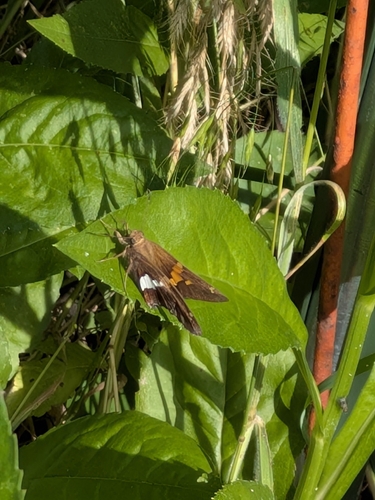
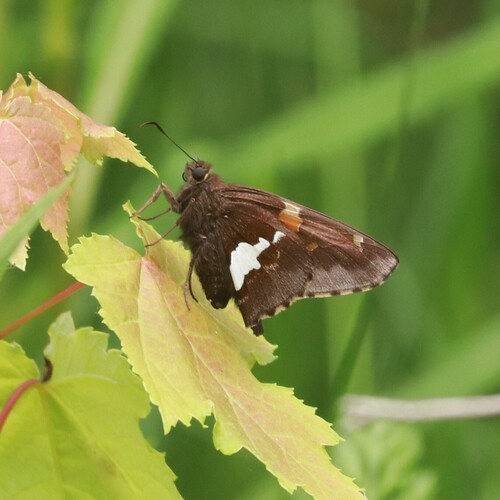
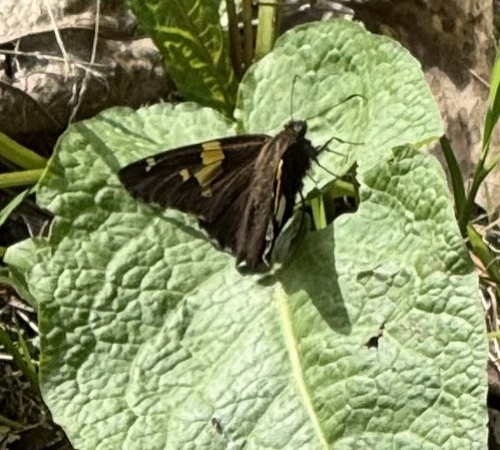
The Silver-spotted Skipper has a sturdy brown body with large, dark brown wings featuring bright orange-gold patches on the forewings. Its most distinctive mark is a large, square, iridescent silver spot on the underside of each hindwing. This silver spot helps distinguish it from other skippers.
Category
InsectsRarity
Common
Danger
1/5 · Very low
Snaps
144
Adult skippers spend winter tucked away as caterpillars or pupae, waiting for spring.
Baby Silver-spotted Skippers build tiny leaf tents to stay hidden from hungry birds.
Its flight pattern looks like it's "skipping" through the air, giving it its name!
They use their strong front legs to hold onto flowers while sipping nectar.
Silver-spotted Skippers can fly incredibly fast and erratically because of powerful wing muscles, helping them dodge predators.
Silver-spotted Skippers have a long, tube-like proboscis that helps them reach deep nectar from many flowers.
Caterpillars of the Silver-spotted Skipper can roll a leaf into a shelter, using silk to hide and eat safely.
Adults sip sweet flower nectar, while their caterpillar babies munch on various plant leaves.
Age differences: Adults drink nectar, while caterpillars munch on leaves.
Marked with spots or patches of a different color.
Colorful describes organisms or objects displaying a wide range of bright and distinct colors.
Grassland habitats are terrestrial biomes dominated by grasses and herbaceous plants, supporting a variety of grazing animals.
This trait characterizes organisms whose diet consists entirely or primarily of plant material.

Describes plants that are particularly attractive and beneficial to a wide range of pollinating organisms.

Diurnal animals are primarily active during daylight hours, typically resting or sleeping at night.

This trait identifies organisms that exhibit exceptional swiftness in movement for hunting, escape, or travel.

Describes organisms that transfer pollen, enabling the fertilization and reproduction of plants.
No aliases listed yet.
Danger
1/5 · Very low
Butterflies are friendly and safe to watch, but don't try to catch them.
The easiest way to identify Silver-spotted Skipper is to use the Snappit nature identifier app.
35-50 mm
15-20 mm
10-14 days
15 km/h
Adults sip sweet flower nectar, while their caterpillar babies munch on various plant leaves.
Grasslands
Foraging
Zoom in to split clusters and explore where this object has been snapped.
Jun 16, 2026
Haskell-Baker WetlandsPhoto attribution
(c) Lydia Dexter, some rights reserved (CC BY)
License: CC BY 4.0 ↗
Image may be shown cropped inside the card frame.
Jun 6, 2026
East Windsor Hill Historic DistrictPhoto attribution
(c) Mark Apgar, some rights reserved (CC BY)
License: CC BY 4.0 ↗
Image may be shown cropped inside the card frame.
May 31, 2026
Binghamton Zoo at Ross ParkPhoto attribution
(c) David Weisenbeck, some rights reserved (CC BY)
License: CC BY 4.0 ↗
Image may be shown cropped inside the card frame.

Virginia, US
You might spot Eastern Box Turtle and White-Tailed Deer.
View guide →

New York, US
You might spot Sundial Lupine, Spotted Horsemint, and New Jersey Tea.
View guide →

Ohio, US
You might spot Eastern Fox Squirrel and Spotted Lanternfly.
View guide →

South Carolina, US
You might spot Anole, Green Treefrog, and Eastern Gray Squirrel.
View guide →

Massachusetts, US
You might spot Eastern Cottontail and American Robin.
View guide →

Tennessee, US
You might spot Black Bear, Yellow Wakerobin, and Pipevine Swallowtail.
View guide →
Take the discovery with you
Snap it with Snappit to identify it, learn what makes it special, and add the discovery to your collection.








.jpg&width=800)



