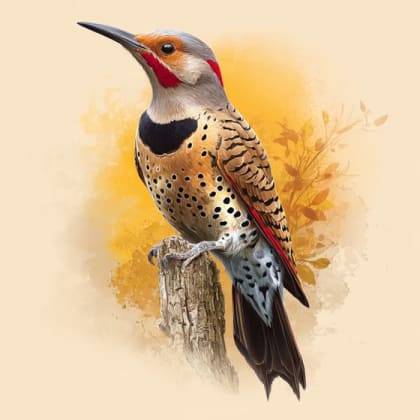





Northern Flicker

The E. Martin Hennings House and Studio Historic District preserves the legacy of a celebrated Taos artist.
This significant historic district in Taos, New Mexico, offers a tangible link to the vibrant Taos art colony and the life of E. Martin Hennings, a distinguished member of the Taos Society of Artists. It encompasses his former home and studio, providing a unique architectural and cultural landmark that reflects the artistic spirit of early 20th-century New Mexico. The property, characterized by its distinctive Southwest Vernacular architectural style, is a testament to the artist's enduring presence in the region.
The main house, a two-story adobe dwelling, and the adjacent one-story adobe studio showcase classic Southwest architectural elements, including flat roofs, stuccoed walls, and charming irregular parapet lines. On the property, a small rectangular pool, historically used for swimming, is now home to goldfish, adding a touch of serene beauty to the historic grounds. Hennings was renowned for his luminous paintings of Pueblo Indians and the dramatic New Mexico landscape, often featuring figures amidst aspen and cottonwood groves—elements that resonate with the setting of his former home.
Visiting this historic district provides a contemplative experience, inviting onlookers to imagine the creative environment that inspired Hennings' iconic works. It offers invaluable insight into the architectural heritage and artistic heritage of Taos, making it a memorable stop for those keen to explore the rich cultural tapestry of New Mexico. The district serves as a quiet monument to a pivotal figure in American art history and the unique aesthetic he helped define. Planning to visit? Download the Snappit app to identify the wildlife you spot in real-time.
buffs exploring New Mexico's cultural heritage
Taos experiences four distinct seasons. Summers are warm and dry, fall brings beautiful foliage, winters can be cold with snow, and spring offers mild temperatures. The architectural features are visible year-round.
As a historic district encompassing private property, accessibility may be limited to public sidewalks or streets adjacent to the property. Specific wheelchair access to the buildings is not indicated for public viewing.
Each card links to a full Explore page with photos, traits, and fun facts.
Start with the big picture, then zoom in to explore individual wildlife observations around this place.
Research E. Martin Hennings beforehand
Familiarize yourself with Hennings' art and his role in the Taos art colony to enhance your appreciation of the site.
Respect private property
If observing from public areas, be mindful that the district includes private residences.
Combine with other Taos art sites
Explore other museums and galleries in Taos that feature works by Hennings and other Taos Society of Artists members for a fuller experience.
Consider the light
The quality of natural light in Taos profoundly influenced artists like Hennings; observe how it illuminates the historic buildings.
Look for architectural details
Pay attention to the adobe construction, rooflines, and window styles that define the Southwest Vernacular architecture.
Jun 5, 2026
Jun 5, 2026
Jun 4, 2026
Jun 4, 2026
Jun 3, 2026

Maryland, US
You might spot White-Tailed Deer and Eastern Gray Squirrel.
View guide →
.jpg)
District of Columbia, US
You might spot Eastern Gray Squirrel, Duck, and House Sparrow.
View guide →

Illinois, US
You might spot American Robin, Canada Goose, and House Sparrow.
View guide →

Virginia, US
You might spot Spotted Lanternfly and Northern Cardinal.
View guide →
Take the discovery with you
Identify the wildlife you spot, learn as you go, and keep a collection of the adventure.














