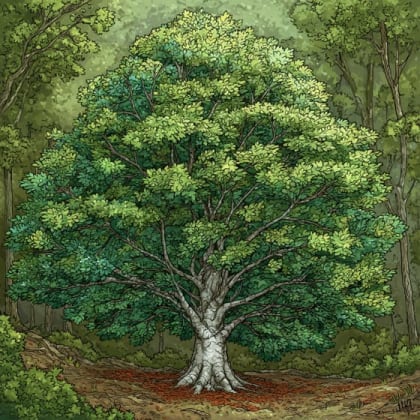
Eastern White Pine

Greenfield Hill Historic District offers a picturesque journey into a preserved New England past.
Greenfield Hill Historic District offers a picturesque journey into a preserved New England past. This affluent historic neighborhood in Fairfield, Connecticut, is a designated U.S. National Register of Historic Places site, renowned for its architectural heritage, intellectual legacy, and stunning natural beauty. It provides a unique opportunity to explore centuries-old homes and landscapes that tell the story of early American life and culture.
The district is a living museum, showcasing an impressive collection of 18th and 19th-century architectural styles, including charming Colonial, Georgian, and distinctive Saltbox homes. Dominating the central green is the iconic Greenfield Hill Congregational Church, an 1855 masterpiece later updated with Colonial Revival elements, whose steeple is a quintessential New England landmark. Visitors can also marvel at the Bronson Windmill, an octagonal wood-frame structure from the 1890s, and the tranquil Old Cemetery, a site with deep historical roots. The district truly comes alive in spring when its abundant dogwood trees burst into a breathtaking display of white and pink blossoms, celebrated annually during the renowned Dogwood Festival.
Beyond its architectural treasures, Greenfield Hill offers a serene escape, where wide, tree-lined roads invite leisurely strolls and exploration. The district's commitment to preserving its historic character ensures an immersive experience, allowing visitors to step back in time. With vibrant seasonal festivals and nearby natural attractions, such as the Connecticut Audubon Society's nature center with its resident raptors like owls, hawks, and peregrine falcons, the Greenfield Hill Historic District promises a memorable visit for history enthusiasts, nature lovers, and families alike. Explore the grounds like a pro—download the Snappit app to instantly identify animals and plants.
The Greenfield Hill area began as a farming community in the early 18th century, with its origins as a distinct parish dating back to 1725. It rose to prominence as an intellectual center in the late 18th and early 19th centuries, largely due to the influence of Timothy Dwight. Dwight, who served as minister of the Greenfield Hill Congregational Church from 1783, later became the eighth president of Yale College. During his time, he established a notable academy at what is now Timothy Dwight Park, which educated both young men and women in classical studies and attracted esteemed scholars and figures like Abraham Baldwin and Joel Barlow. The district is particularly significant for possessing one of Fairfield's largest concentrations of pre-Revolutionary War dwellings, many of which retain their original features. The tradition of planting dogwood trees, which now define the area's spring beauty, was reportedly initiated by Revolutionary War hero Dr. Isaac Bronson. Greenfield Hill was officially listed on the U.S. National Register of Historic Places in 1971, recognizing its rich historical fabric and architectural integrity.
Enjoy a self-guided walking tour to admire the architectural variety and historical markers. Visit during the Dogwood Festival for crafts, music, food, and guided history tours. Explore the nearby Connecticut Audubon Society for nature walks and wildlife viewing.
Spring (May): Peak bloom for dogwood trees and the Dogwood Festival.
Summer: Pleasant for walking tours and exploring the surrounding natural areas.
Fall (October): Enjoy colorful foliage and the annual Pumpkin Festival.
Winter: A quieter time, offering a serene, snow-dusted landscape, though some attractions might have limited hours.
The Greenfield Hill Green and most roads are generally accessible for strolling. The Connecticut Audubon Society, located nearby, offers a wheelchair-accessible trail (Chiboucas Wheelchair-accessible Trail). Specific accessibility for historic homes, which are generally private residences, is limited.
Greenfield Hill Congregational Church and the adjacent historic green.
Historic homes along Meetinghouse Lane, Bronson Road, and Hillside Road, showcasing diverse 18th and 19th-century architecture.
The Bronson Windmill, a distinctive historical structure.
Old Cemetery on Bronson Road, a resting place for soldiers from various American wars.
Each card links to a full Explore page with photos, traits, and fun facts.
Start with the big picture, then zoom in to explore individual wildlife observations around this place.
Wear comfortable shoes
The best way to experience the district is by walking along its historic roads and around the green.
Plan your visit around festivals
If interested in community events, check the dates for the Dogwood Festival (May) or Pumpkin Festival (October) in advance.
Bring a camera
The historic architecture and natural beauty, especially the dogwood trees in spring, offer excellent photographic opportunities.
Park near the church
The Greenfield Hill Congregational Church often serves as a central point, with parking sometimes available during events, making it a good starting point for exploration.
Visit the Connecticut Audubon Society
Located nearby, it offers walking trails and opportunities to see live raptors, complementing a historical tour with a nature experience.
Respect private property
Many historic homes in the district are private residences; admire them from public sidewalks and roads.
Jun 6, 2026
Jun 3, 2026
Jun 3, 2026
Jun 3, 2026
Jun 3, 2026

Maryland, US
You might spot White-Tailed Deer and Eastern Gray Squirrel.
View guide →
.jpg)
District of Columbia, US
You might spot Eastern Gray Squirrel, Duck, and House Sparrow.
View guide →

Illinois, US
You might spot American Robin, Canada Goose, and House Sparrow.
View guide →

Virginia, US
You might spot Spotted Lanternfly and Northern Cardinal.
View guide →
Take the discovery with you
Identify the wildlife you spot, learn as you go, and keep a collection of the adventure.