





mapleleaf viburnum
Viburnum acerifolium
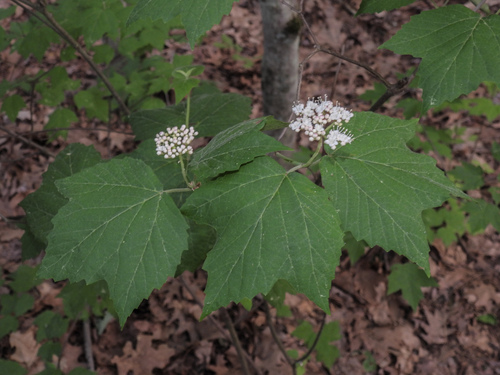
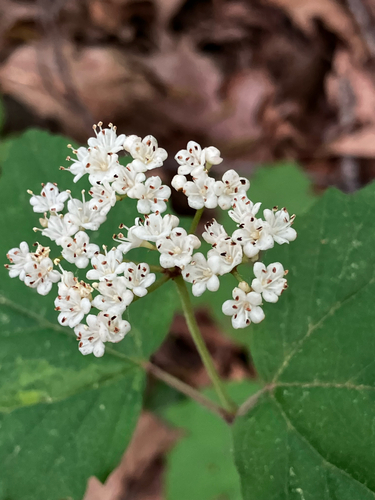
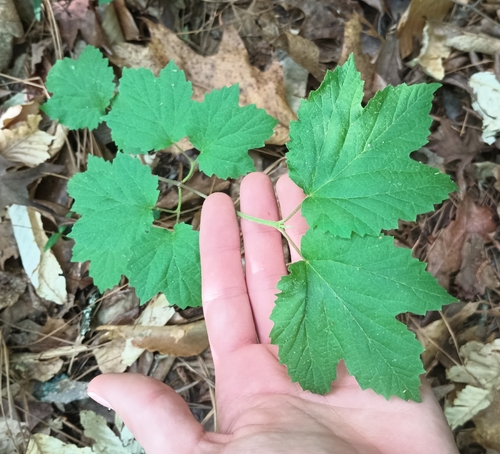
The mapleleaf viburnum is a lovely shrub with beautiful leaves that look like maple leaves! It produces small white flowers in spring and bright red berries in the fall, which are enjoyed by birds.
Habitat: Forests
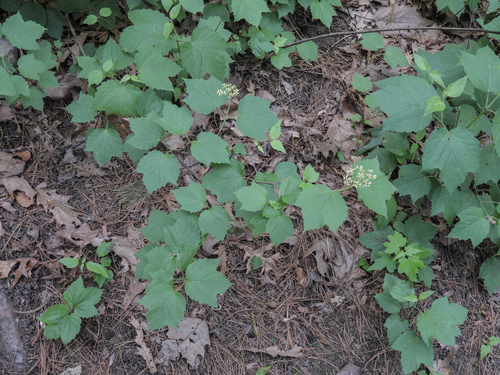
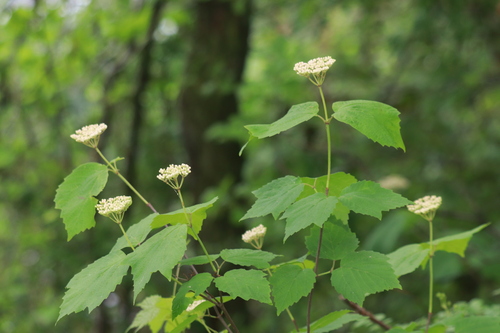
The mapleleaf viburnum is an upright shrub with distinctive three-lobed leaves resembling a maple. It has flat-topped clusters of creamy white flowers in spring, followed by berries that transition from green to red, then finally dark blue-black.
Category
PlantsRarity
Common
Danger
1/5 · Very low
Snaps
58
Despite its name, it's not a maple tree, but a viburnum shrub!
Its dark berries often cling through winter, a vital food source for birds!
Its leaves often have tiny, soft hairs, making them feel wonderfully fuzzy!
Its scientific name means 'maple-leaved' as its leaves truly mimic a maple's!
Mapleleaf viburnum can thrive in shady forest understories, letting it grow where many other plants struggle.
It has leaves that turn a brilliant purplish-red in fall, making it stand out in the forest.
Its berries change from green to red to black, signaling to hungry birds when they are perfectly ripe.
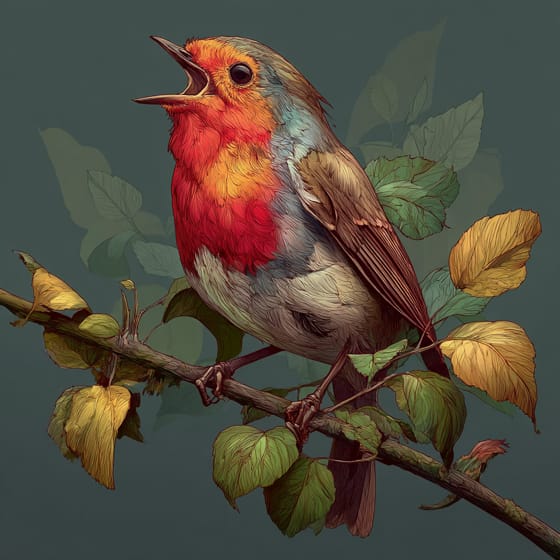
Turdus migratorius
Feeds on its ripe, dark berries.
Apis mellifera
Visits its flowers for nectar and pollen.
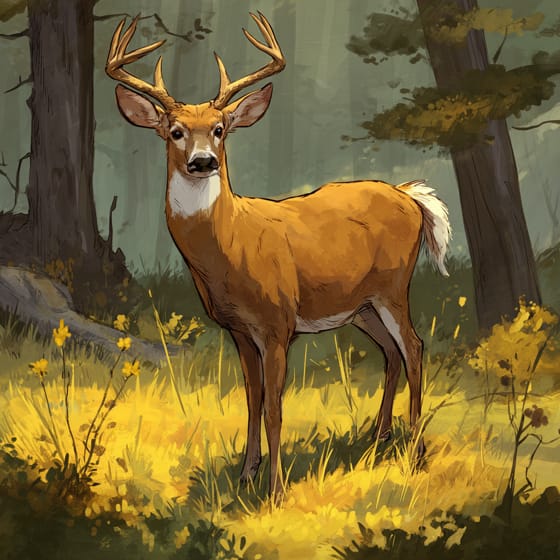
Odocoileus virginianus
Browses on its tender leaves and twigs.
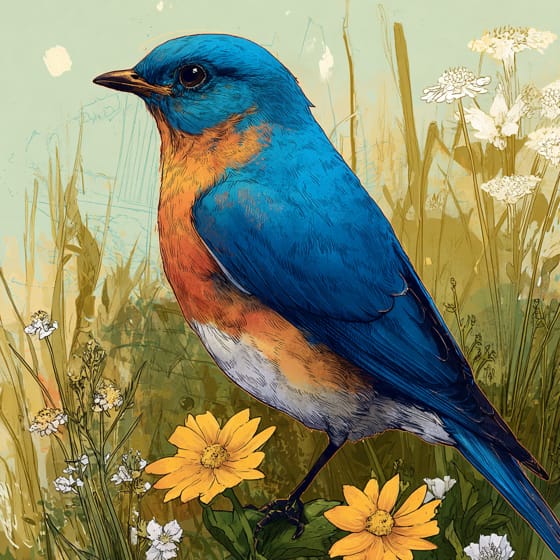
Sialia sialis
Relies on its berries as winter food.
Deciduous plants periodically shed all their leaves, typically during autumn or dry seasons.
Shade tolerant plants are adapted to grow and thrive in areas with low light levels, requiring less direct sunlight.
A shrub is a woody plant smaller than a tree, typically with multiple stems branching from or near the ground.
Fragrant flowers emit a pleasant aroma, often to attract pollinators or for defense.

Fruit-bearing plants produce fruits, which are the mature ovaries of flowering plants containing seeds.

Fall color refers to the seasonal change in foliage pigmentation, primarily in deciduous plants, displaying vibrant hues.

Describes plants that are particularly attractive and beneficial to a wide range of pollinating organisms.

Forest habitats are terrestrial environments dominated by dense tree cover, supporting a high diversity of plant and animal life.
No aliases listed yet.
Danger
1/5 · Very low
Always look but don't touch the berries unless an adult says it's safe.
The easiest way to identify mapleleaf viburnum is to use the Snappit nature identifier app.
150-250 cm
100-200 cm
0.3-0.6 cm
Late spring to early summer
No
Mild
Perennial
Zoom in to split clusters and explore where this object has been snapped.
Jun 2, 2026
Lyman School for BoysPhoto attribution
no rights reserved
License: CC0 1.0 ↗
Image may be shown cropped inside the card frame.
May 31, 2026
East Plymouth Historic DistrictPhoto attribution
(c) Bryan Connolly, some rights reserved (CC BY)
License: CC BY 4.0 ↗
Image may be shown cropped inside the card frame.
May 29, 2026
Jackson Terrace Historic DistrictPhoto attribution
no rights reserved
License: CC0 1.0 ↗
Image may be shown cropped inside the card frame.
May 25, 2026
East Granby Historic DistrictPhoto attribution
(c) Mark Apgar, some rights reserved (CC BY)
License: CC BY 4.0 ↗
Image may be shown cropped inside the card frame.
May 17, 2026
Caldwell Street Historic DistrictPhoto attribution
(c) Raven Dandridge, some rights reserved (CC BY)
License: CC BY 4.0 ↗
Image may be shown cropped inside the card frame.

Rhode Island, US
You might spot Common Mugwort, Duck, and Azure Bluet.
View guide →

Connecticut, US
You might spot Bold Jumping Spider and American Tuliptree.
View guide →
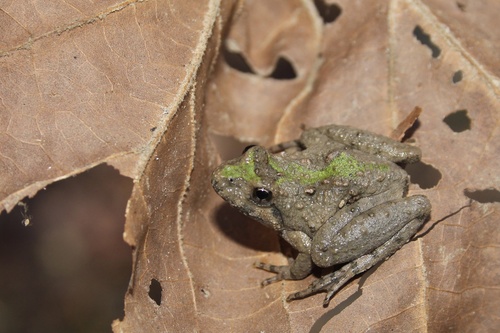
Delaware, US
You might spot Northern Cricket Frog, Fan Clubmoss, and Fowler's Toad.
View guide →

Vermont, US
You might spot Asian Bittersweet, Alder Buckthorn, and Eastern Newt.
View guide →

Connecticut, US
You might spot Downy Woodpecker and Eastern Gray Squirrel.
View guide →

Alabama, US
You might spot Cave Salamander and Pink Lady's Slipper.
View guide →
Take the discovery with you
Snap it with Snappit to identify it, learn what makes it special, and add the discovery to your collection.







.jpg&width=800)


_001.jpg&width=800)



