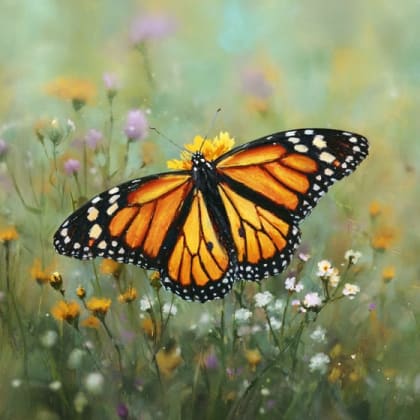





Monarch Butterfly

The New York Botanical Garden is a world-renowned living museum and research center, encompassing 250 acres of breathtaking landscapes and over one million plants.
The New York Botanical Garden is a world-renowned living museum and research center, encompassing 250 acres of breathtaking landscapes and over one million plants. This National Historic Landmark offers an unparalleled escape into the natural world, fostering a deep connection between people, plants, and the planet.
Visitors can explore diverse ecosystems within the iconic Enid A. Haupt Conservatory, a magnificent Victorian-era glasshouse showcasing everything from tropical rainforests to arid deserts, often hosting spectacular seasonal exhibitions like the annual Orchid Show. Outside, wander through the tranquil Thain Family Forest, a 50-acre old-growth woodland with the Bronx River flowing through it, or marvel at the vibrant displays in the Peggy Rockefeller Rose Garden, home to hundreds of rose varieties.
Whether you seek stunning floral beauty, educational insights into plant science, or a peaceful retreat from city life, the New York Botanical Garden provides an unforgettable experience. Its commitment to conservation and ever-changing seasonal beauty make it a truly memorable destination, inspiring visitors of all ages with the wonders of the plant kingdom. Explore the grounds like a pro—download the Snappit app to instantly identify animals and plants.
The New York Botanical Garden was established in 1891, largely due to the efforts of Nathaniel Lord Britton, a botanist at Columbia University, and his wife, Elizabeth Gertrude Britton. Inspired by a visit to the Royal Botanic Gardens, Kew, they envisioned a similar world-class botanical institution in New York to advance public understanding of plants, house rare specimens, and conduct original research. The Garden was built on a portion of the former Lorillard family estate in Bronx Park, chosen for its picturesque terrain, the Bronx River, and existing old-growth forest. The first structures, including the LuEsther T. Mertz Library and the Enid A. Haupt Conservatory, opened by 1902. The New York Botanical Garden has been recognized as a National Historic Landmark since 1967.
Explore the numerous themed gardens, walk along scenic trails, discover plant collections, attend a special exhibition, take a tram tour for an overview of the 250-acre landscape, and participate in educational programs.
Spring: Cherry blossoms, magnolias, daffodils, azaleas, and the vibrant Orchid Show.
Summer: Roses, lilies, daylilies, and aquatic plants are at their peak.
Fall: Enjoy the changing colors of the leaves and harvest-themed events.
Winter: Experience the warmth of the conservatory and the enchanting Holiday Train Show.
The Garden strives to be accessible, with wheelchair-accessible pathways and buildings. Manual wheelchairs are available for free loan on a first-come, first-served basis at visitor entrances. Power-driven wheelchairs and three- or four-wheeled scooters are permitted. The tram tour is wheelchair accessible and can accommodate one wheelchair per tram. Accessible restrooms and baby changing stations are available. Audio tours have transcripts, and Helen's Garden for the Senses includes braille signage. Tours with ASL interpreters are offered on the third Saturday of every month.
A grand Victorian glasshouse featuring diverse habitats like tropical rainforests and deserts.
A 50-acre old-growth forest with native trees and the Bronx River.
Home to over 650 varieties of roses, best in bloom from May to October.
Showcasing the beauty and diversity of plants native to northeastern North America.
Each card links to a full Explore page with photos, traits, and fun facts.
Start with the big picture, then zoom in to explore individual wildlife observations around this place.
Wear comfortable shoes
With 250 acres to explore, you'll be doing a lot of walking.
Check the "What's On" section online
Before your visit, consult the NYBG website for current blooms, events, and exhibition schedules to make the most of your trip.
Utilize the Garden Tram
The tram provides a convenient way to get an overview of the expansive grounds and helps in reaching farther sections, especially if you have limited time or mobility.
Visit on a weekday
To avoid larger crowds, especially during peak seasons or special events, consider visiting Tuesday through Friday.
Plan for dining or bring a picnic
The Garden offers dining options like the Pine Tree Café and Hudson Garden Grill. You can also bring your own food to enjoy at designated picnic areas, such as the Picnic Pavilion behind the Everett Children's Adventure Garden.
Dress for the weather
Much of the Garden is outdoors, so dress in layers and be prepared for varying weather conditions. Outdoor water fountains are closed in colder months.
Jun 5, 2026
Photo attribution
(c) eml23, some rights reserved (CC BY)
License: CC BY 4.0 ↗
Image may be shown cropped inside the card frame.
Jun 5, 2026
Photo attribution
(c) eml23, some rights reserved (CC BY)
License: CC BY 4.0 ↗
Image may be shown cropped inside the card frame.
Jun 5, 2026
Photo attribution
(c) eml23, some rights reserved (CC BY)
License: CC BY 4.0 ↗
Image may be shown cropped inside the card frame.
Jun 5, 2026
Photo attribution
(c) eml23, some rights reserved (CC BY)
License: CC BY 4.0 ↗
Image may be shown cropped inside the card frame.
Jun 5, 2026
Photo attribution
(c) eml23, some rights reserved (CC BY)
License: CC BY 4.0 ↗
Image may be shown cropped inside the card frame.

Maryland, US
You might spot White-Tailed Deer and Eastern Gray Squirrel.
View guide →
.jpg)
District of Columbia, US
You might spot Eastern Gray Squirrel, Duck, and House Sparrow.
View guide →

Illinois, US
You might spot American Robin, Canada Goose, and House Sparrow.
View guide →

Virginia, US
You might spot Spotted Lanternfly and Northern Cardinal.
View guide →
Take the discovery with you
Identify the wildlife you spot, learn as you go, and keep a collection of the adventure.