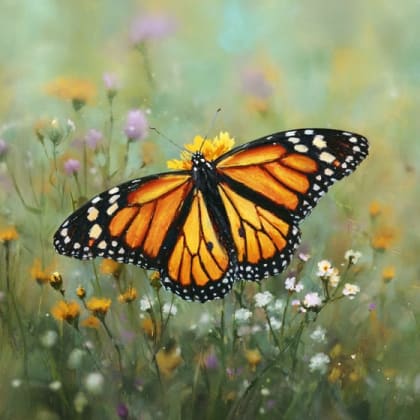





Monarch Butterfly

The Niobrara Valley Preserve is a vast showcase of Nebraska's natural heritage.
The Niobrara Valley Preserve is a vast showcase of Nebraska's natural heritage. This 56,000-acre conservation area, managed by The Nature Conservancy, is a remarkable "biological crossroads" where six distinct ecological systems converge, offering an unparalleled diversity of plant and animal life. Visitors can immerse themselves in landscapes ranging from northern boreal forests and western coniferous stands to eastern deciduous woodlands, alongside mixed-grass, tallgrass, and unique Sandhills prairies, all within a single location.
Among the preserve's most iconic inhabitants are its thriving herds of bison, reintroduced in 1985 after a century-long absence and now grazing across thousands of acres. The diverse ecosystems support an incredible array of species, including over 580 vascular plants, 213 bird species, and 44 mammals. Unique flora, such as the Ponderosa Pine at the eastern edge of its natural range, hybrid Quaking and Bigtooth Aspen, and Paper Birch typically found much further north, highlight the preserve's exceptional biodiversity. The dramatic Niobrara River, featuring scenic bluffs and numerous waterfalls, including the striking Norden Chute, adds to the visual spectacle.
A visit to the Niobrara Valley Preserve promises a memorable journey through a landscape that defies typical expectations of the Great Plains. Whether you're hiking through canyons, observing majestic bison, or floating the scenic river, the preserve offers a unique opportunity to connect with an extraordinary tapestry of nature. It's a place where ecological rarity and conservation success stories unfold against a backdrop of stunning natural beauty. Don't forget to bring the Snappit nature identification app along to scan local species.
The Niobrara Valley has a rich history, initially shaped by the presence of vast bison herds and various Native American nations, including the Ponca and Lakota/Sioux, who utilized the fertile river valley for hunting and sustenance. European ranchers and homesteaders began settling the area in the late 19th century, though much of the land proved unsuitable for extensive farming. The landscape was primarily used for cattle grazing in the 20th century. A pivotal moment for the preserve occurred in 1980 when The Nature Conservancy acquired a significant portion of the land, establishing it as a conservation area. In 1985, a major conservation effort saw the reintroduction of bison to the preserve, restoring a vital part of the region's historical ecology after more than a century. The Niobrara River itself gained national recognition in 1991 when it was designated as part of the National Wild and Scenic River System, further solidifying its protected status. Today, the preserve is actively managed as a working ranch, employing controlled grazing by both bison and cattle, alongside prescribed fires, as key tools for maintaining and restoring the health and diversity of its unique grasslands.
Hiking: Two main hiking trails near the visitor center offer loops with grand views of the Niobrara River, traversing various ecotypes including upland prairie and canyon environments.
* **River Floating: ** The Niobrara River is a major summertime attraction for canoeing and kayaking, with outfitters available nearby.
* **Fishing: ** Fishing is permitted with a valid Nebraska fishing permit.
* **Wildlife Viewing: ** Look for bison, a wide variety of bird species (including migratory birds like the Whooping Crane and Bald Eagle), and other prairie animals.
* **Photography: ** Capture the scenic bluffs, diverse flora, the Norden Chute, and wildlife.
River water levels are typically adequate for floating in summer. Controlled burns are part of the preserve's management, so be aware of potential impacts during certain times.
The Visitor Center offers audio descriptions and assistive listening for park films. Service animals are welcome. River access can be challenging for wheelchair users due to steep, graveled ramps, though an accessible ramp exists near the Cornell Bridge (without a downstream accessible take-out). It's advisable to contact the U.S. Fish and Wildlife Service or National Park Service for specific accessibility advice regarding river activities.
Don't miss the chance to observe the magnificent **bison herds** grazing across vast pastures (tours are available by appointment). Explore the diverse ecosystems on the self-guided hiking trails, which often provide stunning views of the Niobrara River and its unique flora, such as the **Ponderosa Pine** and **Paper Birch**. The **Norden Chute**, a natural waterfall on the Niobrara River, is a popular spot for photography and can be seen by paddlers. The Visitor Center offers information about the preserve's ecology and history.
Each card links to a full Explore page with photos, traits, and fun facts.
Start with the big picture, then zoom in to explore individual wildlife observations around this place.
Book Bison Tours in Advance
If seeing the bison herd is a priority, contact The Nature Conservancy to schedule a tour, as they are often by appointment.
Wear Appropriate Footwear
The hiking trails can be rugged and are foot traffic only, so sturdy hiking shoes are recommended.
Prepare for River Activities
If planning to float the Niobrara River, bring your own canoe/kayak or arrange with one of the local outfitters located near the preserve.
Carry a Fishing Permit
Anglers wishing to fish in the Niobrara River must possess a valid Nebraska fishing permit.
Protect Pets on Trails
If bringing a service animal, be aware that many grasses have sharp burs, and consider protective boots for their feet.
Bring Binoculars
For optimal wildlife and birdwatching opportunities, binoculars will greatly enhance your viewing experience, especially for distant bison or elusive bird species.
May 27, 2026
May 25, 2026
May 24, 2026
May 22, 2026
May 20, 2026

Maryland, US
You might spot White-Tailed Deer and Eastern Gray Squirrel.
View guide →
.jpg)
District of Columbia, US
You might spot Eastern Gray Squirrel, Duck, and House Sparrow.
View guide →

Illinois, US
You might spot American Robin, Canada Goose, and House Sparrow.
View guide →

Virginia, US
You might spot Spotted Lanternfly and Northern Cardinal.
View guide →
Take the discovery with you
Identify the wildlife you spot, learn as you go, and keep a collection of the adventure.








.JPG&width=800)








