Douglas Fir
Skagit Valley Provincial Park, nestled in the rugged Coast Mountains of British Columbia, is a breathtaking wilderness area carved by retreating glaciers, offering a serene escape into nature.
Skagit Valley Provincial Park, nestled in the rugged Coast Mountains of British Columbia, is a breathtaking wilderness area carved by retreating glaciers, offering a serene escape into nature. This expansive park, spanning 27,948 hectares, is characterized by lush old-growth forests, diverse wildlife, and the majestic Skagit River winding through its heart. It's a sanctuary where the grandeur of snow-capped peaks meets verdant valleys, providing a true Coast Mountain experience.
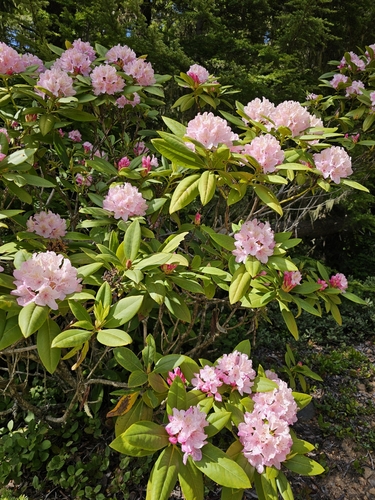
The park boasts over 50 kilometers of trails, inviting hikers to explore its varied terrain, from easy strolls to challenging multi-day adventures. Along these trails, visitors might encounter significant flora such as the vibrant Pacific rhododendron, delicate vanilla leaf, and the distinctive Pacific trillium. The park is also a haven for a rich array of wildlife, with common sightings including Mule Deer and American Black Bear, especially along roadsides and near campgrounds. More elusive species like Moose, Grey Wolves, Cougars, Lynx, and Martens also inhabit the valley, though they are rarely seen. The diverse ecosystems support many other species, including the melodious Pacific chorus frog whose calls resonate by Ross Lake at night, and various birds like the Spotted Sandpiper, Downy Woodpecker, and Rufous Hummingbird.
Skagit Valley Provincial Park is an ideal destination for those seeking to reconnect with nature, offering unparalleled opportunities for outdoor recreation in a truly wild setting. Whether you're casting a line in the Skagit River, paddling on Ross Lake, or simply enjoying a picnic amidst stunning scenery, the park promises memorable experiences. Its remote location ensures a deep immersion in the wilderness, far from commercial services, making it a perfect spot for stargazing and feeling truly off-grid. The blend of stunning landscapes, diverse ecosystems, and abundant wildlife makes Skagit Valley Provincial Park a truly unforgettable natural treasure. Enhance your adventure: download the Snappit app to identify the local species you encounter.
The Skagit Valley has a rich cultural history, with First Nations people utilizing the valley for approximately 8,000 years. In more modern history, the area saw the establishment of the Whatcom Trail by Captain Walter de Lacy of the US Army, following the Skagit River. During the "High Ross controversy," which involved a hydroelectric dam project by Seattle City Light, a portion of the valley was initially designated as Skagit River Provincial Park in 1970. This was replaced by the larger Skagit Valley Recreation Area in 1973, and eventually, most of this area was converted to a Class 'A' provincial park in 1996, protecting its significant wilderness values. The Silver Skagit Road, which provides access to the park today, was originally built to facilitate timber removal from the valley as part of preparations for flooding due to the dam.
Hiking: Explore trails like the Skagit River Trail (14.5 km one-way, intermediate) or the more challenging Skyline II Trail (12.5 km).
Camping: Frontcountry camping is available at Ross Lake Campground (88 sites) and Whitworth Horse Campground (11 sites with corrals). Backcountry camps like Delacy and Harlequin Flats offer more secluded experiences.
Fishing: The Skagit River and Ross Lake are popular for fishing, particularly trout.
Paddling: Canoeing and kayaking on Ross Lake are possible, especially in July and August when water levels are highest.
Wildlife Viewing: Keep an eye out for American Black Bear, Mule Deer, and diverse birdlife.
Spring/Summer (May-October): Ideal for hiking, camping, and water activities on Ross Lake. Ross Lake typically reaches full water levels in July and August. Mosquitoes can be prevalent, so bug spray is recommended.
Autumn: Offers beautiful fall colors in the foliage and continued opportunities for hiking.
Winter: Access is generally closed due to limited snow removal.
The park offers vehicle-accessible campsites. However, the main access road (Silver Skagit Road) is a gravel road that can be rough and muddy, especially after rain, and is shared with logging trucks. A pedestrian bridge at Sumallo Grove was impacted by river shifting as of May 2025, affecting some trail access.
Over 50 km of hiking and horse trails, including the Skagit River Trail and Skyline II Trail.
Ross Lake for swimming, canoeing, kayaking, and fishing, especially for Rainbow Trout.
Wildlife viewing opportunities for American Black Bear, Mule Deer, and various bird species.
Old-growth forests and unique flora like Pacific rhododendron.
Each card links to a full Explore page with photos, traits, and fun facts.
Start with the big picture, then zoom in to explore individual wildlife observations around this place.
Be prepared for a remote experience
There are no commercial services (gas, food, lodging) within the park, so stock up on supplies before arriving.
Drive with caution
The Silver Skagit Road is gravel and shared with logging trucks; drive slowly, use headlights, and be aware of conditions, especially after rain.
Book campsites in advance
Ross Lake Campground accepts reservations, particularly for peak season visits.
Bring bug spray
Mosquitoes can be very active in the park, especially in warmer months.
Check advisories
Before visiting, check the BC Parks website for current advisories, as trail conditions and access can be impacted by weather or maintenance (e.g., bridge status, campground closures).
Respect wildlife
The park is home to many wild animals, including bears. Store food in bear caches, keep a safe distance, and never feed wildlife.
May 11, 2024
Jul 21, 2020
Jun 30, 2020
Jun 23, 2019
Jun 12, 2015

Maryland, US
You might spot White-Tailed Deer and Eastern Gray Squirrel.
View guide →
.jpg)
District of Columbia, US
You might spot Eastern Gray Squirrel, Duck, and House Sparrow.
View guide →

Illinois, US
You might spot American Robin, Canada Goose, and House Sparrow.
View guide →

Virginia, US
You might spot Spotted Lanternfly and Northern Cardinal.
View guide →
Take the discovery with you
Identify the wildlife you spot, learn as you go, and keep a collection of the adventure.