





Alkali Heath
Frankenia salina
Alkali Heath is a special plant that grows in salty places like marshes and shores. It has tiny pink flowers and is very good at living in tough conditions where other plants can't survive.
Habitat: Coastal areas
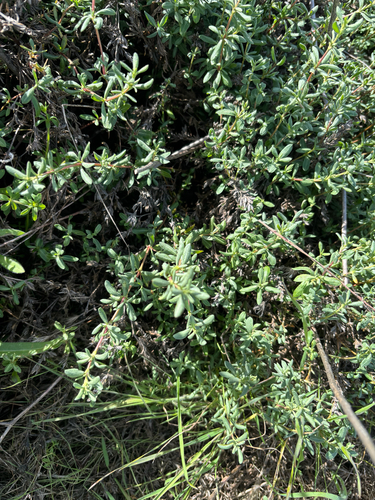
The Alkali Heath is a low, sprawling shrub with slender, reddish stems and tiny, scale-like leaves. Its small, delicate pink to lavender flowers bloom in clusters, giving it a soft, bushy appearance unlike most other salt-tolerant plants.
Category
PlantsRarity
Common
Danger
1/5 · Very low
Snaps
7
Its leaves often turn reddish-purple in cold weather!
Many desert insects find shelter beneath its bushy branches!
Native people once used this plant to make a soapy lather!
This plant can 'sweat' salt crystals from its tiny leaves!
Alkali Heath has special glands on its leaves that excrete excess salt, helping it thrive where most plants cannot.
Alkali Heath can grow deep roots to find water in dry, salty soils, helping it survive arid conditions.
Apis mellifera
Gathers nectar from its flowers.
Bombus vosnesenskii
Visits blooms for pollen.
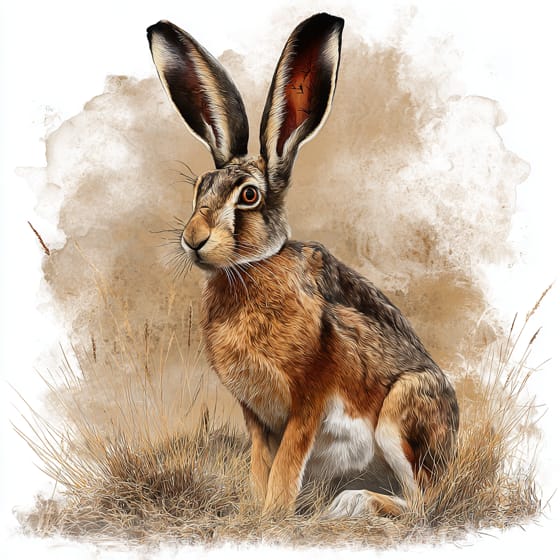
Lepus californicus
Browses on its leaves and stems.
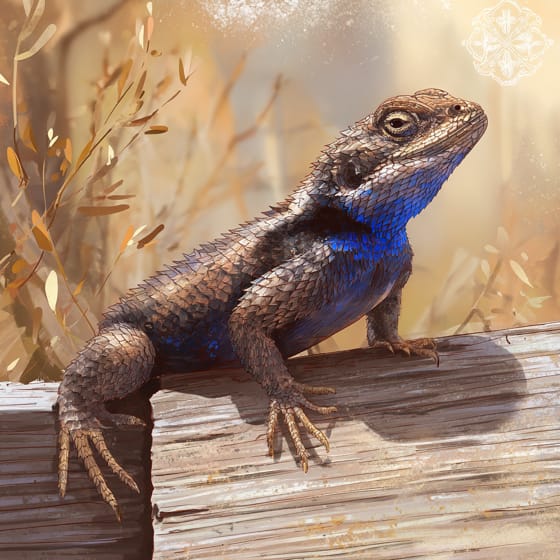
Sceloporus occidentalis
Hides in its low-growing branches.
Flowering plants are any plants that produce flowers as part of their reproductive cycle.
A shrub is a woody plant smaller than a tree, typically with multiple stems branching from or near the ground.
Medicinal plants possess chemical compounds that can be used for therapeutic purposes to treat illnesses or maintain health.
Salt tolerant plants can withstand and grow in conditions with elevated salinity levels in the soil or water.

Drought-tolerant plants can survive and flourish in conditions with limited water availability.

Describes plants that are particularly attractive and beneficial to a wide range of pollinating organisms.

Coastal habitats are dynamic environments located along the interface between land and sea, influenced by tides, waves, and saltwater.

Describes a species whose presence and role have a disproportionately large effect on its environment.
No aliases listed yet.
Danger
1/5 · Very low
Always look but don't touch plants unless you know they are safe.
The easiest way to identify Alkali Heath is to use the Snappit nature identifier app.
15-60 cm
30-90 cm
0.5-1 cm
Spring to fall
No
None
Perennial
Zoom in to split clusters and explore where this object has been snapped.
Feb 22, 2026
Eden Landing Ecological ReservePhoto attribution
(c) Nina S. Zhao, some rights reserved (CC BY)
License: CC BY 4.0 ↗
Image may be shown cropped inside the card frame.

California, US
You might spot American Avocet, Great Egret, and Snowy Egret.
View guide →

California, US
You might spot Great Egret, Snowy Egret, and Savannah Sparrow.
View guide →

California, US
You might spot Sunburst Anemone and Striped Shore Crab.
View guide →
Take the discovery with you
Snap it with Snappit to identify it, learn what makes it special, and add the discovery to your collection.








.jpg&width=800)



_001.jpg&width=800)




