





American hazelnut
Corylus americana
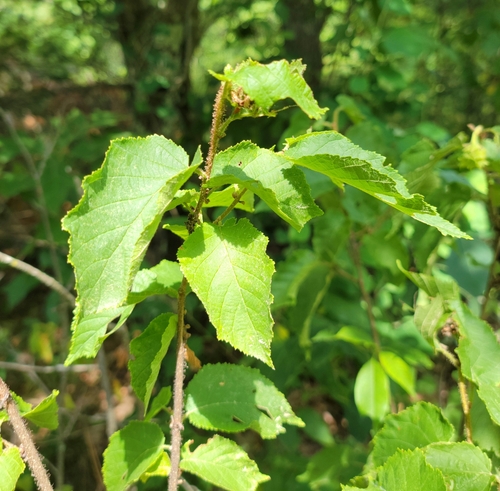
The American hazelnut is a bushy plant that produces tasty nuts! These nuts are small and round, and they grow in clusters. The leaves are green and have a lovely shape.
Habitat: Forests
The American hazelnut is a multi-stemmed shrub with broad, fuzzy, toothed leaves that turn yellow-orange in fall. In early spring, male catkins hang like slender tassels, while tiny female flowers appear as red tufts. Its edible nuts are encased in distinctive leafy, frilly husks.
Category
PlantsRarity
Common
Danger
1/5 · Very low
Snaps
6
Did you know the fuzzy 'jacket' on a hazelnut helps protect it as it grows?
Its male flowers release clouds of pollen even before its leaves emerge in spring!
Native Americans used strong hazelnut branches to weave sturdy baskets and build shelters!
Wild turkeys and deer love to munch on its crunchy nuts and tender twigs!
American hazelnut can release clouds of pollen into the wind, allowing it to spread its genes far and wide for reproduction.
American hazelnut has nutritious nuts protected by a leafy husk, which attracts animals to eat and disperse its seeds.
American hazelnut can spread underground using root suckers, allowing it to form dense thickets for protection and rapid growth.
American hazelnut blooms very early in spring before leaves appear, giving its wind-borne pollen a clear path to travel.
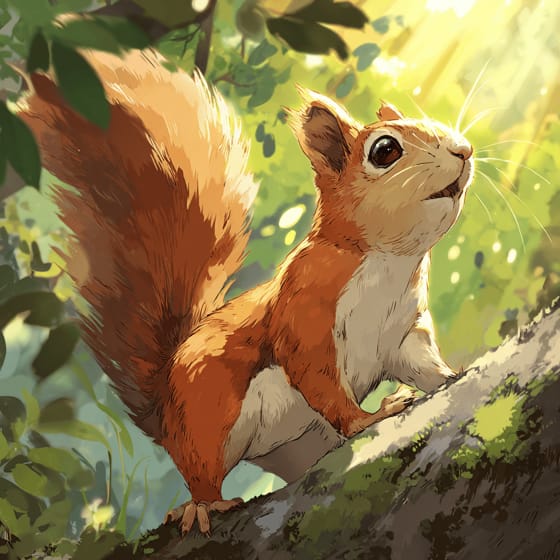
Sciurus carolinensis
Feeds on the nutritious hazelnuts

Odocoileus virginianus
Browses on its leaves and twigs

Bonasa umbellus
Consumes its buds during winter
.jpg&width=800)
Dendroica coronata
Uses branches for nesting and foraging
Deciduous plants periodically shed all their leaves, typically during autumn or dry seasons.
A shrub is a woody plant smaller than a tree, typically with multiple stems branching from or near the ground.
Fruit-bearing plants produce fruits, which are the mature ovaries of flowering plants containing seeds.
Nut bearing plants produce hard-shelled fruits, commonly known as nuts, which contain a single seed and are a valuable food source.

Edible plants are those parts of a plant that are considered safe for human consumption.

Fall color refers to the seasonal change in foliage pigmentation, primarily in deciduous plants, displaying vibrant hues.

Describes plants that are particularly attractive and beneficial to a wide range of pollinating organisms.

Forest habitats are terrestrial environments dominated by dense tree cover, supporting a high diversity of plant and animal life.
No aliases listed yet.
Danger
1/5 · Very low
Always check with an adult before eating any nuts you find in nature.
The easiest way to identify American hazelnut is to use the Snappit nature identifier app.
300-550 cm
200-400 cm
1-5 cm
Early spring
Yes
None
Perennial
Zoom in to split clusters and explore where this object has been snapped.
Jul 2, 2023
Canoe Landing Prairie State Natural AreaPhoto attribution
(c) aarongunnar, some rights reserved (CC BY)
License: CC BY 4.0 ↗
Image may be shown cropped inside the card frame.

Indiana, US
You might spot Panthera Pardus Orientalis and Reticulated Giraffe.
View guide →

North Carolina, US
You might spot Galax, Mountain Laurel, and Downy Rattlesnake Plantain.
View guide →

Wisconsin, US
You might spot Sundial Lupine, Aurora Damsel, and Lancet Clubtail.
View guide →

Indiana, US
You might spot Shield Lichens, Sunburst Lichens, Rosette Lichens, and Allies.
View guide →

Connecticut, US
You might spot Ghost Pipe, American Wintergreen, and Mountain Laurel.
View guide →
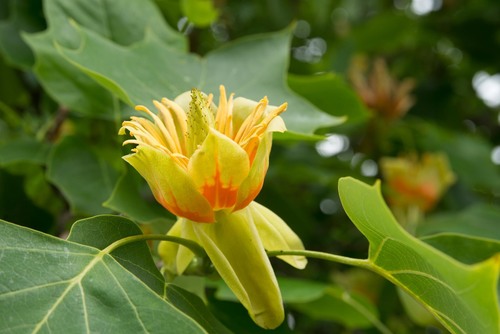
Virginia, US
You might spot American Tuliptree and Japanese Snowball.
View guide →
Take the discovery with you
Snap it with Snappit to identify it, learn what makes it special, and add the discovery to your collection.







.jpg&width=800)



_001.jpg&width=800)



