




autumn olive
Elaeagnus umbellata
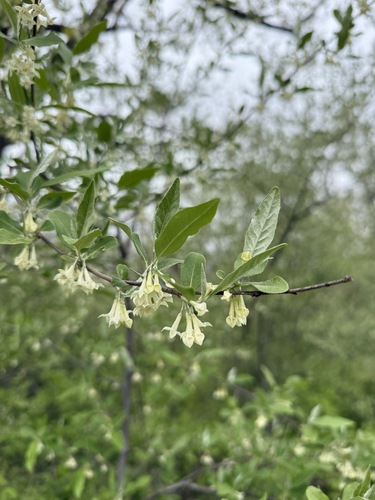
Autumn olive is a bushy plant that has pretty silver leaves and small, yellow flowers. It produces tasty red berries that many animals love to eat!
Habitat: Urban areas
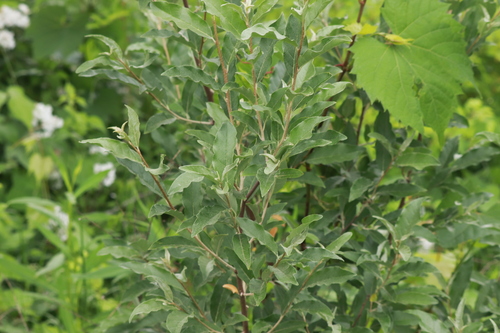
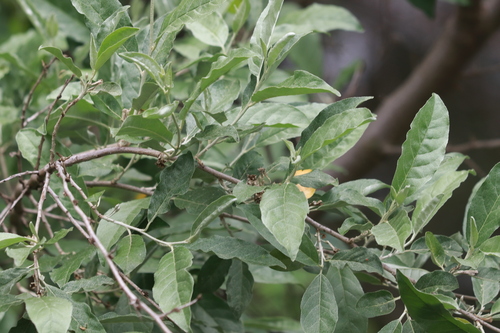
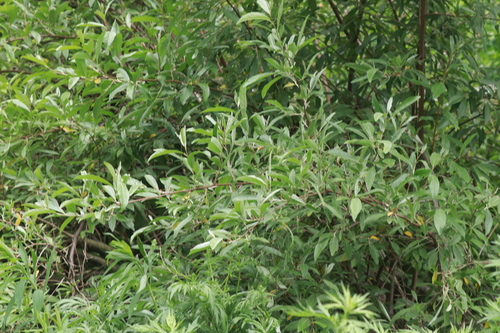
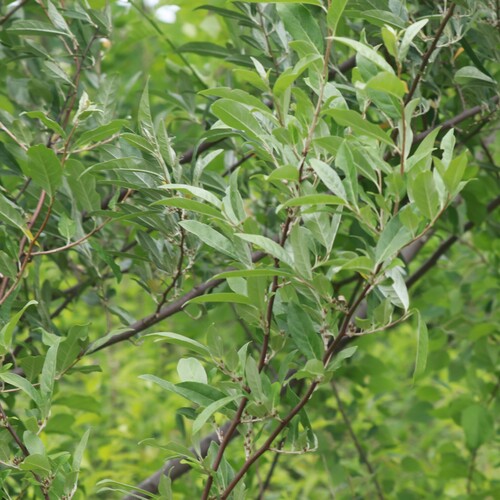
The autumn olive is a large shrub with oblong leaves, distinctively silvery-green above and covered with tiny silver scales underneath. It has small, fragrant, pale yellow flowers in spring, followed by abundant, shiny, round red berries speckled with silver dots in autumn. Its dense, irregular branching gives it a bushy appearance.
Category
PlantsRarity
Common
Danger
1/5 · Very low
Snaps
46
Despite being a shrub, it can grow as tall as a small house!
Its bright red berries are packed with powerful antioxidants, even more than blueberries!
Native to Asia, this plant was brought to other countries many years ago!
The autumn olive is an amazing survivor, growing in tough places where other plants struggle!
Autumn olive can make its own soil fertilizer using special root partners, helping it grow strong even in poor soil.
Autumn olive has a super-berry power, making thousands of fruits to spread its seeds widely and feed many animals.
Autumn olive has tough leaves and roots that let it survive even when there's not much water.
Autumn olive has incredibly fast growth and spreads quickly, allowing it to take over new areas rapidly.
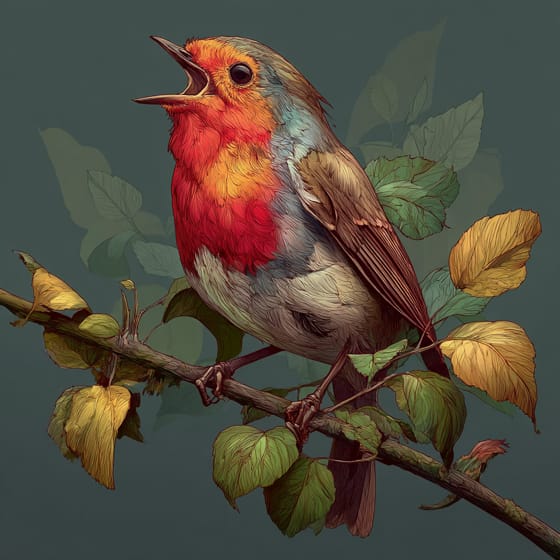
Turdus migratorius
Consumes berries and spreads seeds far away.
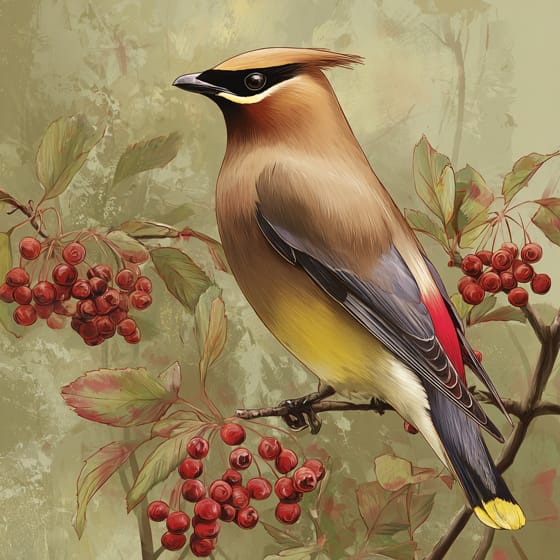
Bombycilla cedrorum
Feeds on abundant berries, especially in autumn.
Apis mellifera
Visits fragrant flowers to collect nectar and pollen.

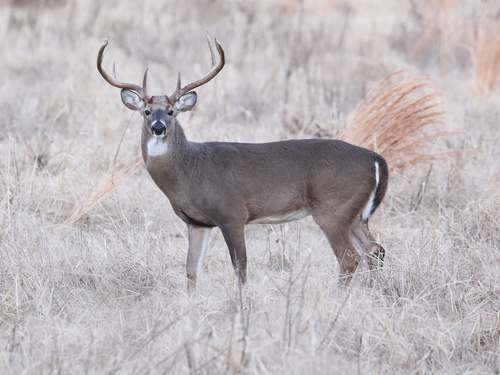
Odocoileus virginianus
Browses its leaves and twigs, especially in winter.
Frankia alni
Fixes nitrogen in its root nodules, enriching the soil.
Deciduous plants periodically shed all their leaves, typically during autumn or dry seasons.
Flowering plants are any plants that produce flowers as part of their reproductive cycle.
Describes organisms capable of converting atmospheric nitrogen into compounds usable by plants.
A shrub is a woody plant smaller than a tree, typically with multiple stems branching from or near the ground.

Fruit-bearing plants produce fruits, which are the mature ovaries of flowering plants containing seeds.

Edible plants are those parts of a plant that are considered safe for human consumption.

Describes plants that are particularly attractive and beneficial to a wide range of pollinating organisms.

Rapid growing plants exhibit accelerated growth rates, quickly increasing in size and biomass within a short period.

This habitat trait indicates species that can coexist with humans in urban and suburban environments, utilizing man-made structures and green spaces.
No aliases listed yet.
Danger
1/5 · Very low
While the berries are tasty, make sure to ask an adult before eating any wild plants.
The easiest way to identify autumn olive is to use the Snappit nature identifier app.
300-600 cm
300-500 cm
0.5-1 cm
Late spring to early summer
Yes
None
Perennial
Zoom in to split clusters and explore where this object has been snapped.
Jun 7, 2026
East Windsor Hill Historic DistrictPhoto attribution
(c) Mark Apgar, some rights reserved (CC BY)
License: CC BY 4.0 ↗
Image may be shown cropped inside the card frame.
Jun 7, 2026
East Windsor Hill Historic DistrictPhoto attribution
(c) Mark Apgar, some rights reserved (CC BY)
License: CC BY 4.0 ↗
Image may be shown cropped inside the card frame.
Jun 7, 2026
East Windsor Hill Historic DistrictPhoto attribution
(c) Mark Apgar, some rights reserved (CC BY)
License: CC BY 4.0 ↗
Image may be shown cropped inside the card frame.
Jun 7, 2026
East Windsor Hill Historic DistrictPhoto attribution
(c) Mark Apgar, some rights reserved (CC BY)
License: CC BY 4.0 ↗
Image may be shown cropped inside the card frame.
May 12, 2026
Richard Bong State Recreation AreaPhoto attribution
(c) Brandon Corder, some rights reserved (CC BY)
License: CC BY 4.0 ↗
Image may be shown cropped inside the card frame.

Maryland, US
You might spot Crane-Fly Orchid, Fragile Forktail, and Ebony Jewelwing.
View guide →

Massachusetts, US
You might spot Threeleaf Goldthread and Spotted Salamander.
View guide →

Connecticut, US
You might spot Eastern Gray Squirrel, Dark-Eyed Junco, and House Sparrow.
View guide →

Michigan, US
You might spot Bladder Campion, Bearberry, and Common Milkweed.
View guide →
Pennsylvania, US
You might spot White-Tailed Deer, Eastern Bluebird, and Northern Cardinal.
View guide →

Michigan, US
You might spot Eastern Box Turtle, Autumn Olive, and Common Watersnake.
View guide →
Take the discovery with you
Snap it with Snappit to identify it, learn what makes it special, and add the discovery to your collection.







.jpg&width=800)



_001.jpg&width=800)



