


bat ray
Myliobatis californica
Bat rays are flat, wing-like fish that glide gracefully through the water. They have a special nose that helps them find food buried in the sand, like clams and crabs.
Habitat: Coastal areas
The bat ray has a broad, diamond-shaped body with a distinct, protruding head and large pectoral fins that resemble wings. It is typically dark brown to black on top, contrasting with a white belly. Its long, whip-like tail has a venomous spine near its base.
Category
FishRarity
Common
Danger
2/5 · Low
Snaps
3
Bat rays can launch themselves completely out of the water!
Each bat ray has unique spot patterns on its underside, like a fingerprint!
Female bat rays give birth to live pups, not laying eggs like many fish.
They often swim in large, graceful schools like underwater squadrons.
Bat rays can find hidden prey by sensing weak electrical fields because of special pores on their snouts.
Bat rays have a sharp, venomous spine on their tail that helps them defend against predators if threatened.
Bat rays can crush hard-shelled prey like clams and crabs because of their strong jaws and flat, plate-like teeth.
Bat rays can dig into sandy seabeds using their disc fins to hide from predators or uncover buried food.
Bat rays are hungry hunters that use their strong mouths to crush shellfish and crabs from the seafloor.
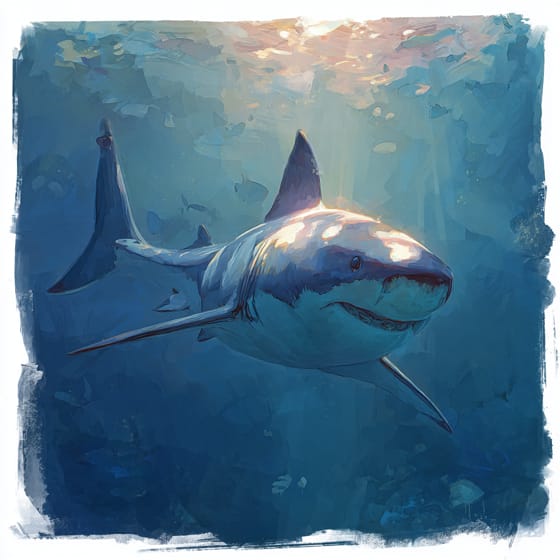
Carcharodon carcharias
Juvenile bat rays are prey for large sharks.
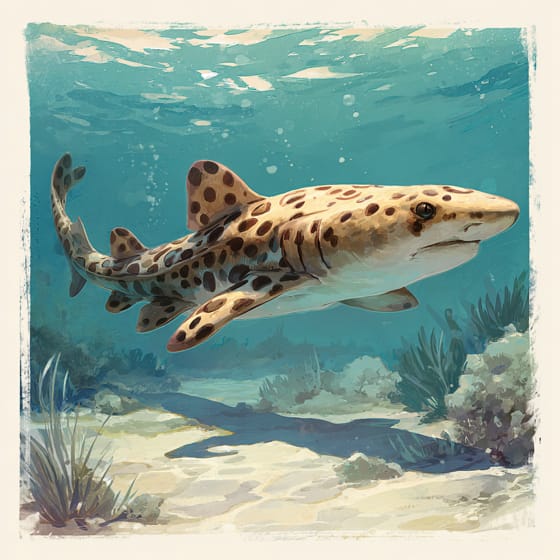
Triakis semifasciata
Leopard sharks prey on smaller bat rays.
Saxidomus giganteus
Bat rays crush and eat this common clam species.

Metacarcinus magister
Bat rays use their strong jaws to feed on crabs.
Solitary animals live alone for most of their lives, only interacting with others for mating or parental care.
Gliding animals move through the air by launching themselves and maintaining flight with specialized body structures, without flapping wings.
An ambush predator hunts by patiently waiting and concealing itself, then launching a sudden attack when unsuspecting prey comes within range.
This trait characterizes organisms with an exceptionally long lifespan compared to others of their kind.

Possessing sharp, pointed projections or spines on the body or surface.

Coastal habitats are dynamic environments located along the interface between land and sea, influenced by tides, waves, and saltwater.

This trait identifies organisms whose diet consists entirely or primarily of animal tissue.

Describes a species whose presence and role have a disproportionately large effect on its environment.

Giant describes organisms or objects of significantly larger size than average for their species or type.

Marine habitats encompass all saltwater environments of the Earth's oceans, supporting an immense diversity of aquatic life.
Danger
2/5 · Low
If you see a bat ray at the beach, watch from a distance and don’t touch them.
The easiest way to identify bat ray is to use the Snappit nature identifier app.
30-180 cm
1-90 kg
1-23 years
Bat rays are hungry hunters that use their strong mouths to crush shellfish and crabs from the seafloor.
20 km/h
Coastal areas
Foraging
Zoom in to split clusters and explore where this object has been snapped.

California, US
You might spot Monarch, Canada Goose, and Western Gull.
View guide →

California, US
You might spot Orca, Bottlenose Dolphin, and Beluga Whale.
View guide →
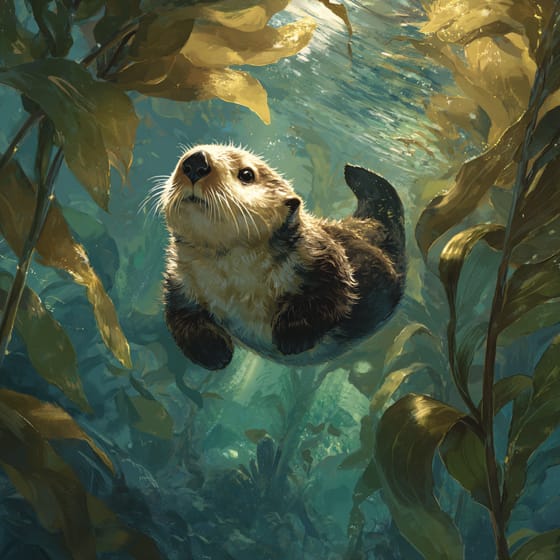
Oregon, US
You might spot Sea Otter, Harbor Seal, and Sea Lion.
View guide →

California, US
You might spot Sea Otter, Octopus, and Northern Sea Nettle.
View guide →
California, US
You might spot Sea Otter, Bull Kelp, and Box Jellyfish.
View guide →
California, US
You might spot Orca, Bottlenose Dolphin, and Sea Lion.
View guide →
Take the discovery with you
Snap it with Snappit to identify it, learn what makes it special, and add the discovery to your collection.