





Black-necked Stilt
Himantopus mexicanus
The Black-necked Stilt is a tall, wading bird with long legs and a striking black neck. They love to stand in shallow waters and are known for their beautiful pink legs and black and white feathers.
Habitat: Wetlands
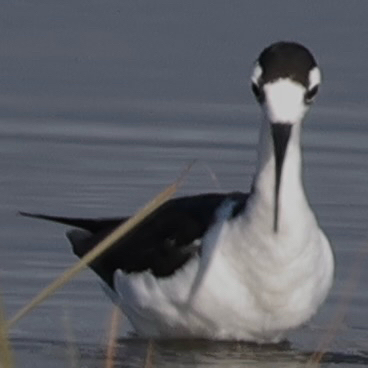
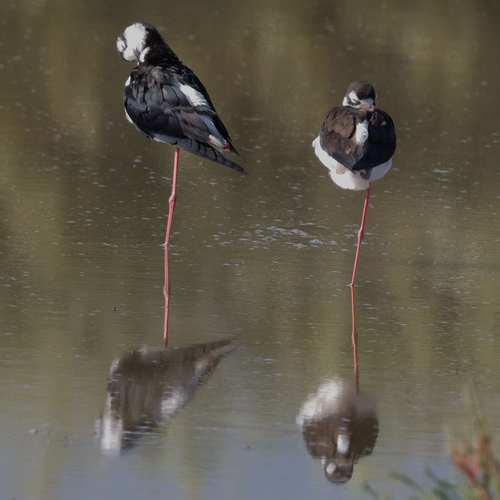
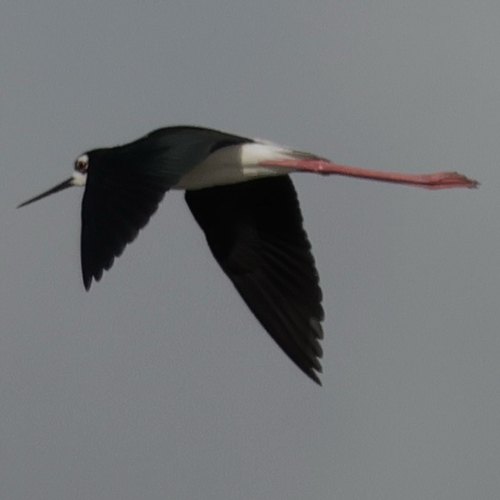
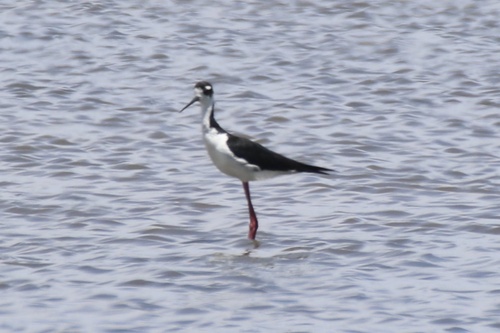
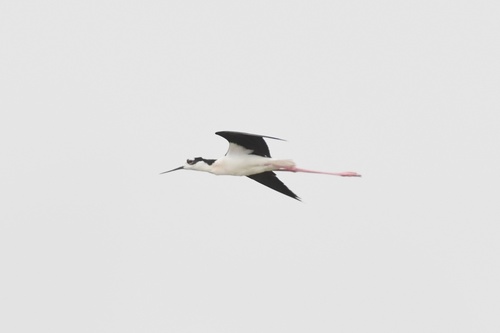
The Black-necked Stilt is an elegant bird with incredibly long, slender pink legs that make it stand tall. It has a striking black back, wings, and nape, contrasting sharply with its pure white belly and forehead. Its pencil-thin, straight black bill is also a distinguishing feature.
Category
BirdsRarity
Common
Danger
1/5 · Very low
Snaps
39
Adult stilts sometimes bravely puncture predator eggs to protect their own nest and chicks!
Black-necked Stilt chicks can swim and find their own food just hours after hatching!
Imagine standing on stilts! These birds have super long legs for their size!
They often nest in huge, noisy groups, creating busy bird neighborhoods for their families!
Black-necked Stilts have super long legs that help them wade into deeper water than other shorebirds to find yummy snacks.
Black-necked Stilts can swiftly sweep their sensitive bills through shallow water to catch tiny insects and crustaceans.
Black-necked Stilts can surprisingly swim well and fly swiftly, helping them escape predators or find new feeding grounds.
Black-necked Stilts perform a "broken-wing" display that helps them lure predators away from their hidden nests and chicks.
These elegant birds sweep their long beaks through shallow water to catch tiny aquatic insects and small fish.
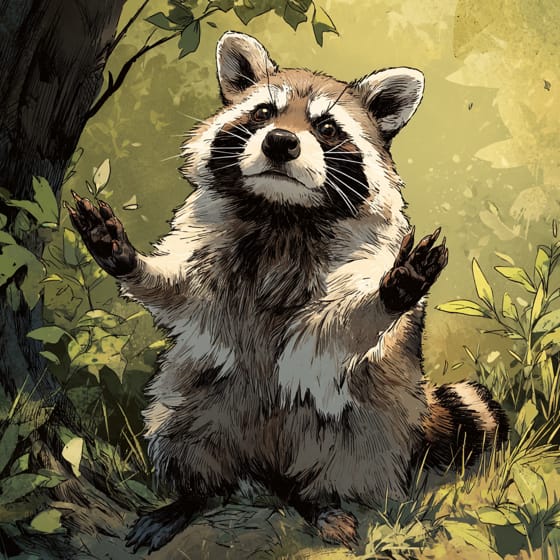
Procyon lotor
Raids nests for eggs and young chicks.
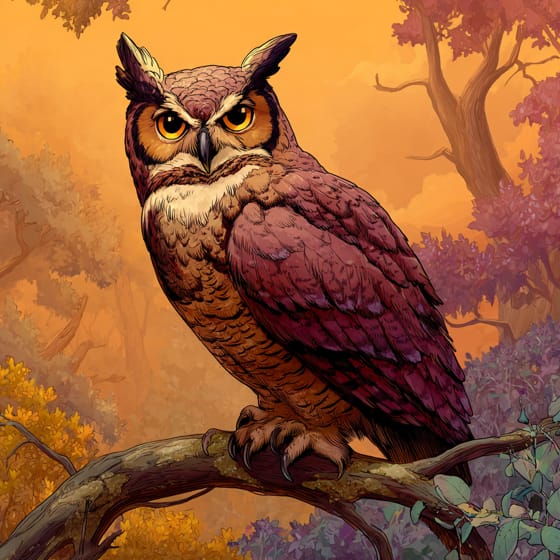
Bubo virginianus
Hunts adult stilts at night.
Gambusia affinis
Forages on these small fish.
Chironomus tentans
Feeds on larvae of aquatic midges.
Feathered describes animals, primarily birds, possessing a covering of feathers.
Social animals live in organized groups, cooperating for survival benefits such as foraging, defense, and raising offspring.
Colorful describes organisms or objects displaying a wide range of bright and distinct colors.
This trait identifies organisms whose diet primarily consists of insects and other small invertebrates.

Piscivorous organisms are animals that primarily subsist on a diet of fish.

This habitat trait identifies species found in wetlands, which are areas of land saturated with water, either permanently or seasonally, including marshes, swamps, and bogs.

Diurnal animals are primarily active during daylight hours, typically resting or sleeping at night.

This trait identifies organisms that exhibit exceptional swiftness in movement for hunting, escape, or travel.

Aquatic habitats encompass environments where organisms live predominantly in water, including oceans, rivers, lakes, and wetlands.
No aliases listed yet.
Danger
1/5 · Very low
Always watch birds from a distance so they feel safe and can fly away if they need to.
The easiest way to identify Black-necked Stilt is to use the Snappit nature identifier app.
33-40 cm
67-76 cm
0.14-0.22 kg
5-10 years
50 km/h
These elegant birds sweep their long beaks through shallow water to catch tiny aquatic insects and small fish.
Wetlands
Zoom in to split clusters and explore where this object has been snapped.
Jun 19, 2026
Palo Alto Baylands Nature PreservePhoto attribution
no rights reserved
License: CC0 1.0 ↗
Image may be shown cropped inside the card frame.
Jun 19, 2026
Palo Alto Baylands Nature PreservePhoto attribution
no rights reserved
License: CC0 1.0 ↗
Image may be shown cropped inside the card frame.
Jun 19, 2026
Palo Alto Baylands Nature PreservePhoto attribution
no rights reserved
License: CC0 1.0 ↗
Image may be shown cropped inside the card frame.
Jun 6, 2026
ProfessorvillePhoto attribution
(c) Cricket Raspet, some rights reserved (CC BY)
License: CC BY 4.0 ↗
Image may be shown cropped inside the card frame.
Jun 6, 2026
Mount EcclesiaPhoto attribution
(c) zr217, some rights reserved (CC BY)
License: CC BY 4.0 ↗
Image may be shown cropped inside the card frame.

California, US
You might spot American Avocet, Great Egret, and Snowy Egret.
View guide →

Indiana, US
You might spot Common Reed, Rosepink, and Bearberry.
View guide →

California, US
You might spot Northern Harrier and Black-Tailed Jackrabbit.
View guide →

Michigan, US
You might spot Bald Eagle, American White Pelican, and Painted Turtle.
View guide →

California, US
You might spot American Avocet, Northern Shoveler, and Black-Necked Stilt.
View guide →

New Jersey, US
You might spot Green Frog, Spongy Moth, and American Toad.
View guide →
Take the discovery with you
Snap it with Snappit to identify it, learn what makes it special, and add the discovery to your collection.




.jpg&width=800)








