





Bluegrass Webworm Moth
Parapediasia teterrellus
The Bluegrass Webworm Moth is a small, fuzzy moth that loves to fly around grassy areas. It has beautiful yellow and brown wings that look like a patchwork quilt!
Habitat: Grasslands
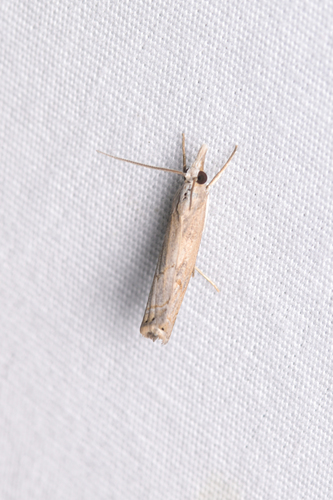
The Bluegrass Webworm Moth is a small, straw-colored or pale brown moth. Its forewings often have subtle darker lines or dots, helping it blend perfectly with dried grasses. The hindwings are usually a lighter, plain off-white color.
Category
InsectsRarity
Common
Danger
1/5 · Very low
Snaps
6
A single female moth can lay hundreds of tiny eggs, usually on grass blades!
Adult Bluegrass Webworm Moths live only for about 1-2 weeks, just to find a mate!
Its caterpillar stage is called a 'webworm' because it spins a silken tunnel!
They help keep grassy areas healthy by pruning old and decaying plant parts.
Bluegrass Webworm Moth larvae can spin silken webs because this helps them create protective tunnels while they feed on grass stems, hiding them from predators.
Bluegrass Webworm Moths have dull brown and straw-like colors that help them disappear against dry grass, making them incredibly hard for predators to spot.
Bluegrass Webworm Moths can fly under the cover of darkness because their nocturnal activity helps them avoid daytime predators and find mates safely.
Larvae munch on grasses, while adults often don't eat, living on stored energy!
Age differences: Larvae feed voraciously on grass; adults typically do not feed or only sip nectar.
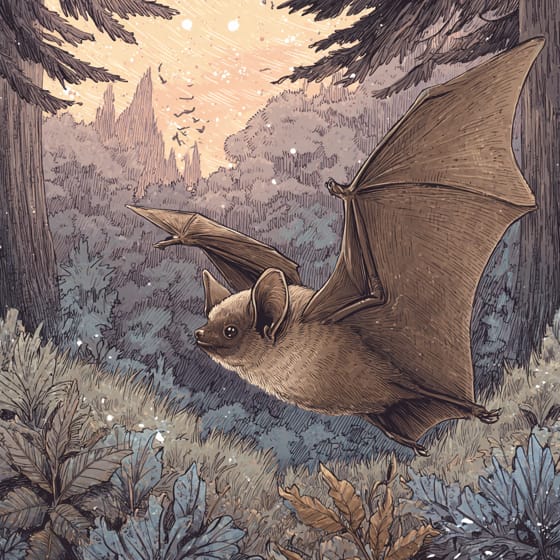
Myotis lucifugus
A nocturnal snack for insect-eating bats.
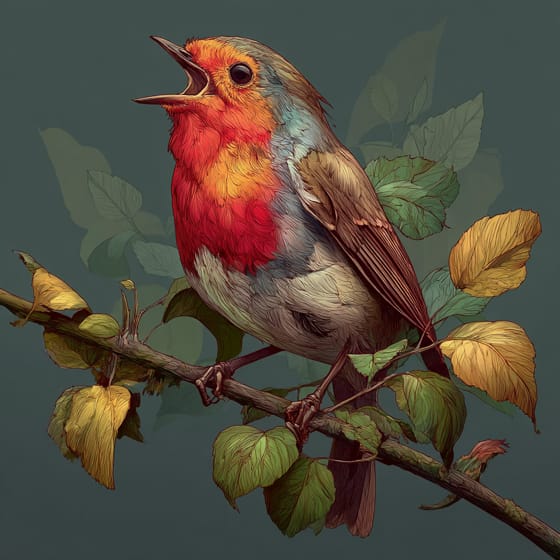
Turdus migratorius
Often predated by common lawn birds.
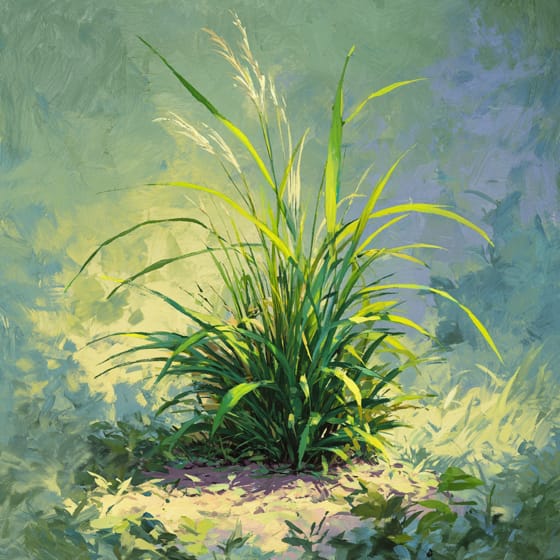
Poa pratensis
Larvae feed on the stems and roots of this common grass.
Trichogramma pretiosum
Tiny wasps lay eggs inside moth eggs, preventing hatching.
Furry describes animals possessing a dense covering of soft hair or fur.
Solitary animals live alone for most of their lives, only interacting with others for mating or parental care.
This trait characterizes organisms that construct elaborate silken webs for catching prey, shelter, or reproduction.
Colorful describes organisms or objects displaying a wide range of bright and distinct colors.

Grassland habitats are terrestrial biomes dominated by grasses and herbaceous plants, supporting a variety of grazing animals.

This trait characterizes organisms whose diet consists entirely or primarily of plant material.

Nocturnal animals are primarily active during the nighttime hours, typically resting or sleeping during the day.

Describes organisms that transfer pollen, enabling the fertilization and reproduction of plants.
No aliases listed yet.
Danger
1/5 · Very low
Moths are usually safe to watch, but don't touch them as they can be delicate.
The easiest way to identify Bluegrass Webworm Moth is to use the Snappit nature identifier app.
14-20 mm
8-12 mm
5-14 days
7 km/h
Larvae munch on grasses, while adults often don't eat, living on stored energy!
Grasslands
Foraging
Zoom in to split clusters and explore where this object has been snapped.
Jun 19, 2026
River ParkPhoto attribution
(c) Becca, some rights reserved (CC BY)
License: CC BY 4.0 ↗
Image may be shown cropped inside the card frame.

Illinois, US
You might spot Chicory, Hackberry Emperor, and Compass Plant.
View guide →

Tennessee, US
You might spot Monarch and Eastern Tiger Swallowtail.
View guide →
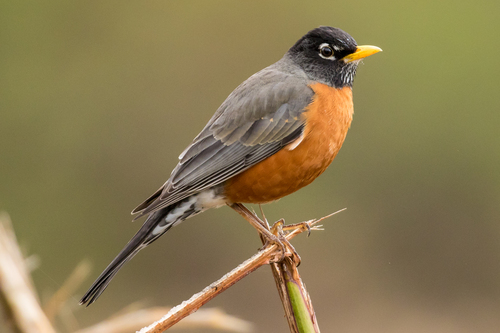
Illinois, US
You might spot American Robin and White-Tailed Deer.
View guide →

Illinois, US
You might spot White-Tailed Deer, Lesser Celandine, and American Robin.
View guide →

Illinois, US
You might spot Polar Bear, Grizzly Bear, and African Lion.
View guide →

Alabama, US
You might spot Eastern Gray Squirrel and Northern Mockingbird.
View guide →
Take the discovery with you
Snap it with Snappit to identify it, learn what makes it special, and add the discovery to your collection.






.jpg&width=800)



