





Broad-winged Hawk
Buteo platypterus
The Broad-winged Hawk is a medium-sized bird of prey with broad wings and a short tail. They are known for their beautiful soaring flight and can often be seen in the sky during migration.
Habitat: Forests
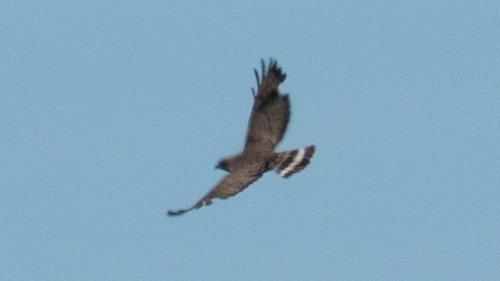
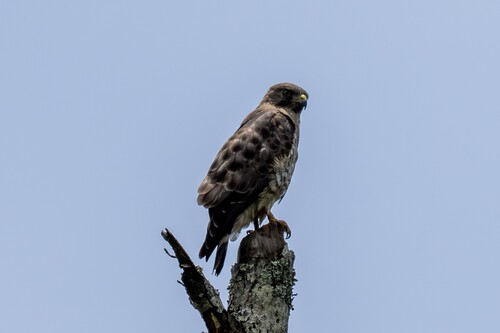
The Broad-winged Hawk is a small, stocky raptor with broad, pointed wings and a short tail. It has a brown back and a white underside with rusty-red barring. Its tail shows distinctive broad dark and white bands.
Category
BirdsRarity
Common
Danger
1/5 · Very low
Snaps
25
Broad-winged Hawks build cozy stick nests high up in forest trees.
Their migration groups, called kettles, can contain tens of thousands of birds!
They often hunt from a hidden perch, swooping down with amazing surprise!
This hawk has a unique, high-pitched whistle call, not a typical screech.
Broad-winged Hawks can soar effortlessly on rising air currents because this ability helps them conserve energy during long migrations.
Broad-winged Hawks have super sharp eyesight that helps them spot tiny prey, like mice, from high in the trees.
Broad-winged Hawks have strong, sharp talons that help them grasp and hold onto slippery prey like snakes and frogs.
These agile hunters primarily eat small mammals, amphibians, and large insects from forest habitats.
Microtus pennsylvanicus
A primary food source.

Lithobates sylvaticus
Often catches these amphibians.
Thamnophis sirtalis
Preys on these small reptiles.

Quercus alba
Nests in tall deciduous trees.
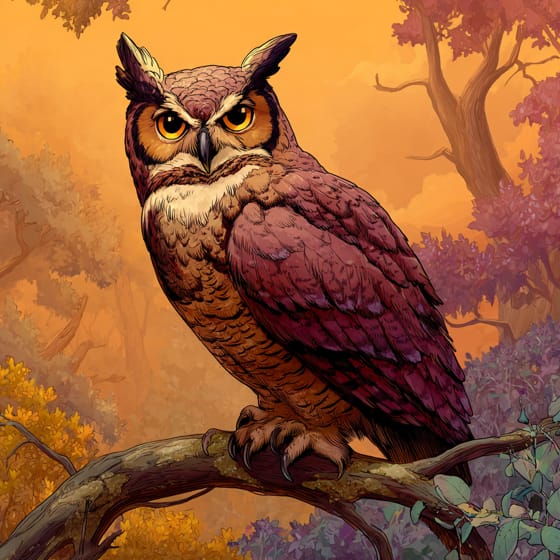
Bubo virginianus
Owl sometimes preys on nestlings.
Feathered describes animals, primarily birds, possessing a covering of feathers.
Social animals live in organized groups, cooperating for survival benefits such as foraging, defense, and raising offspring.
Aerial creatures spend a significant portion of their lives airborne, utilizing flight for various activities such as hunting, migration, or nesting.
Forest habitats are terrestrial environments dominated by dense tree cover, supporting a high diversity of plant and animal life.

This trait identifies organisms whose diet consists entirely or primarily of animal tissue.

Diurnal animals are primarily active during daylight hours, typically resting or sleeping at night.

Migratory animals undertake seasonal movements from one region to another, typically in response to changes in climate or food availability.
No aliases listed yet.
Danger
1/5 · Very low
Always watch birds from a distance and don't try to touch them.
The easiest way to identify Broad-winged Hawk is to use the Snappit nature identifier app.
34-44 cm
81-100 cm
0.265-0.56 kg
10-16 years
64 km/h
These agile hunters primarily eat small mammals, amphibians, and large insects from forest habitats.
Forests
Zoom in to split clusters and explore where this object has been snapped.
Jun 8, 2026
Pennellville Historic DistrictPhoto attribution
no rights reserved
License: CC0 1.0 ↗
Image may be shown cropped inside the card frame.
Jun 7, 2026
Locust Grove State Historic SitePhoto attribution
(c) Brandon Johnson, some rights reserved (CC BY)
License: CC BY 4.0 ↗
Image may be shown cropped inside the card frame.

Maryland, US
You might spot Osprey, Duck, and Spotted Lanternfly.
View guide →

Vermont, US
You might spot Eastern White Pine, Staghorn Sumac, and Box Elder.
View guide →
Maryland, US
You might spot Duck, American Toad, and Eastern Bluebird.
View guide →

Pennsylvania, US
You might spot Canada Goose, American Robin, and Red-Winged Blackbird.
View guide →

Louisiana, US
You might spot Mississippi River Wakerobin and Lyreleaf Sage.
View guide →

Maine, US
You might spot Pink Lady's Slipper, Wood Lily, and Great Blue Heron.
View guide →
Take the discovery with you
Snap it with Snappit to identify it, learn what makes it special, and add the discovery to your collection.




.jpg&width=800)






