





Bull Kelp
nereocystis luetkeana
Bull Kelp is a giant sea plant that looks like a long green noodle! It sways gracefully in the ocean and provides homes for many sea creatures.
Habitat: Bull Kelp lives in the cool, shallow waters of the Pacific Ocean.
The Bull Kelp has a single, very long, hollow stipe that can stretch for many meters, topped by a gas-filled float. Its olive-green to brown fronds radiate from this float, creating a dense canopy on the ocean's surface.
Category
PlantsRarity
Common
Danger
0/5 · No known danger
Snaps
10
Ancient coastal peoples historically used its hollow stipes to make fishing lines and even trumpets!
It's a very important food source, especially for many types of marine gastropods.
The kelp's gas bladder can sometimes be heard making popping sounds during low tide!
Underwater, its long stalks form amazing "forests" for countless sea creatures.
Bull Kelp can grow incredibly fast, up to 60 cm a day, helping it reach the sunlight quickly.
Bull Kelp has a strong holdfast that grips rocks tightly, helping it withstand powerful ocean currents.
Its long, rubbery stipe is incredibly flexible, allowing it to bend and sway without breaking in rough waves.
Bull Kelp has a gas-filled float at its top, helping its fronds stay near the surface for maximum sunlight.
Strongylocentrotus purpuratus
Grazes on kelp blades and stipes, affecting kelp forests.
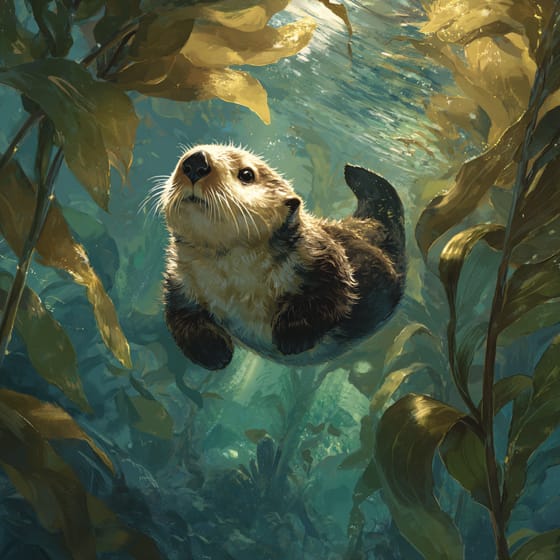
Enhydra lutris
Eats urchins, indirectly protecting kelp populations.
Sebastes mystinus
Uses kelp fronds for hiding from predators and resting.
Pagurus samuelis
Finds refuge and food among the dense kelp beds.
Social animals live in organized groups, cooperating for survival benefits such as foraging, defense, and raising offspring.
Describes organisms that break down dead organic material, recycling nutrients back into the ecosystem.
Coastal habitats are dynamic environments located along the interface between land and sea, influenced by tides, waves, and saltwater.
Aquatic habitats encompass environments where organisms live predominantly in water, including oceans, rivers, lakes, and wetlands.

Marine habitats encompass all saltwater environments of the Earth's oceans, supporting an immense diversity of aquatic life.
Danger
0/5 · No known danger
No special safety notes yet.
The easiest way to identify Bull Kelp is to use the Snappit nature identifier app.
100-3600 cm
Yes
None
Annual
Water
Bull Kelp lives in the cool, shallow waters of the Pacific Ocean.
Zoom in to split clusters and explore where this object has been snapped.

Illinois, US
You might spot Beluga Whale, Pacific White-Sided Dolphin, and Sea Otter.
View guide →
Oregon, US
You might spot Sea Otter, Harbor Seal, and Sea Lion.
View guide →

California, US
You might spot Sea Otter, Bull Kelp, and Box Jellyfish.
View guide →

California, US
You might spot Hilton's Aeolid and Opalescent Nudibranch.
View guide →

California, US
You might spot Brown Pelican, Snowy Plover, and Sanderling.
View guide →

Washington, US
You might spot Mule Deer, Harlequin Duck, and Pacific Trillium.
View guide →
Take the discovery with you
Snap it with Snappit to identify it, learn what makes it special, and add the discovery to your collection.









.jpg&width=800)



_001.jpg&width=800)




