





California Dutchman's Pipe
Aristolochia californica
The California Dutchman's Pipe is a unique plant with big, heart-shaped leaves and unusual, pipe-shaped flowers. It grows in shady spots and is a favorite of butterflies and other insects.
Habitat: Forests
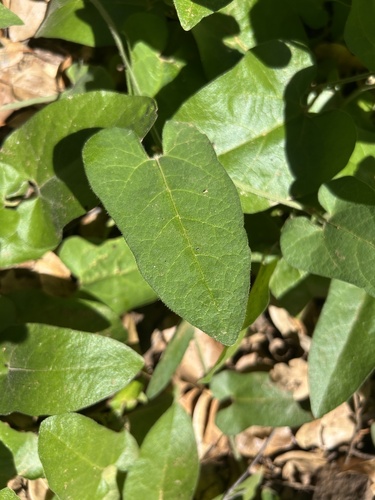
The California Dutchman's Pipe is a woody vine with distinctive S-shaped flowers that resemble a smoking pipe. These unusual blooms range from greenish-white to purple, often featuring intricate brown-purple veining. Its heart-shaped leaves are velvety and grow densely.
Category
PlantsRarity
Common
Danger
3/5 · Moderate
Snaps
5
Ancient people once used this plant for medicine, but it's very poisonous!
Its strange flowers trick tiny flies into pollinating them!
The plant smells faintly like mushrooms to attract its insect visitors!
This vine can grow as tall as a house if it finds good support!
California Dutchman's Pipe has unique pipe-shaped flowers that temporarily trap small flies, ensuring effective pollination.
California Dutchman's Pipe produces special toxic chemicals to deter most hungry animals from eating its leaves and stems.
California Dutchman's Pipe can rapidly twine its way up other plants and structures to reach vital sunlight in dense forests.

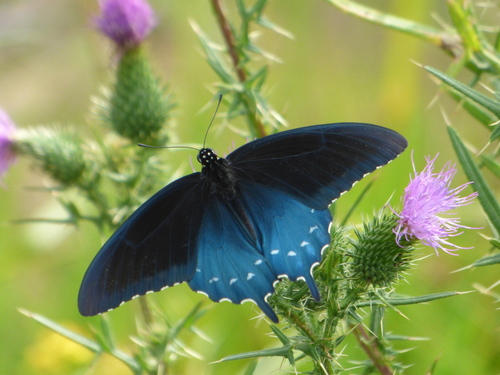
Battus philenor
larvae feed on leaves
Bradysia impatiens
pollinates flowers

Aphelocoma californica
nests in dense vines
Deciduous plants periodically shed all their leaves, typically during autumn or dry seasons.
Flowering plants are any plants that produce flowers as part of their reproductive cycle.
Shade tolerant plants are adapted to grow and thrive in areas with low light levels, requiring less direct sunlight.
A tube flower has petals fused together at the base, forming a distinct tubular structure that typically holds nectar deep within.

Describes plants that are particularly attractive and beneficial to a wide range of pollinating organisms.

Rapid growing plants exhibit accelerated growth rates, quickly increasing in size and biomass within a short period.

Forest habitats are terrestrial environments dominated by dense tree cover, supporting a high diversity of plant and animal life.
No aliases listed yet.
Danger
3/5 · Moderate
Do not touch or eat any part of this plant, as it can be harmful.
The easiest way to identify California Dutchman's Pipe is to use the Snappit nature identifier app.
100-600 cm
100-300 cm
2.5-5 cm
Winter, Spring
No
High
Perennial
Zoom in to split clusters and explore where this object has been snapped.
Jun 3, 2026
Lake Oroville State Recreation AreaPhoto attribution
(c) Chaye Vail, some rights reserved (CC BY)
License: CC BY 4.0 ↗
Image may be shown cropped inside the card frame.

California, US
You might spot White Globe Lily, Rose Campion, and Pipevine Swallowtail.
View guide →

California, US
You might spot Toyon, Mule Deer, and White Globe Lily.
View guide →

California, US
You might spot Pipevine Swallowtail and Western Fence Lizard.
View guide →

California, US
You might spot White-Crowned Sparrow and Bermuda Buttercup.
View guide →
California, US
You might spot Pipevine Swallowtail and Western Fence Lizard.
View guide →

California, US
You might spot Pipevine Swallowtail and Anna's Hummingbird.
View guide →
Take the discovery with you
Snap it with Snappit to identify it, learn what makes it special, and add the discovery to your collection.






.jpg&width=800)



_001.jpg&width=800)



