





cardinal catchfly
Silene laciniata
The cardinal catchfly is a bright red flower that loves to grow in sunny places. Its petals look like they are catching the sun, making it a beautiful sight in nature.
Habitat: Grasslands
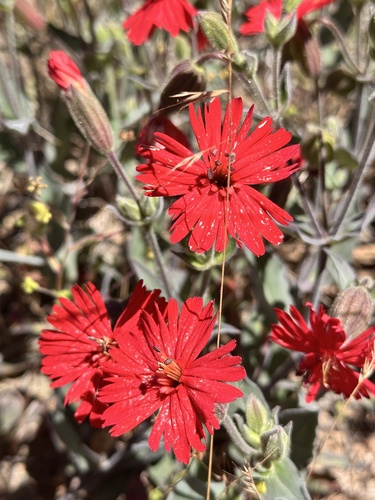
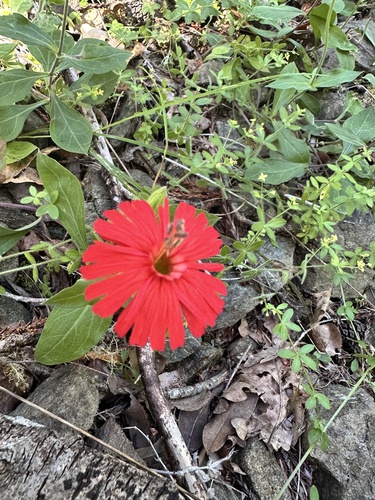
The cardinal catchfly has dazzling cardinal-red flowers with petals so deeply fringed they appear shredded or lacy. Its slender stems often have sticky glands, giving it a 'catchfly' reputation. This vibrant plant stands out with its fiery color in dry landscapes.
Category
PlantsRarity
Common
Danger
1/5 · Very low
Snaps
21
Each petal is so deeply cut, it looks like a delicate, lacy snowflake!
It can bloom for many months, making hillsides look like they are on fire!
Its name 'catchfly' comes from sticky stems that can trap tiny bugs!
The brilliant red flowers are often visited by speedy hummingbird moths!
Cardinal catchfly has sticky glands on its stems that can trap small insects, protecting it from munching herbivores.
It has deeply fringed red petals that act like a bright target, guiding busy pollinators to its sweet nectar.
Cardinal catchfly can thrive in dry, rocky soils, thanks to a strong root system that helps it find deep water.

Papilio rutulus
Feeds on nectar, carrying pollen.
Hyles lineata
Visits flowers for nectar, especially at dusk.

Bombus vosnesenskii
Collects nectar and pollen.
Flowering plants are any plants that produce flowers as part of their reproductive cycle.
Summer blooming plants produce their flowers during the summer season, often providing vibrant color when many other plants have finished.
Fragrant flowers emit a pleasant aroma, often to attract pollinators or for defense.
Colorful describes organisms or objects displaying a wide range of bright and distinct colors.

Grassland habitats are terrestrial biomes dominated by grasses and herbaceous plants, supporting a variety of grazing animals.

Describes plants that are particularly attractive and beneficial to a wide range of pollinating organisms.
No aliases listed yet.
Danger
1/5 · Very low
Always look but don't touch flowers in nature, as some can be delicate.
The easiest way to identify cardinal catchfly is to use the Snappit nature identifier app.
30-90 cm
20-45 cm
2-3 cm
Spring to fall
No
None
Perennial
Zoom in to split clusters and explore where this object has been snapped.
Jun 3, 2026
Armstrong Redwoods State Natural ReservePhoto attribution
no rights reserved
License: CC0 1.0 ↗
Image may be shown cropped inside the card frame.
Jun 2, 2026
Armstrong Redwoods State Natural ReservePhoto attribution
no rights reserved
License: CC0 1.0 ↗
Image may be shown cropped inside the card frame.

California, US
You might spot Redwood Sorrel, Redwood, and Button's Banana Slug.
View guide →
California, US
You might spot Warrior's Plume, Western Leatherwood, and White Globe Lily.
View guide →

California, US
You might spot Pipevine Swallowtail and Western Fence Lizard.
View guide →

California, US
You might spot Sequoia, California Incense-Cedar, and White Fir.
View guide →

California, US
You might spot Western Fence Lizard, Eastern Fox Squirrel, and Bee.
View guide →

California, US
You might spot Canyon Sunflower, Cardinal Catchfly, and White Globe Lily.
View guide →
Take the discovery with you
Snap it with Snappit to identify it, learn what makes it special, and add the discovery to your collection.








.jpg&width=800)


_001.jpg&width=800)




