





Carolina ponysfoot
Dichondra carolinensis
Carolina ponysfoot is a small, green plant that grows close to the ground. It has round leaves that look like little coins and can spread quickly, making it a fun plant to find in gardens and parks!
Habitat: Urban areas
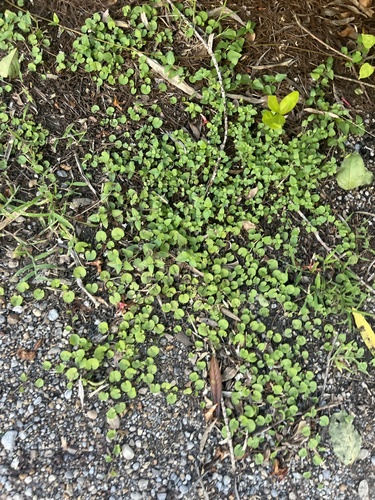
The Carolina ponysfoot is a low-growing perennial with distinctive kidney or hoof-shaped leaves. Its small, roundish leaves are bright green, often forming a dense mat. Tiny, inconspicuous greenish-white flowers bloom nestled among the foliage.
Category
PlantsRarity
Common
Danger
1/5 · Very low
Snaps
5
Carolina ponysfoot is sometimes used as a natural, low-maintenance lawn substitute.
Its common name comes from the shape of its leaves, which look like miniature pony hooves!
This resilient plant can form a living carpet, even growing through cracks in pavement.
You might need a magnifying glass to truly appreciate its tiny, star-shaped flowers!
Carolina ponysfoot can spread rapidly using creeping stems that root as they grow, helping it colonize open ground quickly.
Carolina ponysfoot has strong roots that allow it to grow in various soil types, helping it thrive even in poor conditions.
Carolina ponysfoot has tiny flowers that are often overlooked, helping it conserve energy and avoid being eaten by large browsers.
Lasioglossum vierecki
Visits its small flowers for nectar and pollen.
.JPG&width=800)
Sylvilagus floridanus
Rabbits may browse its tender leaves.

Odocoileus virginianus
Deer occasionally graze on its foliage.
Arion subfuscus
Provides ground cover and moisture for slugs.
Flowering plants are any plants that produce flowers as part of their reproductive cycle.
Edible plants are those parts of a plant that are considered safe for human consumption.
Describes plants that are particularly attractive and beneficial to a wide range of pollinating organisms.
Rapid growing plants exhibit accelerated growth rates, quickly increasing in size and biomass within a short period.

This habitat trait indicates species that can coexist with humans in urban and suburban environments, utilizing man-made structures and green spaces.
No aliases listed yet.
Danger
1/5 · Very low
Always check with an adult before touching or picking plants.
The easiest way to identify Carolina ponysfoot is to use the Snappit nature identifier app.
2-10 cm
30-90 cm
0.2-0.5 cm
Spring to Summer
No
None
Perennial
Zoom in to split clusters and explore where this object has been snapped.
Jun 19, 2026
BroadmoorPhoto attribution
(c) Elliot Greiner, some rights reserved (CC BY)
License: CC BY 4.0 ↗
Image may be shown cropped inside the card frame.

Louisiana, US
You might spot Brown Anole, White Ibis, and Duck.
View guide →

Arkansas, US
You might spot Pear-Shaped Puffball and American Beautyberry.
View guide →

Georgia, US
You might spot Eastern Gray Squirrel, Domestic Cat, and Anole.
View guide →

Florida, US
You might spot Yellow Pitcher Plant and Parrot Pitcher Plant.
View guide →
Arkansas, US
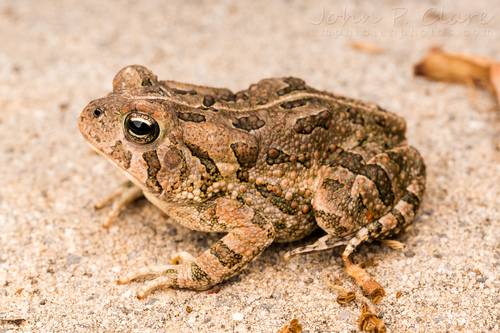
You might spot Fowler's Toad, Anole, and Eastern Lubber Grasshopper.
View guide →
Take the discovery with you
Snap it with Snappit to identify it, learn what makes it special, and add the discovery to your collection.








.jpg&width=800)



_001.jpg&width=800)



