





Cassin's Kingbird
Tyrannus vociferans
Cassin's Kingbird is a cheerful bird known for its loud calls and bright colors. It loves to perch on fences and trees, watching for tasty insects to eat.
Habitat: Grasslands
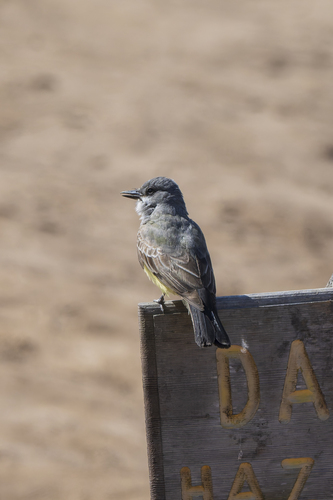
The Cassin's Kingbird has an olive-gray back, a striking yellow belly, and a dark tail. Its head is gray with a clean white chin and a faint dark mask around its eyes, making it distinct from other kingbirds.
Category
BirdsRarity
Common
Danger
1/5 · Very low
Snaps
13
Cassin's Kingbirds sometimes build their cup-shaped nests on odd places like windmills!
They have a loud, high-pitched 'chi-bew' call that sounds like a squeaky toy!
They often perch high up on wires or dead branches, like tiny sentinels!
This bold bird will bravely dive-bomb even big hawks to protect its territory!
Cassin's Kingbird has a brave personality that helps them chase away much larger predators, like hawks, from their nests.
Cassin's Kingbird can flash a patch of fiery orange feathers on its head when excited or agitated, a secret signal.
These clever birds mostly feast on flying insects, but also enjoy a juicy berry snack!
Apis mellifera
A key part of their insect diet.
Sambucus mexicana
Feeds on its ripe berries.

Quercus agrifolia
Often builds nests in its sturdy branches.
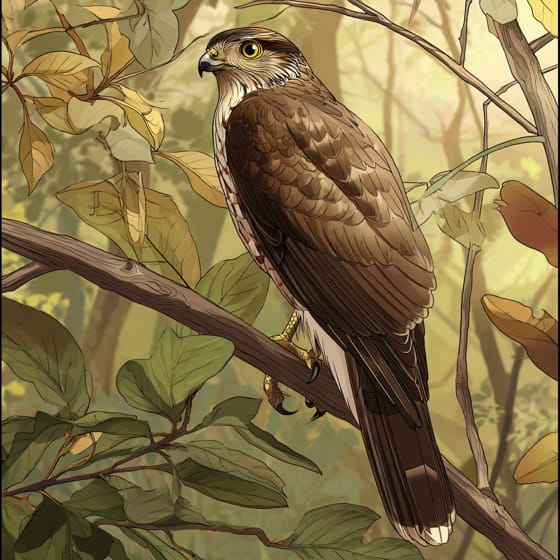
Accipiter cooperii
A potential predator, especially for young birds.
Feathered describes animals, primarily birds, possessing a covering of feathers.
Social animals live in organized groups, cooperating for survival benefits such as foraging, defense, and raising offspring.
Singing animals produce complex vocalizations, often for purposes of attracting mates, defending territory, or communicating within their species.
Colorful describes organisms or objects displaying a wide range of bright and distinct colors.

Grassland habitats are terrestrial biomes dominated by grasses and herbaceous plants, supporting a variety of grazing animals.

This trait identifies organisms whose diet primarily consists of insects and other small invertebrates.

Diurnal animals are primarily active during daylight hours, typically resting or sleeping at night.

This trait identifies organisms that exhibit exceptional swiftness in movement for hunting, escape, or travel.
No aliases listed yet.
Danger
1/5 · Very low
Enjoy watching birds from a distance and don't try to touch them.
The easiest way to identify Cassin's Kingbird is to use the Snappit nature identifier app.
20-23 cm
33-38 cm
0.038-0.05 kg
5-10 years
50 km/h
These clever birds mostly feast on flying insects, but also enjoy a juicy berry snack!
Grasslands
Zoom in to split clusters and explore where this object has been snapped.
May 25, 2026
Bolsa Chica Ecological ReservePhoto attribution
(c) William Walker, some rights reserved (CC BY)
License: CC BY 4.0 ↗
Image may be shown cropped inside the card frame.

New Mexico, US
You might spot Tree Cholla, Colorado Pinyon, and House Finch.
View guide →

California, US
You might spot Snowy Egret, Great Blue Heron, and Willet.
View guide →

California, US
You might spot Peridot Sweat Bee and Western Fence Lizard.
View guide →

California, US
You might spot Western Fence Lizard, Duck, and California Brittlebush.
View guide →

New Mexico, US
You might spot Vermilion Flycatcher, Turkey, and American Rubyspot.
View guide →

California, US
You might spot Giant Anteaters and Black-and-Gold Howler Monkey.
View guide →
Take the discovery with you
Snap it with Snappit to identify it, learn what makes it special, and add the discovery to your collection.




.jpg&width=800)








