_(39660989151).jpg&width=800)





Chukar
Alectoris chukar
Chukars are colorful birds that love to run and hide in the grass. They have a special call that sounds like a cheerful 'chuk-chuk'! These birds are great at blending in with their surroundings.
Habitat: Grasslands
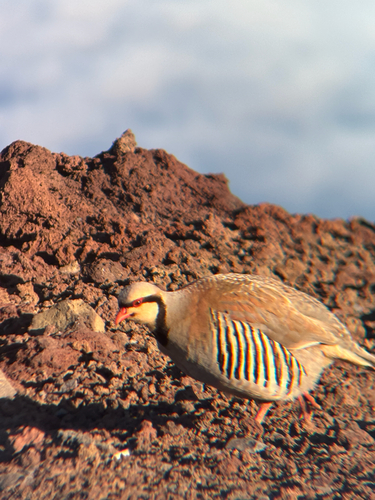
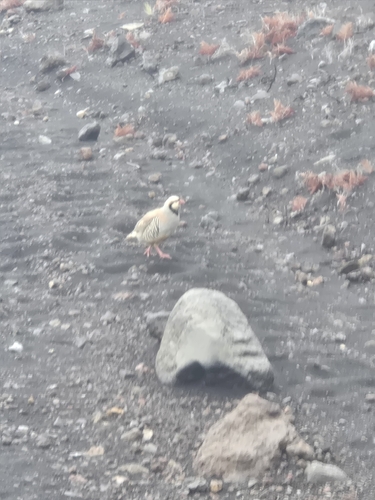
The Chukar is a plump, grey-brown bird with a distinctive black band running from its forehead, through the eyes, down the neck, and forming a gorget around a white throat. Its flanks are boldly striped black and white, and it has bright red legs and a red bill.
Category
BirdsRarity
Common
Danger
1/5 · Very low
Snaps
13
Chukar birds often live in large family groups called coveys, sometimes with over 20 birds!
Chukars will sometimes share their nesting duties with another female bird!
Their name, 'Chukar,' sounds just like their loud, repeated call!
They love to sunbathe, stretching out to soak up the warmth on rocks.
Chukar can quickly navigate steep, rocky slopes because of its strong legs and nimble footing.
Chukar has a loud, distinctive 'chukar-chukar' call that helps them warn their group of danger.
Chukar can take dust baths which helps them clean their feathers and remove parasites.
Chukar can burst into short, powerful flights to escape predators from cover.
These ground birds primarily eat seeds, grasses, and leaves, with some tasty insects added in!
Age differences: Young chicks eat more insects for protein, while adults mainly consume plants.
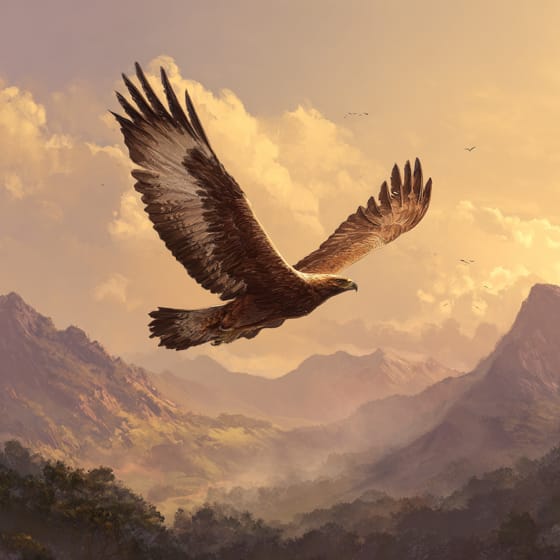
Aquila chrysaetos
A powerful bird of prey that hunts adult Chukars.
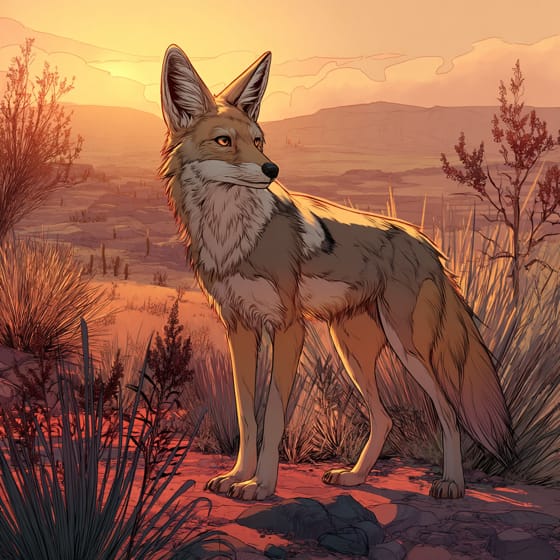
Canis latrans
A common predator that ambushes Chukars on the ground.

Bromus tectorum
Chukars consume the seeds of this common invasive grass.

Artemisia tridentata
Provides vital cover and some food for Chukars in arid habitats.
Feathered describes animals, primarily birds, possessing a covering of feathers.
Social animals live in organized groups, cooperating for survival benefits such as foraging, defense, and raising offspring.
Singing animals produce complex vocalizations, often for purposes of attracting mates, defending territory, or communicating within their species.
Camouflaged describes organisms that possess coloring or patterns that allow them to blend into their environment.

Colorful describes organisms or objects displaying a wide range of bright and distinct colors.

Grassland habitats are terrestrial biomes dominated by grasses and herbaceous plants, supporting a variety of grazing animals.

This trait characterizes organisms whose diet consists entirely or primarily of plant material.

Diurnal animals are primarily active during daylight hours, typically resting or sleeping at night.

This trait identifies organisms that exhibit exceptional swiftness in movement for hunting, escape, or travel.
No aliases listed yet.
Danger
1/5 · Very low
Always watch birds from a distance and be quiet so you don’t scare them away.
The easiest way to identify Chukar is to use the Snappit nature identifier app.
32-39 cm
47-53 cm
0.45-0.8 kg
3-5 years
70 km/h
These ground birds primarily eat seeds, grasses, and leaves, with some tasty insects added in!
Grasslands
Zoom in to split clusters and explore where this object has been snapped.
May 19, 2026
Crater Historic DistrictPhoto attribution
(c) happyslug, some rights reserved (CC BY)
License: CC BY 4.0 ↗
Image may be shown cropped inside the card frame.
Apr 9, 2026
Crater Historic DistrictPhoto attribution
(c) Mike Burnett, some rights reserved (CC BY)
License: CC BY 4.0 ↗
Image may be shown cropped inside the card frame.

Ohio, US
You might spot Blue-Fronted Dancer, American Rubyspot, and Fowler's Toad.
View guide →

California, US
You might spot Sand Blazingstar, Red Rock Tarplant, and Lacy Phacelia.
View guide →

Hawaii, US
You might spot 'āhinahina, Kūpaoa, and Chukar.
View guide →

Oregon, US
You might spot Balkan Toadflax, Big Sagebrush, and Western Juniper.
View guide →

California, US
You might spot Crotalus Cerastes, Creosote Bush, and Bladderpod.
View guide →

Hawaii, US
You might spot Māmane, Great Mullein, and Wand Mullein.
View guide →
Take the discovery with you
Snap it with Snappit to identify it, learn what makes it special, and add the discovery to your collection.




.jpg&width=800)







