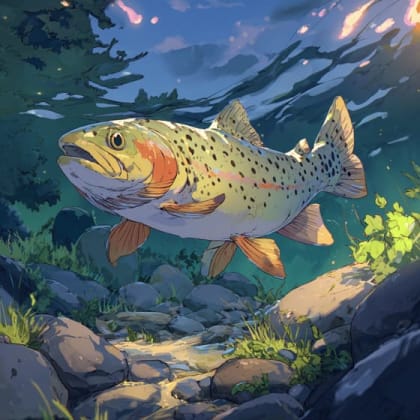
Chum Salmon
Oncorhynchus keta
Chum Salmon are shiny fish that live in the ocean and swim upstream to lay their eggs. They are known for their pinkish color and are a favorite food for many animals!
Habitat: Coastal areas and rivers
The Chum Salmon has a silvery-blue back and flanks when in the ocean, fading to white underneath. During spawning, they develop distinctive dark vertical bars or blotches on their sides, and males grow large, hooked jaws with prominent teeth, earning them the nickname 'dog salmon'.
Category
FishRarity
Common
Danger
1/5 · Very low
Snaps
Be the first to snap!
Chum Salmon are semelparous, meaning they only reproduce once in their life before they die.
Chum Salmon eggs, called roe, are an important food source for many animals, from birds to bears!
They are sometimes called 'dog salmon' because of the large, canine-like teeth males develop during spawning.
They are the most widespread salmon species in the Pacific, found from California to Korea!
Chum Salmon can navigate thousands of miles back to their exact birth river because of their incredible sense of smell.
Chum Salmon can dramatically change color from silver to vibrant greens and purples for camouflage and mating displays.
Chum Salmon can swim long distances upstream in rivers, even leaping over obstacles, to reach their spawning grounds.
Chum Salmon are ocean hunters, feasting on small marine creatures.
Age differences: Young salmon eat plankton and insect larvae; adults primarily eat small fish and invertebrates in the ocean.

Ursus arctos
Bears rely heavily on salmon during their spawning runs.

Haliaeetus leucocephalus
Eagles catch salmon from rivers and scavenge carcasses.
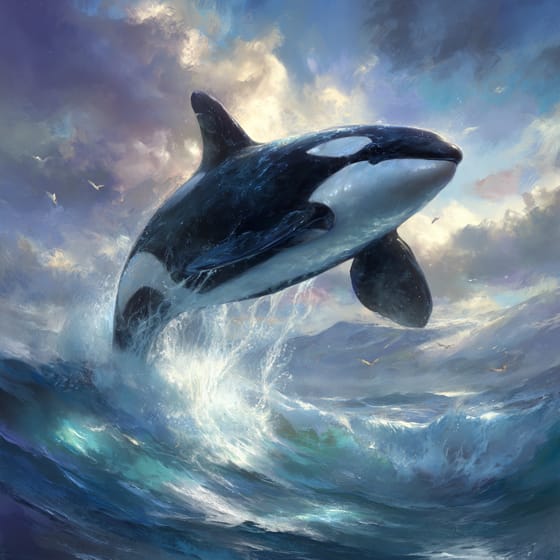
Orcinus orca
Pods of orcas prey on salmon in coastal ocean waters.
%2C_Point_Lobos%2C_CA%2C_US_-_May_2013.jpg&width=800)
Larus occidentalis
Gulls feed on salmon eggs and fry in estuaries.
Colorful describes organisms or objects displaying a wide range of bright and distinct colors.
Coastal habitats are dynamic environments located along the interface between land and sea, influenced by tides, waves, and saltwater.
This trait identifies organisms whose diet consists entirely or primarily of animal tissue.
Freshwater habitats include non-saline aquatic environments such as rivers, lakes, ponds, and wetlands, vital for numerous species.

Describes a species whose presence and role have a disproportionately large effect on its environment.

Aquatic habitats encompass environments where organisms live predominantly in water, including oceans, rivers, lakes, and wetlands.

Marine habitats encompass all saltwater environments of the Earth's oceans, supporting an immense diversity of aquatic life.

Migratory animals undertake seasonal movements from one region to another, typically in response to changes in climate or food availability.
Danger
1/5 · Very low
Always stay close to an adult when near water, as it can be slippery and deep.
The easiest way to identify Chum Salmon is to use the Snappit nature identifier app.
55-75 cm
4.5-10 kg
3-5 years
Chum Salmon are ocean hunters, feasting on small marine creatures.
30 km/h
Coastal areas and rivers
Pursuit
Zoom in to split clusters and explore where this object has been snapped.
Recent snaps will appear here as new observations are added.

US
You might spot Bald Eagle, Common Raven, and Salmonberry.
View guide →

Alaska, US
You might spot Bald Eagle, Salmonberry, and Ochre Sea Star.
View guide →
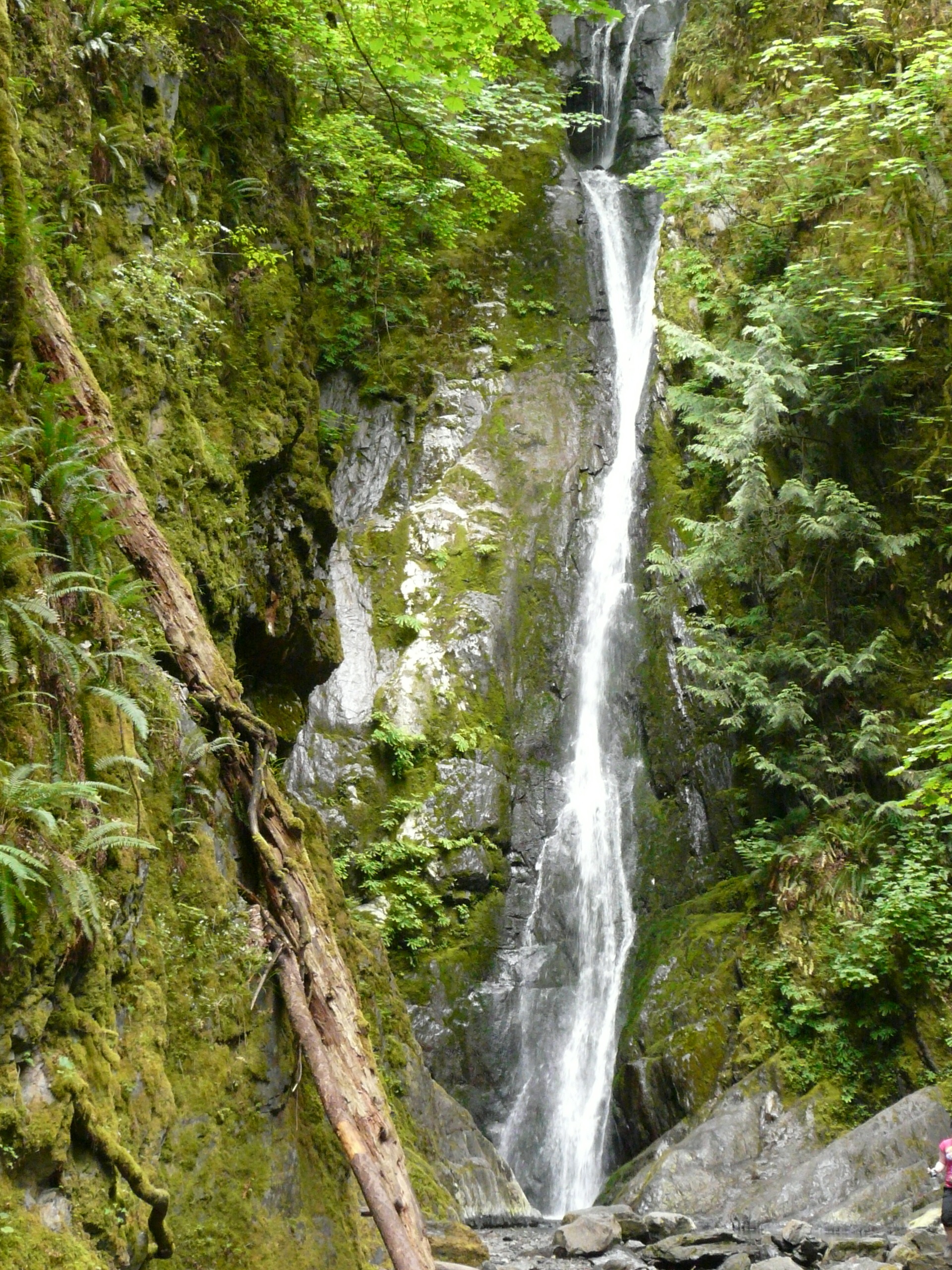
British Columbia, CA
You might spot Western Sword Fern and Western Redcedar.
View guide →
Take the discovery with you
Snap it with Snappit to identify it, learn what makes it special, and add the discovery to your collection.