





cinnamon fern
Osmundastrum cinnamomeum
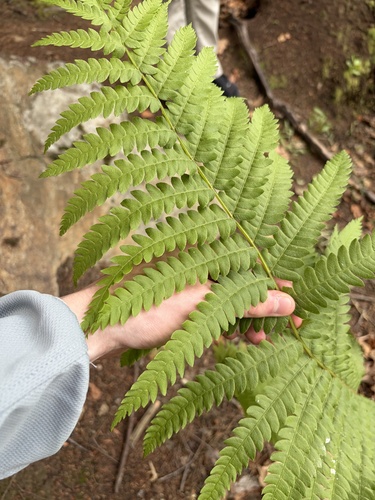
The cinnamon fern is a beautiful plant with feathery leaves that can grow quite tall. It loves to live in shady, wet places and adds a lovely green touch to the forest floor.
Habitat: Wetlands
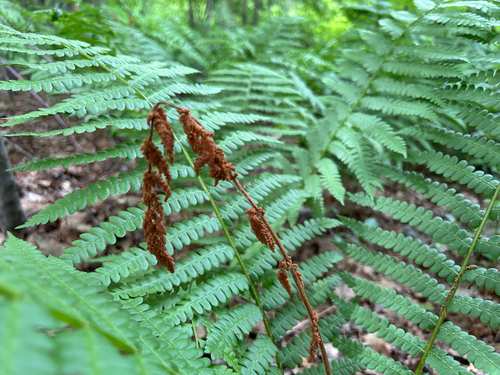
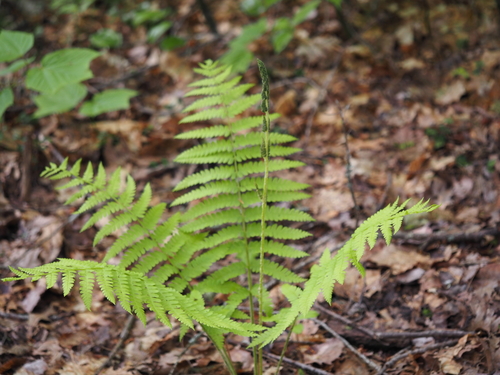
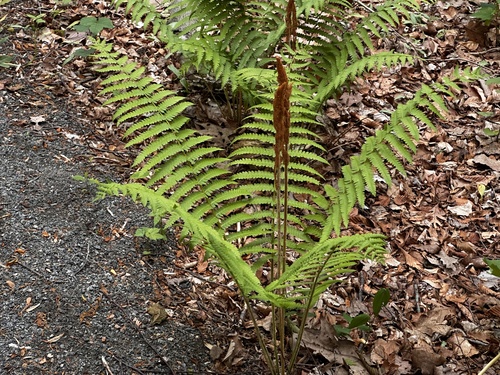
The cinnamon fern has large, vase-shaped clusters of bright green, sterile fronds that can grow over a meter tall. Distinctive fuzzy, cinnamon-brown fertile fronds emerge in spring, standing upright in the center before releasing spores and fading.
Category
PlantsRarity
Common
Danger
1/5 · Very low
Snaps
94
It forms a giant green "vase" shape in the forest!
Its fuzzy brown fronds look like cinnamon sticks but are full of spores.
Native Americans traditionally harvested and ate its young shoots.
This ancient fern species has existed on Earth for millions of years!
Cinnamon fern can reproduce by releasing tiny spores from its unique cinnamon-colored fronds, allowing new plants to sprout far away.
The fertile fronds of cinnamon fern are covered in woolly, cinnamon-colored hairs that help protect the developing spores inside.
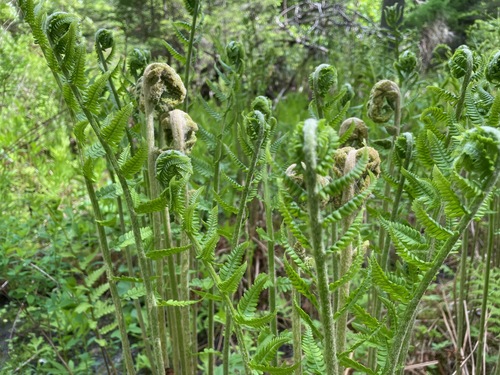
Cinnamon fern has young, coiled fronds called fiddleheads that can be safely eaten by humans as a tasty early spring vegetable.
Feathered describes animals, primarily birds, possessing a covering of feathers.
Deciduous plants periodically shed all their leaves, typically during autumn or dry seasons.
Grass-like plants are herbaceous plants that visually resemble true grasses, typically having long, narrow leaves.
Shade tolerant plants are adapted to grow and thrive in areas with low light levels, requiring less direct sunlight.

Spore-producing organisms reproduce by releasing small, often single-celled, reproductive units called spores.

Forest habitats are terrestrial environments dominated by dense tree cover, supporting a high diversity of plant and animal life.

This habitat trait identifies species found in wetlands, which are areas of land saturated with water, either permanently or seasonally, including marshes, swamps, and bogs.
No aliases listed yet.
Danger
1/5 · Very low
Always look but don’t touch wild plants, as some can be prickly or cause allergies.
The easiest way to identify cinnamon fern is to use the Snappit nature identifier app.
60-150 cm
60-120 cm
Yes
None
Perennial
Wetlands
Zoom in to split clusters and explore where this object has been snapped.
Jun 6, 2026
Harvard Shaker Village Historic DistrictPhoto attribution
(c) Lythronax246, some rights reserved (CC BY)
License: CC BY 4.0 ↗
Image may be shown cropped inside the card frame.
Jun 2, 2026
Cato Hill Historic DistrictPhoto attribution
(c) Branson Khounvichith, some rights reserved (CC BY-SA)
License: CC BY-SA 4.0 ↗
Image may be shown cropped inside the card frame.
May 29, 2026
Barre Downtown Historic DistrictPhoto attribution
(c) Tom Scavo, some rights reserved (CC BY)
License: CC BY 4.0 ↗
Image may be shown cropped inside the card frame.
May 28, 2026
Days Ferry Historic DistrictPhoto attribution
(c) Clay Gibbons, some rights reserved (CC BY)
License: CC BY 4.0 ↗
Image may be shown cropped inside the card frame.
May 14, 2026
Frelinghuysen ArboretumPhoto attribution
(c) gwt2102, some rights reserved (CC BY)
License: CC BY 4.0 ↗
Image may be shown cropped inside the card frame.

New Jersey, US
You might spot Garlic Mustard, Sensitive Fern, and Common Mugwort.
View guide →

South Carolina, US
You might spot American Alligator, Anole, and Great Blue Heron.
View guide →

Pennsylvania, US
You might spot Pinesap, Great Rhododendron, and Mountain Laurel.
View guide →
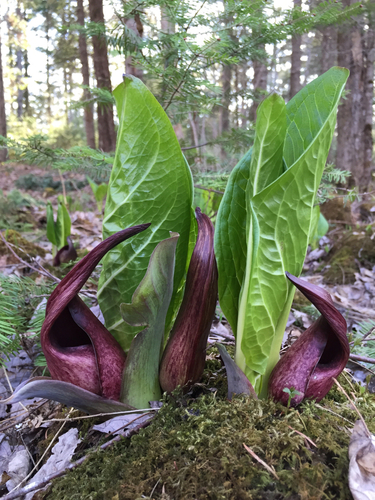
Connecticut, US
You might spot Eastern Skunk Cabbage and Eastern White Pine.
View guide →

New York, US
You might spot American Robin, Pond Slider, and Northern Cardinal.
View guide →

Maine, US
You might spot American Bullfrog and Three-Toothed Cinquefoil.
View guide →
Take the discovery with you
Snap it with Snappit to identify it, learn what makes it special, and add the discovery to your collection.




.JPG&width=800)



.jpg&width=800)



_001.jpg&width=800)



