





colt's-foot
Tussilago farfara
Colt's-foot is a bright yellow flower that blooms in early spring. Its leaves look like big, fuzzy hands and can be found near roadsides and in fields.
Habitat: Grasslands
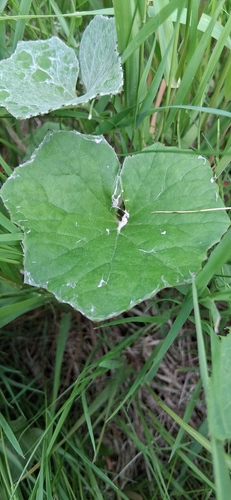
The colt's-foot has bright yellow, dandelion-like flowers that emerge on fuzzy stalks before any leaves appear. Its large, heart-shaped or hoof-shaped green leaves grow later in the season. These leaves often have white, felt-like undersides.
Category
PlantsRarity
Common
Danger
1/5 · Very low
Snaps
26
After its cheerful yellow flowers fade, they transform into fluffy white seed heads, just like dandelions!
Ancient Romans used its dried leaves to make soothing remedies for coughs and colds.
Colt's-foot is so hardy it can grow in places other plants can't, like disturbed soil or roadsides!
Its scientific name, Tussilago, comes from Latin, meaning 'cough expeller'!
Colt's-foot can push its flowers through frozen ground and snow, becoming one of the first blooms of spring.
Colt's-foot has long, creeping underground stems (rhizomes) that help it spread far and wide, even under tough ground.
Colt's-foot shows its yellow flowers first, then its big leaves grow much later, splitting up its yearly show.
Apis mellifera
Visits flowers for early nectar and pollen.
Bombus terrestris
An important early pollinator, feeding on its flowers.
Puccinia poarum
A specific fungus that often grows on its leaves.

Helix aspersa
Feeds on its leaves and stems.
Flowering plants are any plants that produce flowers as part of their reproductive cycle.
Spring blooming plants produce their flowers during the spring season, often signifying the end of winter and the start of new growth.
Medicinal plants possess chemical compounds that can be used for therapeutic purposes to treat illnesses or maintain health.
Edible plants are those parts of a plant that are considered safe for human consumption.

Grassland habitats are terrestrial biomes dominated by grasses and herbaceous plants, supporting a variety of grazing animals.

Describes plants that are particularly attractive and beneficial to a wide range of pollinating organisms.
No aliases listed yet.
Danger
1/5 · Very low
Always look but don't touch wild plants without asking an adult.
The easiest way to identify colt's-foot is to use the Snappit nature identifier app.
10-30 cm
15-40 cm
2-3 cm
Early spring
No
Mild
Perennial
Zoom in to split clusters and explore where this object has been snapped.
Jun 16, 2026
Parc linéaire de la rivière Saint-CharlesPhoto attribution
no rights reserved
License: CC0 1.0 ↗
Image may be shown cropped inside the card frame.

Pennsylvania, US
You might spot Pinesap, Great Rhododendron, and Mountain Laurel.
View guide →

Massachusetts, US
You might spot Common Eastern Bumble Bee and Eastern Skunk Cabbage.
View guide →

Pennsylvania, US
You might spot Eastern Tiger Swallowtail and Slowpoke Moth.
View guide →

New York, US
You might spot Allegheny Mountain Dusky Salamander.
View guide →

Massachusetts, US
You might spot Hemlock Woolly Adelgid, Eastern Newt, and Red Trillium.
View guide →

Michigan, US
You might spot Eastern Skunk Cabbage and Kirtland's Warbler.
View guide →
Take the discovery with you
Snap it with Snappit to identify it, learn what makes it special, and add the discovery to your collection.








.jpg&width=800)



_001.jpg&width=800)



