





common bracken
Pteridium aquilinum
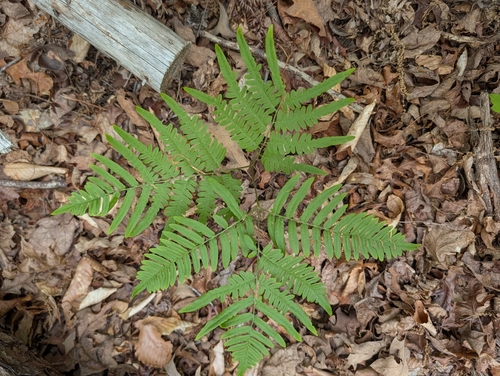
Common bracken is a tall, leafy plant that grows in many places like forests and fields. Its big, green fronds look like giant hands reaching for the sky!
Habitat: Forests
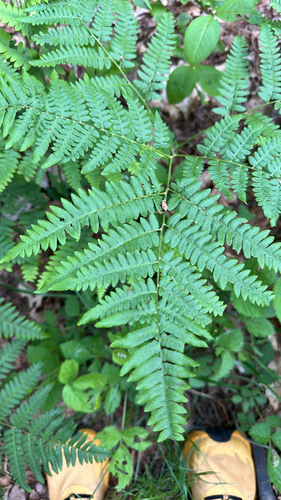
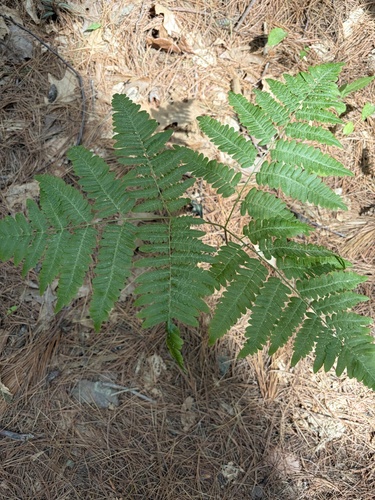
The common bracken has large, distinctive triangular fronds that are typically bright green, often forming dense, carpet-like patches. These fronds emerge from the ground, unfurling like scrolls, and can turn yellow to brown in autumn.
Category
PlantsRarity
Common
Danger
2/5 · Low
Snaps
45
Common bracken is one of the oldest plant species, with relatives dating back to dinosaur times!
Historically, people used bracken ash to make soap and even as an ingredient for glass!
Its tiny spores can drift high on the wind, traveling for miles to sprout in new places!
You can find this super adaptable fern on every continent except Antarctica. It's a world traveler!
Common bracken has rapidly spreading underground stems (rhizomes) that help it quickly colonize large areas.
Common bracken can release chemicals into the soil that stop other plants from growing nearby, helping it dominate its space.
Common bracken has deep rhizomes that can survive fires, allowing it to quickly regrow even after intense burns.
Hypena obsitalis
Larvae feed on its fronds
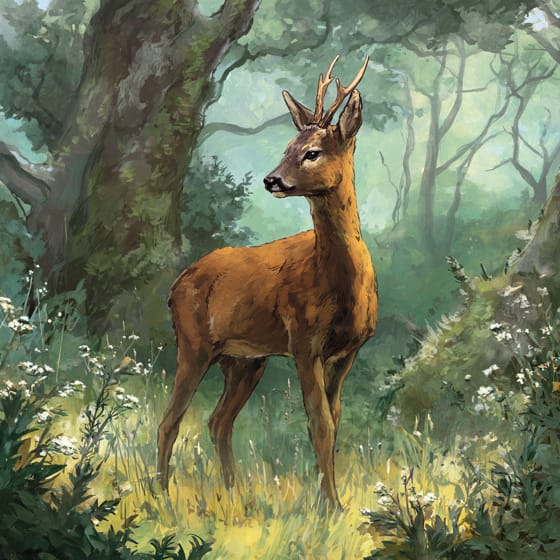
Capreolus capreolus
Often hides among dense bracken
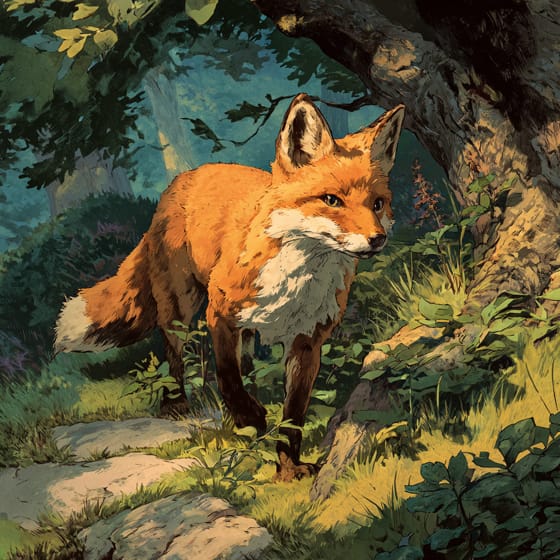
Vulpes vulpes
Uses dense patches for cover
Deciduous plants periodically shed all their leaves, typically during autumn or dry seasons.
Broadleaf trees are angiosperms characterized by flat, wide leaves that are typically shed annually in temperate climates.
Medicinal plants possess chemical compounds that can be used for therapeutic purposes to treat illnesses or maintain health.
This human use trait identifies species that yield natural fibers, used by humans for textiles, rope, paper, and other manufactured goods.

Rapid growing plants exhibit accelerated growth rates, quickly increasing in size and biomass within a short period.

Forest habitats are terrestrial environments dominated by dense tree cover, supporting a high diversity of plant and animal life.

Giant describes organisms or objects of significantly larger size than average for their species or type.
No aliases listed yet.
Danger
2/5 · Low
Don't eat any part of the bracken plant, as it can be harmful.
The easiest way to identify common bracken is to use the Snappit nature identifier app.
50-200 cm
50-150 cm
No
High
Perennial
Forests
Zoom in to split clusters and explore where this object has been snapped.
Jun 6, 2026
Days Ferry Historic DistrictPhoto attribution
(c) Doug Suitor, some rights reserved (CC BY)
License: CC BY 4.0 ↗
Image may be shown cropped inside the card frame.
Jun 6, 2026
Harvard Shaker Village Historic DistrictPhoto attribution
(c) Lythronax246, some rights reserved (CC BY)
License: CC BY 4.0 ↗
Image may be shown cropped inside the card frame.
May 2, 2026
Scottsville Historic DistrictPhoto attribution
(c) James Weaver, some rights reserved (CC BY)
License: CC BY 4.0 ↗
Image may be shown cropped inside the card frame.

South Carolina, US
You might spot American Alligator, Anole, and Great Blue Heron.
View guide →

Pennsylvania, US
You might spot Mountain Laurel, Ghost Pipe, and Sweetfern.
View guide →

Pennsylvania, US
You might spot Pinesap, Great Rhododendron, and Mountain Laurel.
View guide →

New York, US
You might spot Dame's Rocket, American Pokeweed, and American Toad.
View guide →

Maine, US
You might spot American Bullfrog and Three-Toothed Cinquefoil.
View guide →

Washington, US
You might spot Pacific Banana Slug and Oregon Forestsnail.
View guide →
Take the discovery with you
Snap it with Snappit to identify it, learn what makes it special, and add the discovery to your collection.







.jpg&width=800)


_001.jpg&width=800)




