





common pawpaw
Asimina triloba
The common pawpaw is a small tree that grows delicious, sweet fruits. Its leaves are big and green, and the tree can be found in many forests across North America.
Habitat: Forests
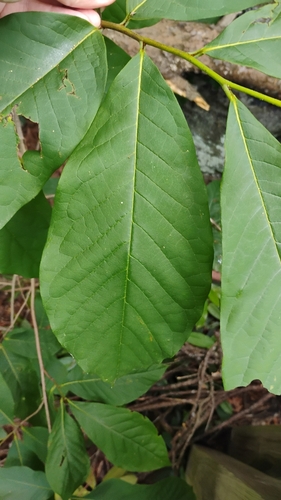
The common pawpaw is a small deciduous tree with large, oblong leaves that turn bright yellow in fall. Its unique bell-shaped, purplish-brown flowers appear before the leaves. The kidney-shaped fruit ripens from green to yellow-brown.
Category
PlantsRarity
Common
Danger
1/5 · Very low
Snaps
54
George Washington's favorite dessert was chilled pawpaw fruit!
Its unusual flowers are pollinated by flies and beetles, not bees!
Pawpaw leaves contain natural insecticides, protecting them from most pests.
The pawpaw is North America's largest native edible fruit!
common pawpaw has flowers that smell like rotting meat to attract flies and beetles for pollination.
common pawpaw has special chemicals in its leaves and twigs that deter most insects and deer.
common pawpaw can grow well in the shade of larger trees, helping it thrive in forest environments.

Papilio troilus
larvae eat its leaves for food
Didelphis virginiana
enjoys the sweet, ripe pawpaw fruits
Calliphora vicina
attracted to its unusual smelling flowers

Procyon lotor
feasts on the fallen, ripe pawpaw fruits
Deciduous plants periodically shed all their leaves, typically during autumn or dry seasons.
Broadleaf trees are angiosperms characterized by flat, wide leaves that are typically shed annually in temperate climates.
Fragrant flowers emit a pleasant aroma, often to attract pollinators or for defense.
Fruit-bearing plants produce fruits, which are the mature ovaries of flowering plants containing seeds.

A fruit tree is a perennial tree that produces fruit, which is edible to humans or animals.

Edible plants are those parts of a plant that are considered safe for human consumption.

Describes plants that are particularly attractive and beneficial to a wide range of pollinating organisms.

Forest habitats are terrestrial environments dominated by dense tree cover, supporting a high diversity of plant and animal life.
Danger
1/5 · Very low
Always ask an adult before picking or eating any fruit from trees.
The easiest way to identify common pawpaw is to use the Snappit nature identifier app.
300-1000 cm
200-600 cm
2.5-5 cm
Spring
Yes
Mild
Perennial
Zoom in to split clusters and explore where this object has been snapped.
Jun 6, 2026
Nuttallburg Coal Mining Complex and Town Historic DistrictPhoto attribution
no rights reserved
License: CC0 1.0 ↗
Image may be shown cropped inside the card frame.

Virginia, US
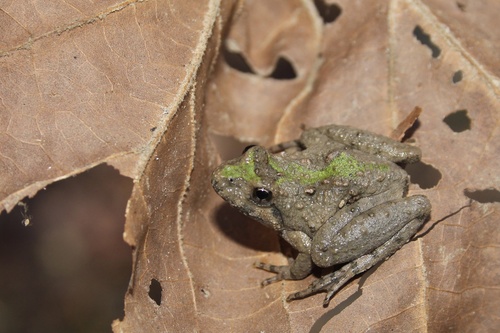
You might spot Cope's Gray Tree Frog and Basilica Orbweaver.
View guide →
Maryland, US
You might spot Northern Cricket Frog and Common Whitetail.
View guide →

Maryland, US
You might spot Osprey, Duck, and Spotted Lanternfly.
View guide →

Maryland, US
You might spot Common Pawpaw, Zebra Swallowtail, and Bald Eagle.
View guide →

Maryland, US
You might spot Common Pawpaw and Feather-Edged Petrophila.
View guide →

Virginia, US
You might spot Garlic Mustard, Spotted Lanternfly, and Bloodroot.
View guide →
Take the discovery with you
Snap it with Snappit to identify it, learn what makes it special, and add the discovery to your collection.







.jpg&width=800)

_001.jpg&width=800)



