





desert willow
Chilopsis linearis
The desert willow is a beautiful tree that grows in dry places. It has long, slender leaves and pretty flowers that attract butterflies and hummingbirds. This tree loves the sun and can survive in hot, sandy areas.
Habitat: Desert
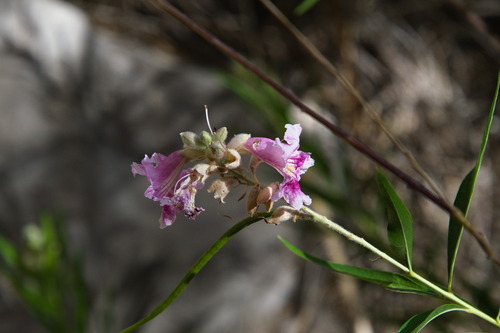
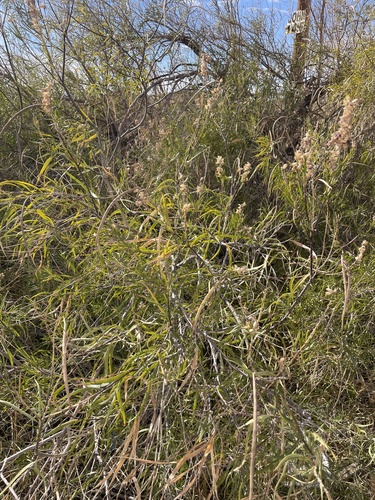
The desert willow is a small, often multi-stemmed tree or large shrub with long, slender, willow-like leaves. It boasts showy, trumpet-shaped flowers, typically in shades of pink, lavender, white, or magenta, sometimes with yellow or purple markings inside. Its distinctive, long, narrow seed pods resemble green beans.
Category
PlantsRarity
Common
Danger
1/5 · Very low
Snaps
10
Hummingbirds eagerly sip sweet nectar from its beautiful blossoms!
It looks like a willow, but is actually a type of trumpet vine!
Its long seed pods split open to release fuzzy, winged seeds.
Native Americans traditionally used its strong wood for building and tools.
The desert willow has a deep taproot system that helps it find precious groundwater in dry desert soils.
Its long, narrow leaves help the desert willow reduce water loss through evaporation, staying hydrated in the heat.
Desert willow's vibrant, trumpet-shaped flowers attract buzzing bees and hummingbirds for successful pollination.
Apis mellifera
collects nectar from flowers

Archilochus alexandri
sips nectar from blossoms
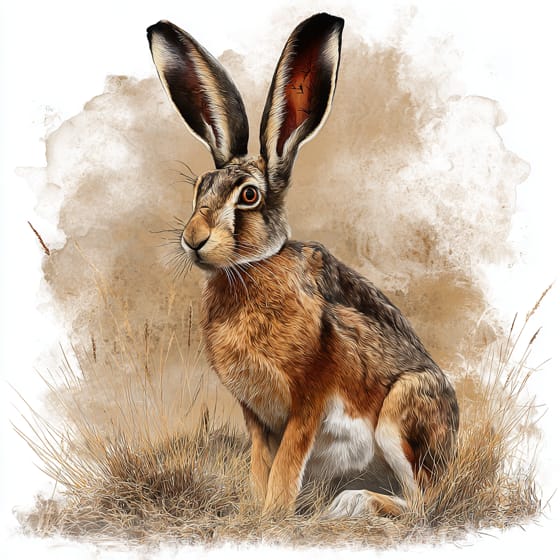
Lepus californicus
browses on young shoots
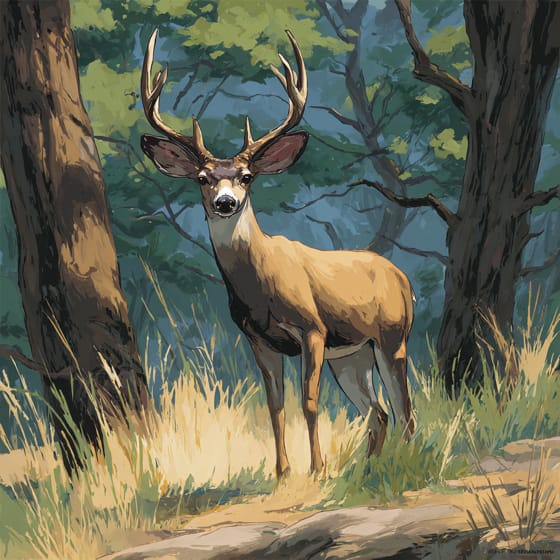
Odocoileus hemionus
grazes on its foliage
Bell-shaped flowers possess petals fused or arranged to form a cup-like or campanulate structure resembling a bell.
Deciduous plants periodically shed all their leaves, typically during autumn or dry seasons.
Flowering plants are any plants that produce flowers as part of their reproductive cycle.
Shade tolerant plants are adapted to grow and thrive in areas with low light levels, requiring less direct sunlight.

Summer blooming plants produce their flowers during the summer season, often providing vibrant color when many other plants have finished.

Broadleaf trees are angiosperms characterized by flat, wide leaves that are typically shed annually in temperate climates.

Drought-tolerant plants can survive and flourish in conditions with limited water availability.

Describes plants that are particularly attractive and beneficial to a wide range of pollinating organisms.

Desert habitats are arid regions characterized by extremely low precipitation and often extreme temperatures, supporting specialized flora and fauna.

This trait characterizes organisms with an exceptionally long lifespan compared to others of their kind.
No aliases listed yet.
Danger
1/5 · Very low
Always stay on paths when exploring nature and don't touch plants without asking an adult.
The easiest way to identify desert willow is to use the Snappit nature identifier app.
150-760 cm
150-760 cm
2-4 cm
Late spring to fall
No
None
Perennial
Zoom in to split clusters and explore where this object has been snapped.
May 5, 2026
Rancho EstellePhoto attribution
(c) Mike Ostrowski, some rights reserved (CC BY-SA)
License: CC BY-SA 4.0 ↗
Image may be shown cropped inside the card frame.
Nov 24, 2024
Calico Early Man SitePhoto attribution
no rights reserved
License: CC0 1.0 ↗
Image may be shown cropped inside the card frame.

California, US
You might spot Frémont's Phacelia and Devil's Spineflower.
View guide →

Texas, US
You might spot Honey Mesquite, Anacua, and Alamo Vine.
View guide →

California, US
You might spot Creosote Bush, Desert Holly, and Cottontop Cactus.
View guide →

US
You might spot Creosote Bush, Great-Tailed Grackle, and Ocotillo.
View guide →

New Mexico, US
You might spot Soaptree Yucca and White-Winged Dove.
View guide →

Arizona, US
You might spot Mexican Jay, Yarrow's Spiny Lizard, and White-Tailed Deer.
View guide →
Take the discovery with you
Snap it with Snappit to identify it, learn what makes it special, and add the discovery to your collection.







.jpg&width=800)


_001.jpg&width=800)


