





dwarf ginseng
Panax trifolius
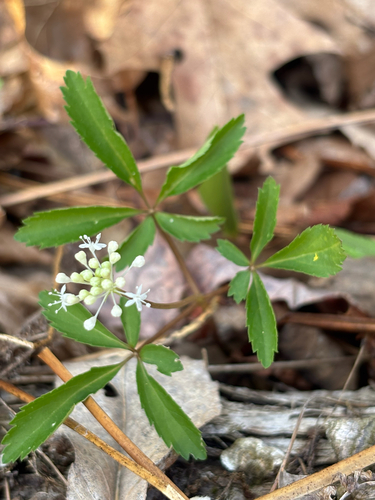
Dwarf ginseng is a small plant with lovely green leaves and tiny white flowers. It grows close to the ground in shady places and is part of the ginseng family, which is known for its special roots.
Habitat: Forests
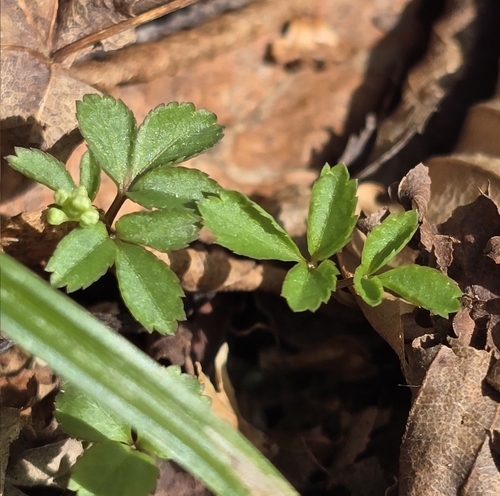
The dwarf ginseng is a petite perennial plant, 5-20 cm tall, with a slender stem topped by a single whorl of deeply divided leaves, usually in sets of three to five leaflets. It bears a small, globe-like cluster of tiny white to pale pinkish flowers, later replaced by bright red berries.
Category
PlantsRarity
Common
Danger
1/5 · Very low
Snaps
14
Dwarf ginseng flowers open before most trees get their leaves, soaking up precious early sunlight.
Instead of leaves appearing one by one, dwarf ginseng grows a single 'umbrella' of leaves at its top!
Its underground root looks like a miniature radish, but it's part of the powerful ginseng family!
This tiny plant is named 'dwarf' because it's so much smaller than its famous cousin, American ginseng!
Dwarf ginseng stores energy in its small, round root, allowing it to sprout and flower super early in spring before forest trees leaf out.
This plant produces bright red berries that attract birds and small mammals, helping to spread its seeds far and wide in the forest.
Bombus impatiens
One of the first bees active, it pollinates early flowers.
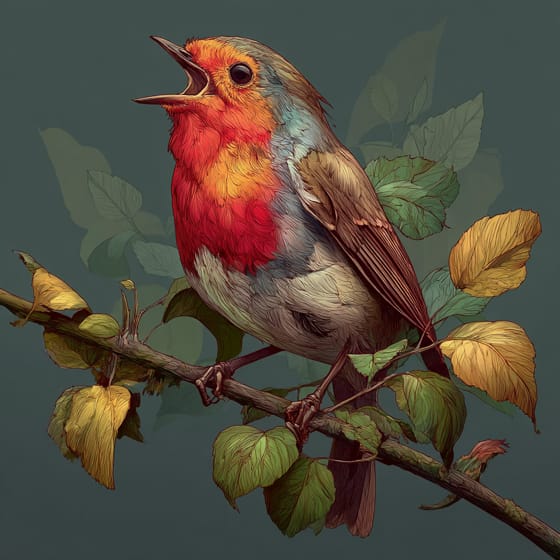
Turdus migratorius
Consumes the bright red berries, helping to spread seeds.
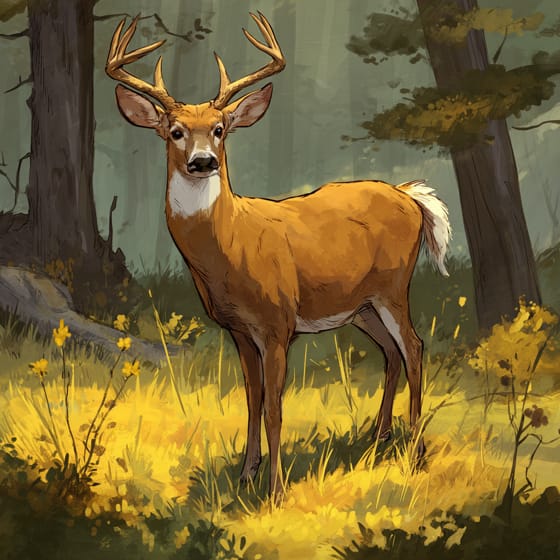
Odocoileus virginianus
Deer occasionally browse on its leaves and stems.
Deciduous plants periodically shed all their leaves, typically during autumn or dry seasons.
Flowering plants are any plants that produce flowers as part of their reproductive cycle.
Shade tolerant plants are adapted to grow and thrive in areas with low light levels, requiring less direct sunlight.
Medicinal plants possess chemical compounds that can be used for therapeutic purposes to treat illnesses or maintain health.

Edible plants are those parts of a plant that are considered safe for human consumption.

Forest habitats are terrestrial environments dominated by dense tree cover, supporting a high diversity of plant and animal life.

Pertaining to species that are significantly smaller than typical or average for their kind.

Endangered status indicates a species is at a very high risk of extinction in the wild in the near future.
No aliases listed yet.
Danger
1/5 · Very low
Don't touch plants unless you know they are safe. Always ask an adult first!
The easiest way to identify dwarf ginseng is to use the Snappit nature identifier app.
5-20 cm
0.3-0.4 cm
Early spring
Yes
None
Perennial
Insect
Zoom in to split clusters and explore where this object has been snapped.
May 5, 2026
Norway Historic DistrictPhoto attribution
(c) JSReiff, some rights reserved (CC BY)
License: CC BY 4.0 ↗
Image may be shown cropped inside the card frame.
Apr 11, 2026
New Boston Village Historic DistrictPhoto attribution
(c) Jonas Katona, some rights reserved (CC BY)
License: CC BY 4.0 ↗
Image may be shown cropped inside the card frame.

Pennsylvania, US
You might spot Pinesap, Great Rhododendron, and Mountain Laurel.
View guide →

Maryland, US
You might spot American Cancer-Root and Rue Anemone.
View guide →
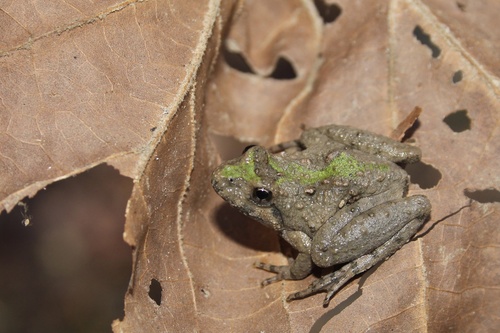
Maryland, US
You might spot Northern Cricket Frog and Common Whitetail.
View guide →

Pennsylvania, US
You might spot Downy Rattlesnake Plantain and Striped Wintergreen.
View guide →

Massachusetts, US
You might spot Eastern Newt, Ghost Pipe, and Partridgeberry.
View guide →
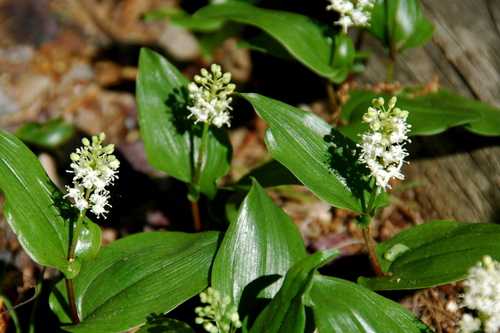
Connecticut, US
You might spot Canada Mayflower and Eastern White Pine.
View guide →
Take the discovery with you
Snap it with Snappit to identify it, learn what makes it special, and add the discovery to your collection.






.jpg&width=800)



_001.jpg&width=800)


