





eastern redcedar
Juniperus virginiana
The eastern redcedar is a beautiful tree with soft, green needles and a lovely smell. It can grow tall and provides homes for many birds and animals.
Habitat: Forests
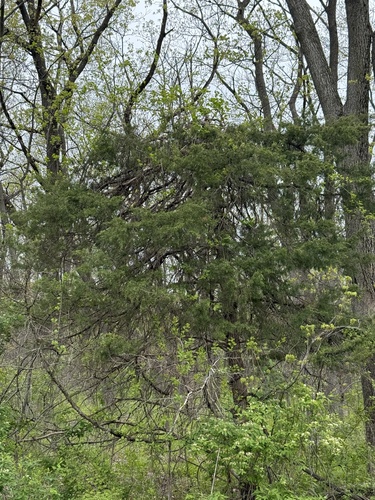
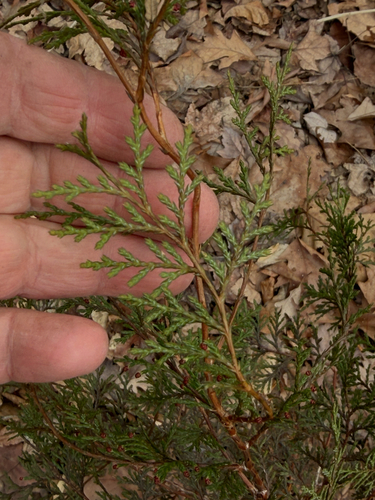
The eastern redcedar is an evergreen conifer with a dense, conical crown and distinctive reddish-brown bark that peels in fibrous strips. Its leaves are usually a mix of sharp, needle-like juvenile foliage and pressed, scale-like mature foliage, often with a blue-green hue.
Category
PlantsRarity
Common
Danger
1/5 · Very low
Snaps
33
Early American settlers used redcedar heartwood to build log cabins and fences.
Its 'berries' are actually tiny cones that smell sweet when crushed!
The wood of a redcedar is often used to make pencils because it's soft yet strong.
Unlike most trees, its wood is so dense it often sinks in water!
Eastern redcedar can grow in poor soils and disturbed land, helping it colonize new areas where other trees struggle.
Eastern redcedar produces small, bluish, berry-like cones that provide essential food for many birds through winter.
Eastern redcedar has aromatic wood that acts as a natural insect repellent, helping it defend against some pests.
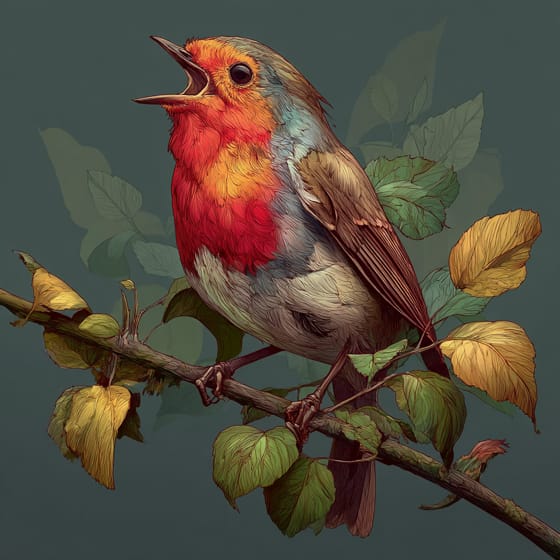
Turdus migratorius
Feasts on its nutrient-rich 'berries' in winter.
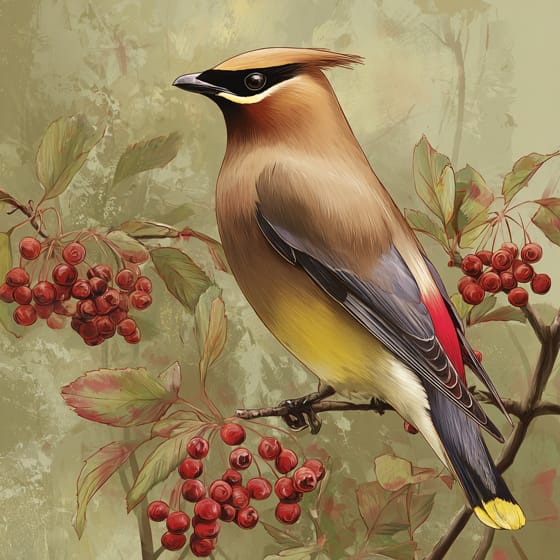
Bombycilla cedrorum
Loves to eat its 'berries', spreading seeds far and wide.
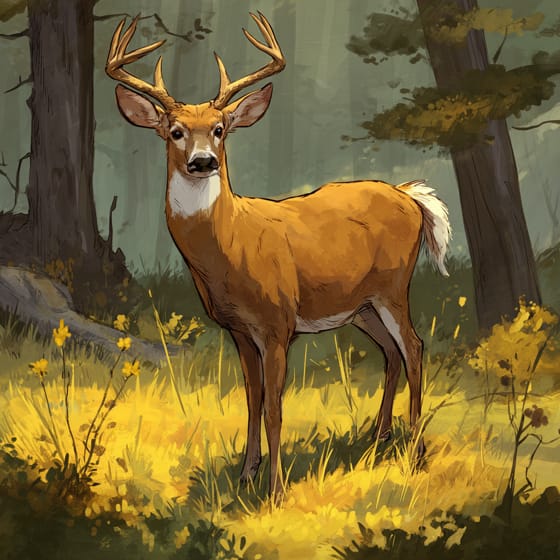
Odocoileus virginianus
Browses on its foliage, especially during harsh winters.

Gymnosporangium juniperi-virginianae
Causes galls on branches, needing apple trees to complete its life cycle.
Aromatic plants produce and emit fragrant volatile organic compounds, often for defense or to attract pollinators.
Broadleaf trees are angiosperms characterized by flat, wide leaves that are typically shed annually in temperate climates.
Coniferous plants are typically evergreen, bearing needles or scales and reproductive cones.
Evergreen plants retain their foliage throughout the year, never shedding all their leaves at once.

Fruit-bearing plants produce fruits, which are the mature ovaries of flowering plants containing seeds.

Drought-tolerant plants can survive and flourish in conditions with limited water availability.

Edible plants are those parts of a plant that are considered safe for human consumption.

Timber refers to wood that has been prepared for use in building and carpentry.

Forest habitats are terrestrial environments dominated by dense tree cover, supporting a high diversity of plant and animal life.

This trait characterizes organisms with an exceptionally long lifespan compared to others of their kind.

Describes a species whose presence and role have a disproportionately large effect on its environment.
No aliases listed yet.
Danger
1/5 · Very low
Stay on paths when exploring near trees and don't climb without an adult.
The easiest way to identify eastern redcedar is to use the Snappit nature identifier app.
500-3000 cm
250-800 cm
Early Spring
No
Mild
Perennial
Wind
Zoom in to split clusters and explore where this object has been snapped.
May 12, 2026
Richard Bong State Recreation AreaPhoto attribution
(c) Brandon Corder, some rights reserved (CC BY)
License: CC BY 4.0 ↗
Image may be shown cropped inside the card frame.
Mar 15, 2026
South Mountain ReservationPhoto attribution
(c) Tom Pollard, some rights reserved (CC BY)
License: CC BY 4.0 ↗
Image may be shown cropped inside the card frame.

Tennessee, US
You might spot American Robin, Northern Cardinal, and Eastern Chipmunk.
View guide →

New Jersey, US
You might spot Common Mugwort and White-Tailed Deer.
View guide →

Georgia, US
You might spot Eastern Gray Squirrel, Domestic Cat, and American Robin.
View guide →

Alabama, US
You might spot Cave Salamander and Pink Lady's Slipper.
View guide →

Louisiana, US
You might spot Heavenly Bamboo, Rio Grande Copper Lily, and Ballmoss.
View guide →

Wisconsin, US
You might spot Eastern Redcedar, Rock Polypody, and Vulture.
View guide →
Take the discovery with you
Snap it with Snappit to identify it, learn what makes it special, and add the discovery to your collection.








.jpg&width=800)


_001.jpg&width=800)

