





Eastern Teaberry
Gaultheria procumbens
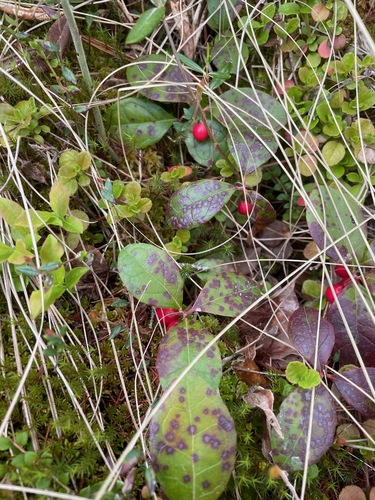
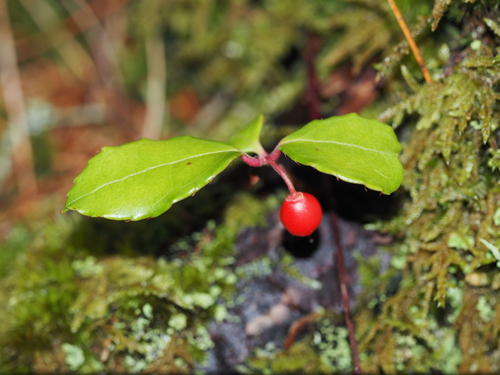
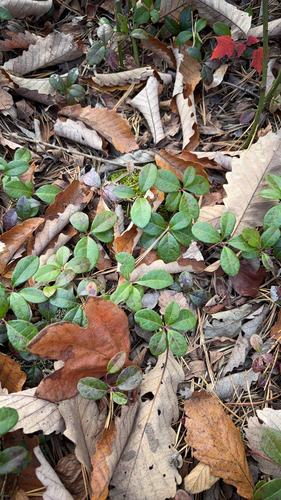
Eastern Teaberry is a small plant with shiny green leaves and bright red berries. It grows close to the ground and loves shady spots in the forest. The berries are sweet and can be used to make tasty treats!
Habitat: Forests
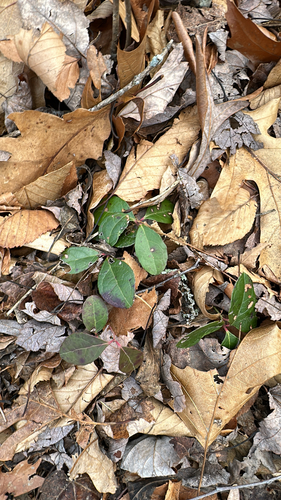
The Eastern Teaberry is a low-growing plant with shiny, dark green leaves that often turn reddish-purple in winter. Its small, white or pale pink, bell-shaped flowers bloom in summer, followed by bright red, round berries that persist through the colder months.
Category
PlantsRarity
Common
Danger
1/5 · Very low
Snaps
25
Even when covered by snow, its green leaves continue to make food for the plant!
Its berries have a surprising minty, sweet taste, like a forest candy!
Native Americans once used its crushed leaves as a natural pain reliever.
The famous 'wintergreen' flavor in candies and toothpaste comes from this plant!
Eastern Teaberry has tough, waxy leaves that stay green all year, helping it make food even in winter!
This plant produces a special minty oil in its leaves that helps protect it from hungry nibblers.
Its bright red berries stay on the plant through winter, providing food for animals when other snacks are scarce.
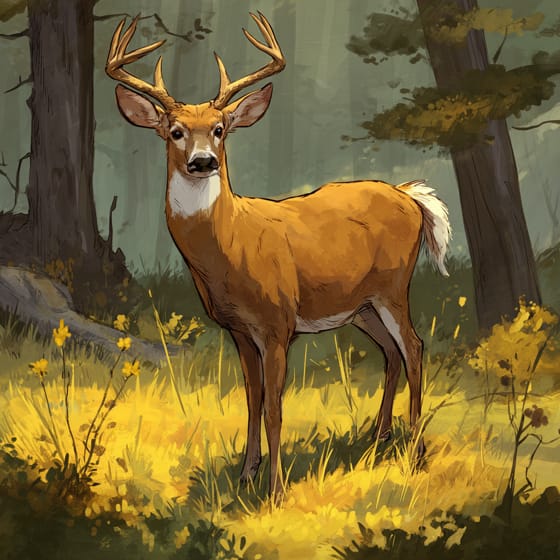
Odocoileus virginianus
eats leaves and twigs
Meleagris gallopavo
eats its berries

Bonasa umbellus
eats its berries
Bombus impatiens
collects nectar from flowers
Aromatic plants produce and emit fragrant volatile organic compounds, often for defense or to attract pollinators.
Shade tolerant plants are adapted to grow and thrive in areas with low light levels, requiring less direct sunlight.
A shrub is a woody plant smaller than a tree, typically with multiple stems branching from or near the ground.
Evergreen plants retain their foliage throughout the year, never shedding all their leaves at once.

Fragrant flowers emit a pleasant aroma, often to attract pollinators or for defense.

Fruit-bearing plants produce fruits, which are the mature ovaries of flowering plants containing seeds.

Medicinal plants possess chemical compounds that can be used for therapeutic purposes to treat illnesses or maintain health.

Edible plants are those parts of a plant that are considered safe for human consumption.

Forest habitats are terrestrial environments dominated by dense tree cover, supporting a high diversity of plant and animal life.
Danger
1/5 · Very low
Always check with an adult before tasting any berries or plants.
The easiest way to identify Eastern Teaberry is to use the Snappit nature identifier app.
5-15 cm
30-100 cm
0.5-1 cm
Late spring to mid-summer
Yes
Mild
Perennial
Zoom in to split clusters and explore where this object has been snapped.
May 29, 2026
Barre Downtown Historic DistrictPhoto attribution
(c) Tom Scavo, some rights reserved (CC BY)
License: CC BY 4.0 ↗
Image may be shown cropped inside the card frame.
May 16, 2026
Pennellville Historic DistrictPhoto attribution
(c) Clay Gibbons, some rights reserved (CC BY)
License: CC BY 4.0 ↗
Image may be shown cropped inside the card frame.
Jan 15, 2026
Oak Knoll Wildlife SanctuaryPhoto attribution
(c) John Baur, some rights reserved (CC BY)
License: CC BY 4.0 ↗
Image may be shown cropped inside the card frame.
Oct 25, 2025
Abram S. Hewitt State ForestPhoto attribution
no rights reserved
License: CC0 1.0 ↗
Image may be shown cropped inside the card frame.

Pennsylvania, US
You might spot Mountain Laurel, Ghost Pipe, and Sweetfern.
View guide →

Vermont, US
You might spot Eastern White Pine, Staghorn Sumac, and Box Elder.
View guide →

Michigan, US
You might spot Eastern Skunk Cabbage and Kirtland's Warbler.
View guide →

West Virginia, US
You might spot Spotted Lanternfly and Eastern Box Turtle.
View guide →

Maine, US
You might spot Rugosa Rose and European Green Crab.
View guide →

Massachusetts, US
You might spot Eastern Skunk Cabbage and Sweet Pepperbush.
View guide →
Take the discovery with you
Snap it with Snappit to identify it, learn what makes it special, and add the discovery to your collection.








.jpg&width=800)


_001.jpg&width=800)

