





Fall Webworm Moth
Hyphantria cunea
The Fall Webworm Moth is a fuzzy little insect that loves to spin big webs in trees. These webs can look like fluffy cotton candy and are home to many caterpillars that turn into beautiful moths.
Habitat: Forests
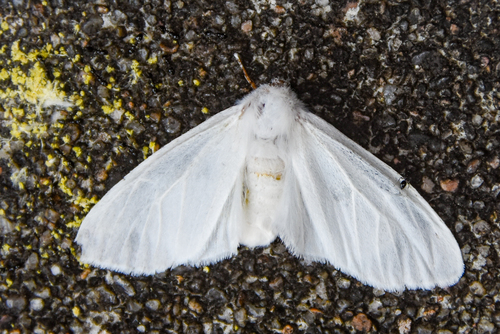
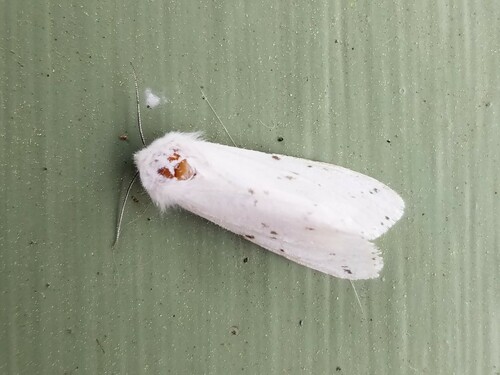
The Fall Webworm Moth has a fuzzy, stout white body and mostly pure white wings, though some individuals exhibit small, scattered black spots. It is visually distinct from most other white moths by its hairiness and often unblemished white appearance.
Category
InsectsRarity
Common
Danger
1/5 · Very low
Snaps
24
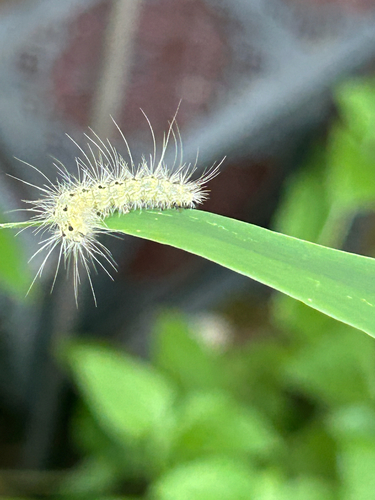
Caterpillars of this moth can be either black-headed or red-headed, but they are both the same species!
Even though their caterpillars make enormous webs, the adult moths themselves only live for about 5-10 days.
Female Fall Webworm Moths can lay over 500 tiny eggs at once, all tucked neatly under a leaf.
The huge webs they build can completely cover tree branches, looking like spooky ghost costumes in the fall!
Fall Webworm Moth caterpillars can spin enormous communal silk webs that protect them from predators and the weather as they feed.
Fall Webworm Moth caterpillars can eat leaves from over 100 different kinds of trees, making them adaptable to many habitats.
Fall Webworm Moths can complete two or more life cycles in a single warm season, helping their populations grow quickly.
As caterpillars, they munch on leaves from many different kinds of trees!
Age differences: Adult moths typically do not feed or only sip nectar; all the extensive eating happens in the caterpillar stage.
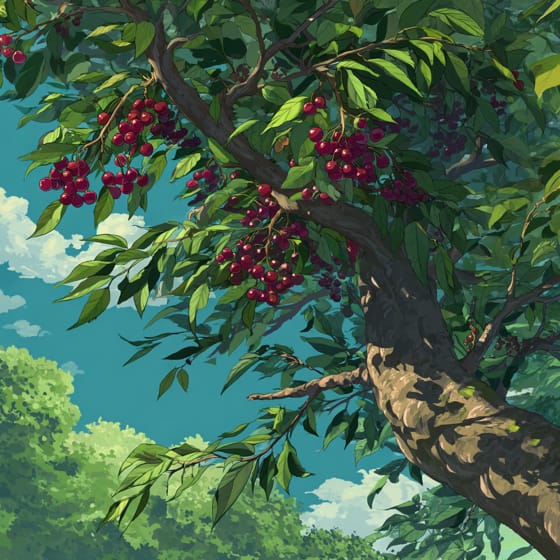
Prunus serotina
Their caterpillars munch on these leaves.
_1_(24790682337).jpg&width=800)
Carya illinoinensis
A favorite food source for the web-building caterpillars.
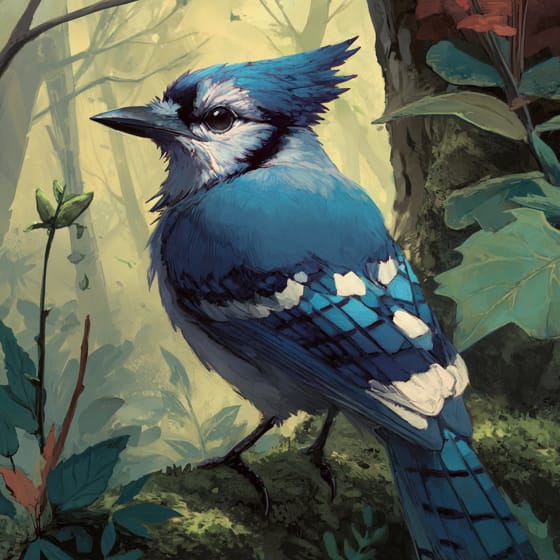
Cyanocitta cristata
Birds often feed on the caterpillars, despite the web protection.
Cotesia congregata
Lays eggs inside the caterpillars, which then develop inside them.
Furry describes animals possessing a dense covering of soft hair or fur.
Social animals live in organized groups, cooperating for survival benefits such as foraging, defense, and raising offspring.
This trait characterizes organisms that construct elaborate silken webs for catching prey, shelter, or reproduction.
This trait characterizes organisms whose diet consists entirely or primarily of plant material.

Forest habitats are terrestrial environments dominated by dense tree cover, supporting a high diversity of plant and animal life.

Diurnal animals are primarily active during daylight hours, typically resting or sleeping at night.

Describes organisms that transfer pollen, enabling the fertilization and reproduction of plants.
No aliases listed yet.
Danger
1/5 · Very low
It's best to look at the webs from a distance and not touch them.
The easiest way to identify Fall Webworm Moth is to use the Snappit nature identifier app.
25-40 mm
10-15 mm
5-10 days
As caterpillars, they munch on leaves from many different kinds of trees!
Forests
Foraging
6
Zoom in to split clusters and explore where this object has been snapped.
May 30, 2026
Oklahoma AquariumPhoto attribution
(c) Jay Pruett, some rights reserved (CC BY)
License: CC BY 4.0 ↗
Image may be shown cropped inside the card frame.
May 24, 2026
Mercer Arboretum and Botanic GardensPhoto attribution
no rights reserved
License: CC0 1.0 ↗
Image may be shown cropped inside the card frame.
Mar 28, 2023
Greensboro Commercial Historic DistrictPhoto attribution
(c) Leila Dasher, some rights reserved (CC BY)
License: CC BY 4.0 ↗
Image may be shown cropped inside the card frame.

Georgia, US
You might spot Gulf Fritillary, Anole, and American Beautyberry.
View guide →

Indiana, US
You might spot Eastern Fox Squirrel, Duck, and Canada Goose.
View guide →

Alabama, US
You might spot Anole, Eastern Box Turtle, and Resurrection Fern.
View guide →

US
You might spot Pond Slider, Black-Bellied Whistling-Duck, and Brown Anole.
View guide →

West Virginia, US
You might spot Spotted Lanternfly and Eastern Box Turtle.
View guide →

Illinois, US
You might spot American Robin, Monarch, and Duck.
View guide →
Take the discovery with you
Snap it with Snappit to identify it, learn what makes it special, and add the discovery to your collection.






.jpg&width=800)



