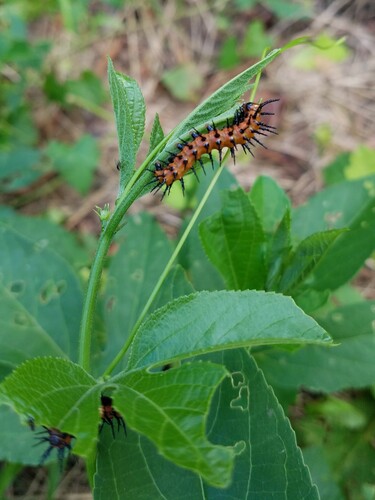
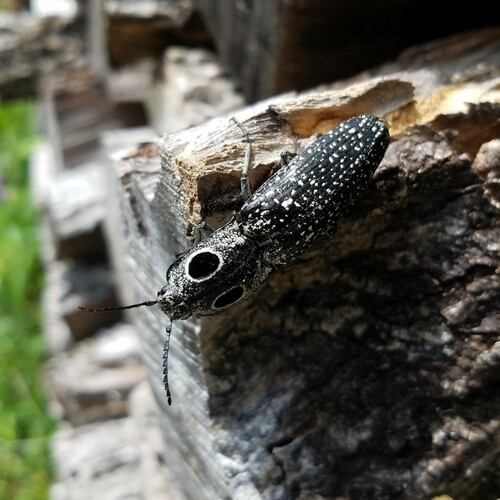
Asian Lady Beetle

Greensboro's Commercial Historic District offers a charming journey back to Georgia's rich past.
Greensboro's Commercial Historic District offers a charming journey back to Georgia's rich past. This well-preserved district, listed on the National Register of Historic Places, showcases a captivating array of 19th and early 20th-century architecture that tells the story of a bustling Southern commercial hub. Dominated by Victorian-era brick buildings and the stately Greek Revival Greene County Courthouse, the district invites visitors to explore a unique blend of history and small-town charm.
Wandering through the district, visitors can admire the architectural diversity, from the grand 1849 Greek Revival Greene County Courthouse to the much older and starkly primitive Old Gaol, believed to be the oldest masonry jail in Georgia. Significant commercial structures like the historic "Big Store" (McCommons Store) and Copelan's Block, with its intricate brickwork and metal columns, line Broad and Main Streets, offering glimpses into Greensboro's mercantile past. The district also features the 1937 U.S. Post Office, notable for its 1930s government design and interior WPA murals.
This historic district is more than just old buildings; it's a living testament to a vibrant community, providing a delightful backdrop for strolls, shopping in local boutiques, and enjoying Southern hospitality. The district's flat terrain and well-maintained sidewalks, some paved with early 20th-century hexagonal pavers, make it an accessible and enjoyable destination for history buffs, architecture enthusiasts, and anyone seeking a genuine small-town experience. Enhance your adventure: download the Snappit app to identify the local species you encounter.
The Greensboro Commercial Historic District developed as the central business district for Greene County, a region established in 1786 and named after Revolutionary War General Nathanael Greene. The city of Greensboro itself was laid out in a traditional quadrangle, with Broad and Main Streets forming the heart of its commercial activity. The district's growth was significantly tied to the cotton economy, with Greensboro becoming a crucial commercial center for one of Georgia's most important cotton-producing counties by the mid-19th century. The majority of the district's contributing buildings date from the mid-to-late 19th century, predominantly showcasing Victorian design elements. Key structures like the Greene County Courthouse, built in 1849, anchored the public square, while commercial blocks like McCommons Store (originally built in the late 1850s) and Copelan's Block (1889) represent the evolving architectural styles and economic prosperity of the era. The district was officially listed on the National Register of Historic Places in 1987, recognizing its architectural significance and its role in the commercial development of Greensboro.
Take a leisurely stroll to admire the Victorian and Greek Revival architecture. Explore local shops and antique stores, and look for places offering Southern cuisine. Consider picking up a walking tour brochure from the Greene County Chamber of Commerce.
While enjoyable year-round, check for local events like Southland Jubilee or Moonlight on Main, which often feature live music, food, and family-friendly activities in the downtown area, especially during spring and fall. Summers can be hot and humid, while winters are generally mild.
The district features sidewalks, some paved with early 20th-century hexagonal pavers, and a relatively flat terrain, making it generally accessible for walking. Specific accessibility for individual buildings would need to be confirmed with each establishment.
The Greene County Courthouse, the Old Gaol, McCommons Store ("The Big Store"), Copelan's Block, and the 1937 U.S. Post Office with its WPA murals are essential stops. Don't miss the unique architecture and historical markers found throughout Broad and Main Streets.
Each card links to a full Explore page with photos, traits, and fun facts.
Start with the big picture, then zoom in to explore individual wildlife observations around this place.
Wear comfortable shoes, as the best way to experience the district is by walking along Broad and Main Streets.
Pick up a walking tour map or brochure from a local visitor center or the Greene County Chamber of Commerce to guide your exploration.
Allow time to pop into the unique antique shops and boutiques—you might find a hidden gem.
Don't forget your camera to capture the intricate architectural details and historic streetscapes.
Visit the 1937 U.S. Post Office to see its Depression-era WPA murals inside.
Plan to enjoy a meal at one of the local eateries to experience authentic Southern cuisine.
Sep 1, 2025
Photo attribution
(c) Leila Dasher, some rights reserved (CC BY)
License: CC BY 4.0 ↗
Image may be shown cropped inside the card frame.
Sep 2, 2024
Photo attribution
(c) Leila Dasher, some rights reserved (CC BY)
License: CC BY 4.0 ↗
Image may be shown cropped inside the card frame.
Aug 9, 2023
Photo attribution
(c) Leila Dasher, some rights reserved (CC BY)
License: CC BY 4.0 ↗
Image may be shown cropped inside the card frame.
Jul 18, 2023
Photo attribution
(c) Leila Dasher, some rights reserved (CC BY)
License: CC BY 4.0 ↗
Image may be shown cropped inside the card frame.
May 16, 2023
Photo attribution
(c) Leila Dasher, some rights reserved (CC BY)
License: CC BY 4.0 ↗
Image may be shown cropped inside the card frame.

Maryland, US
You might spot White-Tailed Deer and Eastern Gray Squirrel.
View guide →
.jpg)
District of Columbia, US
You might spot Eastern Gray Squirrel, Duck, and House Sparrow.
View guide →

Illinois, US
You might spot American Robin, Canada Goose, and House Sparrow.
View guide →

Virginia, US
You might spot Spotted Lanternfly and Northern Cardinal.
View guide →
Take the discovery with you
Identify the wildlife you spot, learn as you go, and keep a collection of the adventure.