





Golden-fronted Woodpecker
Melanerpes aurifrons
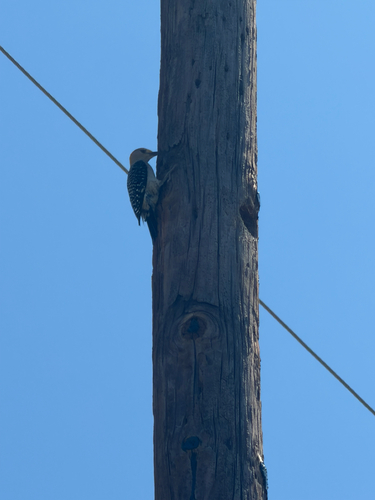
The Golden-fronted Woodpecker is a colorful bird with a bright yellow belly and a striking red crown. They love to peck on trees to find tasty bugs and make their homes in wood.
Habitat: Forests
The Golden-fronted Woodpecker has a distinctive barred black and white back, with a pale buffy-brown underside. Males sport a vibrant red crown and nape, along with a signature golden-yellow patch at the base of their bill.
Category
BirdsRarity
Common
Danger
1/5 · Very low
Snaps
5
Their loud drumming on trees is often a way to attract a mate!
They sometimes tap on metal poles or signs for an extra loud sound!
They store acorns and other seeds in tree holes for later meals!
This bird can stretch its amazing tongue almost twice its head length!
Golden-fronted Woodpecker has a specially adapted skull that absorbs shock, helping them hammer wood without injury.
Golden-fronted Woodpecker can extend a long, barbed tongue to extract insects hidden deep within tree bark.
Golden-fronted Woodpecker has zygodactyl feet (two toes forward, two back) that help them grip tree trunks tightly.
Golden-fronted Woodpecker uses stiff tail feathers as a strong prop, helping them balance while climbing and drilling.
These omnivores enjoy insects, fruits, nuts, and even cactus fruit to stay healthy!
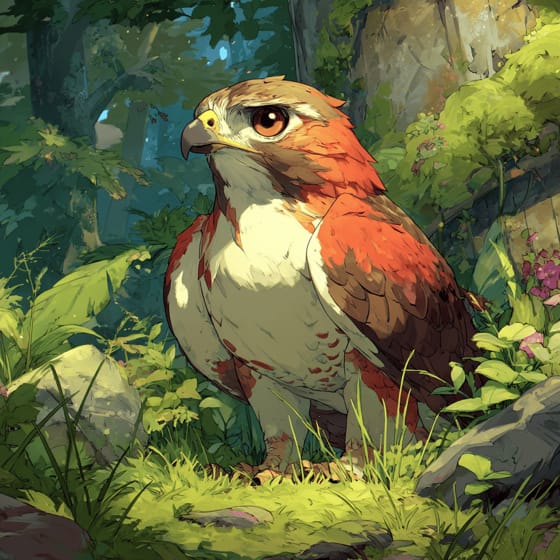
Buteo jamaicensis
A common hawk that preys on adult woodpeckers.

Otus asio
An owl that hunts nestlings and sleeping adults.
Opuntia engelmannii
Eats fruit from this common cactus for food and moisture.
Quercus fusiformis
Nests in and gathers acorns from this oak species.
Feathered describes animals, primarily birds, possessing a covering of feathers.
Social animals live in organized groups, cooperating for survival benefits such as foraging, defense, and raising offspring.
Singing animals produce complex vocalizations, often for purposes of attracting mates, defending territory, or communicating within their species.
Colorful describes organisms or objects displaying a wide range of bright and distinct colors.

This trait identifies organisms whose diet primarily consists of insects and other small invertebrates.

This trait describes organisms that manipulate external objects to achieve a specific goal.

Forest habitats are terrestrial environments dominated by dense tree cover, supporting a high diversity of plant and animal life.

Diurnal animals are primarily active during daylight hours, typically resting or sleeping at night.

Describes a species whose presence and role have a disproportionately large effect on its environment.
No aliases listed yet.
Danger
1/5 · Very low
Enjoy watching woodpeckers from a distance and don't disturb their nests.
The easiest way to identify Golden-fronted Woodpecker is to use the Snappit nature identifier app.
22-26 cm
40-45 cm
0.068-0.101 kg
6-10 years
35 km/h
These omnivores enjoy insects, fruits, nuts, and even cactus fruit to stay healthy!
Forests
Zoom in to split clusters and explore where this object has been snapped.
May 23, 2026
Fort McIntoshPhoto attribution
(c) Ian McFaul, some rights reserved (CC BY)
License: CC BY 4.0 ↗
Image may be shown cropped inside the card frame.

US
You might spot Pond Slider, Black-Bellied Whistling-Duck, and Brown Anole.
View guide →

US
You might spot Great Kiskadee, Rock Pigeon, and Mexican Palo Verde.
View guide →

Texas, US
You might spot Plain Chachalaca, Green Jay, and Queen.
View guide →

Texas, US
You might spot Great-Tailed Grackle and Eastern Fox Squirrel.
View guide →

Texas, US
You might spot Monarch, Queen, and Fiery Skipper.
View guide →
Take the discovery with you
Snap it with Snappit to identify it, learn what makes it special, and add the discovery to your collection.




.jpg&width=800)







