





henbit deadnettle
Lamium amplexicaule
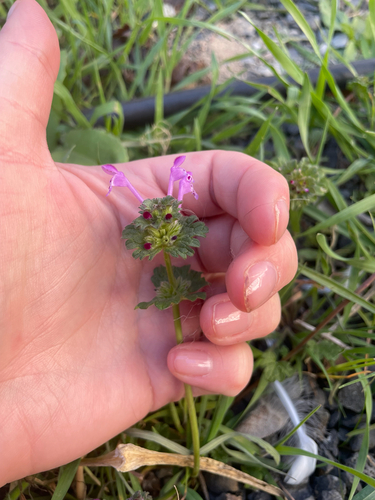
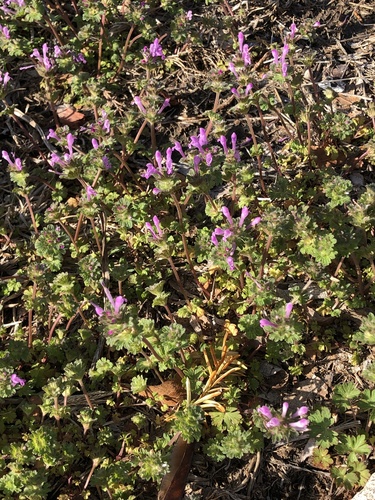
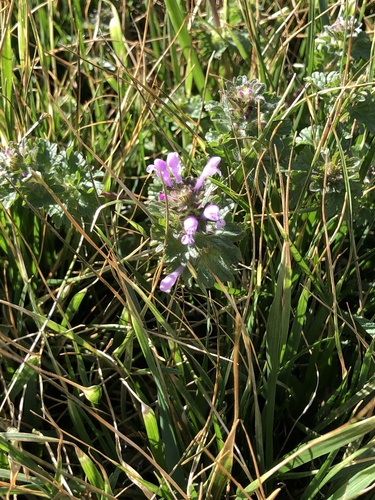
Henbit deadnettle is a pretty little plant with purple flowers that bloom in spring. It grows close to the ground and can be found in gardens and fields, making it a cheerful sight for everyone!
Habitat: Urban areas
The henbit deadnettle has distinct square stems and round to heart-shaped leaves that directly clasp the stem, particularly the upper ones. Its small, tubular, purplish-pink flowers are arranged in whorls around the stem in the leaf axils. It often forms low, sprawling mats of green foliage.
Category
PlantsRarity
Common
Danger
1/5 · Very low
Snaps
31
Henbit flowers look like tiny snapdragon faces peeking out!
It's one of the first wild edibles to forage in early spring!
Its square stems are unique; try rolling one between your fingers!
The plant's name 'henbit' comes from chickens loving to eat its leaves!
Henbit deadnettle can bloom very early, providing vital nectar for hungry pollinators when few other flowers are available.
Henbit deadnettle has hidden flowers that self-pollinate, ensuring it can always produce seeds even without insect visitors.
Henbit deadnettle can sprout and grow in cool weather, thriving as a winter annual when many other plants are dormant.
Apis mellifera
collects nectar and pollen
Bombus impatiens
visits flowers for nectar

Homo sapiens
leaves and flowers are edible
Deroceras reticulatum
grazes on foliage
Flowering plants are any plants that produce flowers as part of their reproductive cycle.
Spring blooming plants produce their flowers during the spring season, often signifying the end of winter and the start of new growth.
Fragrant flowers emit a pleasant aroma, often to attract pollinators or for defense.
Colorful describes organisms or objects displaying a wide range of bright and distinct colors.

Edible plants are those parts of a plant that are considered safe for human consumption.

Describes plants that are particularly attractive and beneficial to a wide range of pollinating organisms.

Rapid growing plants exhibit accelerated growth rates, quickly increasing in size and biomass within a short period.

This habitat trait indicates species that can coexist with humans in urban and suburban environments, utilizing man-made structures and green spaces.
No aliases listed yet.
Danger
1/5 · Very low
It's safe to look at and touch, but don't eat any plants without asking an adult.
The easiest way to identify henbit deadnettle is to use the Snappit nature identifier app.
10-30 cm
15-45 cm
0.5-1.5 cm
Late_winter_to_late_spring
Yes
None
Annual
Zoom in to split clusters and explore where this object has been snapped.
Mar 31, 2026
Grand CouleePhoto attribution
(c) solidstate, some rights reserved (CC BY)
License: CC BY 4.0 ↗
Image may be shown cropped inside the card frame.
Mar 29, 2026
Central Springfield Historic DistrictPhoto attribution
(c) Y. Liu, some rights reserved (CC BY)
License: CC BY 4.0 ↗
Image may be shown cropped inside the card frame.
Mar 27, 2026
Illinois State Fairgrounds RacetrackPhoto attribution
(c) Y. Liu, some rights reserved (CC BY)
License: CC BY 4.0 ↗
Image may be shown cropped inside the card frame.

Missouri, US
You might spot Common Eastern Bumble Bee and Brown-Belted Bumble Bee.
View guide →

Illinois, US
You might spot Ivory Gull, Bald Eagle, and Eastern Fox Squirrel.
View guide →

Kansas, US
You might spot Panthera Pardus Orientalis, Snow Leopard, and African Lion.
View guide →

Alabama, US
You might spot Green Treefrog, Anole, and Thin-Walled Maze Polypore.
View guide →

Alabama, US
You might spot Duck, Heavenly Bamboo, and Eastern Tiger Swallowtail.
View guide →

California, US
You might spot Penguin, Leopard Shark, and Weedy Seadragon.
View guide →
Take the discovery with you
Snap it with Snappit to identify it, learn what makes it special, and add the discovery to your collection.








.jpg&width=800)


_001.jpg&width=800)



