.jpg&width=800)





Huron Skipper
Atalopedes huron
The Huron Skipper is a small, colorful butterfly that loves to flutter around flowers. With its bright orange wings, it is a delightful sight in gardens and fields.
Habitat: Grasslands
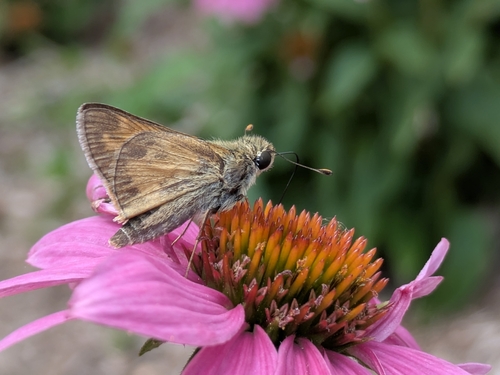
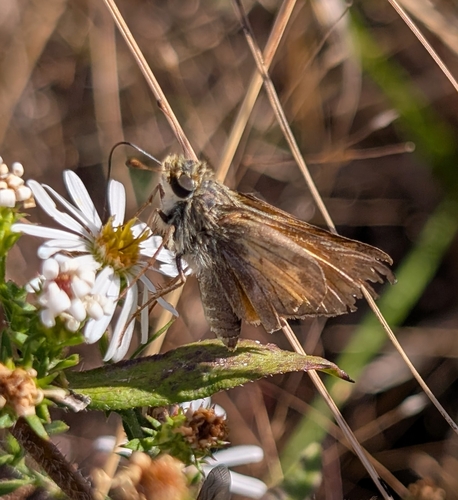
The Huron Skipper is a small, robust butterfly, sporting a brownish-orange body and wings with darker markings. Its wings often have a subtle dusky-brown wash, and its antennae feature distinctive hooked tips. This coloration helps it blend into grassy habitats.
Category
InsectsRarity
Common
Danger
1/5 · Very low
Snaps
14
Huron Skipper caterpillars build cozy leaf shelters by rolling and tying leaves together with silk.
Their antennae have tiny hooks at the end, almost like a fishing pole!
They are called 'skippers' because of their rapid, skipping flight pattern through the air!
Unlike most butterflies, skippers fold their wings in a unique 'delta' shape when resting.
Huron Skipper can fly very quickly in short, erratic bursts because of its powerful wing muscles that help it evade predators.
Huron Skipper has drab brown and orange wings that help it blend perfectly with dried grasses, making it hard for predators to spot.
Huron Skipper has a long, straw-like proboscis that helps it reach deep into flowers to drink sweet nectar.
Adult Huron Skippers sip sweet nectar from various flowers, while caterpillars munch on grass leaves.
Age differences: Caterpillars eat grass leaves, but adults drink nectar from flowers using a proboscis.
Sorghastrum nutans
Larvae feed on the leaves.

Monarda fistulosa
Adults collect nectar from its flowers.

Asclepias syriaca
Adults are common visitors to its blooms.
Solitary animals live alone for most of their lives, only interacting with others for mating or parental care.
Colorful describes organisms or objects displaying a wide range of bright and distinct colors.
Grassland habitats are terrestrial biomes dominated by grasses and herbaceous plants, supporting a variety of grazing animals.
This trait characterizes organisms whose diet consists entirely or primarily of plant material.

Describes plants that are particularly attractive and beneficial to a wide range of pollinating organisms.

Diurnal animals are primarily active during daylight hours, typically resting or sleeping at night.

Pertaining to species that are significantly smaller than typical or average for their kind.

Describes organisms that transfer pollen, enabling the fertilization and reproduction of plants.
No aliases listed yet.
Danger
1/5 · Very low
Always watch butterflies from a distance so you don't scare them away.
The easiest way to identify Huron Skipper is to use the Snappit nature identifier app.
25-35 mm
10-15 mm
7-21 days
10-25 km/h
Adult Huron Skippers sip sweet nectar from various flowers, while caterpillars munch on grass leaves.
Grasslands
Foraging
Zoom in to split clusters and explore where this object has been snapped.
Jun 17, 2026
Haskell-Baker WetlandsPhoto attribution
(c) Lydia Dexter, some rights reserved (CC BY)
License: CC BY 4.0 ↗
Image may be shown cropped inside the card frame.
Oct 26, 2024
Nathan and Olive Boone Homestead State Historic SitePhoto attribution
(c) Conway Hawn, some rights reserved (CC BY)
License: CC BY 4.0 ↗
Image may be shown cropped inside the card frame.

Arkansas, US
You might spot Widow's-Cross, Yucca Giant-Skipper, and Outis Skipper.
View guide →

New York, US
You might spot Common Eastern Bumble Bee and American Robin.
View guide →

Oklahoma, US
You might spot Western Ratsnake and Spotted Chorus Frog.
View guide →

New York, US
You might spot Rock Pigeon, American Robin, and Spotted Lanternfly.
View guide →
New York, US
You might spot Canada Goose and Atlantic Horseshoe Crab.
View guide →

Iowa, US
You might spot Common Eastern Bumble Bee and North American Luna Moth.
View guide →
Take the discovery with you
Snap it with Snappit to identify it, learn what makes it special, and add the discovery to your collection.






.jpg&width=800)



