





Indigo Bunting
Passerina cyanea
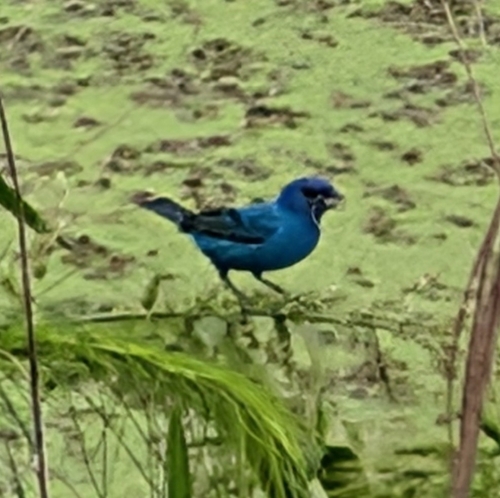
The Indigo Bunting is a small, bright blue bird that sings sweet songs. They love to eat seeds and insects and can be found in open fields and forests during the summer.
Habitat: Open fields and forests
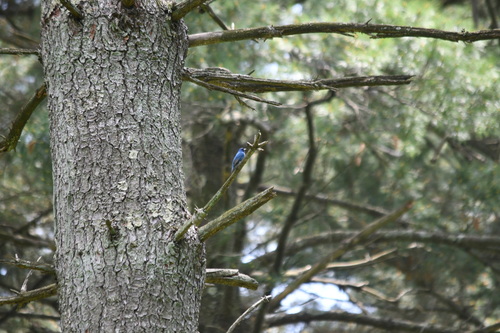
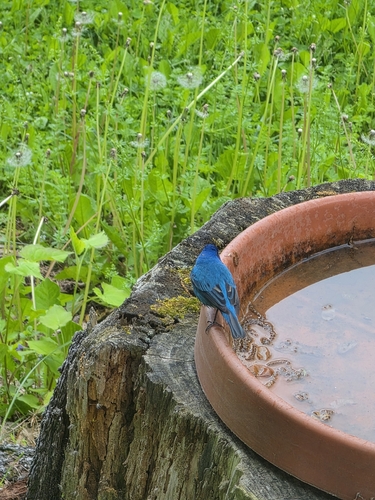
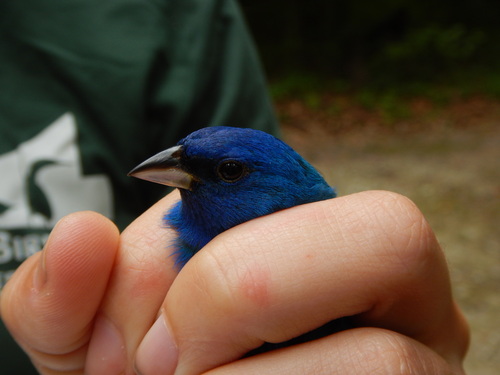
The Indigo Bunting has an iridescent deep blue plumage in males, appearing nearly black in shade, while females are a warm brown with faint streaking. A key visual difference is the male's vibrant, structural blue compared to the duller female.
Category
BirdsRarity
Common
Danger
1/5 · Very low
Snaps
70
Indigo Buntings can breed more than once in a single summer season!
Male Indigo Buntings learn complex new songs every year from their neighbors!
Their dazzling blue color isn't a pigment, but light scattering like a prism!
They use the stars to guide their incredible long migrations at night.
Indigo Bunting can navigate long distances using star patterns at night because of specialized magnetoreceptors that guide them.
Indigo Bunting has brilliant blue feathers that aren't pigmented but scatter light like tiny prisms, making them glow.
These tiny birds feast on many small bugs and enjoy munching on various seeds and berries.
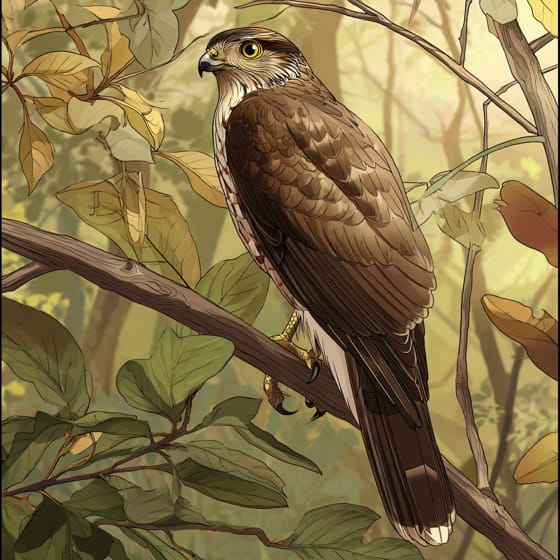
Accipiter cooperii
This speedy hawk is a common predator of small birds like the Bunting.
.jpg&width=800)
Molothrus ater
Lays eggs in bunting nests, making the bunting raise its young.
.jpg&width=800)
Cirsium discolor
Adults feast on the abundant and nutritious seeds of this plant.

Populus tremuloides
Often nests in the saplings and shrubby undergrowth of this habitat.
Feathered describes animals, primarily birds, possessing a covering of feathers.
Social animals live in organized groups, cooperating for survival benefits such as foraging, defense, and raising offspring.
Singing animals produce complex vocalizations, often for purposes of attracting mates, defending territory, or communicating within their species.
Colorful describes organisms or objects displaying a wide range of bright and distinct colors.

Grassland habitats are terrestrial biomes dominated by grasses and herbaceous plants, supporting a variety of grazing animals.

This trait identifies organisms whose diet primarily consists of insects and other small invertebrates.

Forest habitats are terrestrial environments dominated by dense tree cover, supporting a high diversity of plant and animal life.

Diurnal animals are primarily active during daylight hours, typically resting or sleeping at night.

Migratory animals undertake seasonal movements from one region to another, typically in response to changes in climate or food availability.
No aliases listed yet.
Danger
1/5 · Very low
Enjoy watching birds from a distance and be quiet so you don’t scare them away.
The easiest way to identify Indigo Bunting is to use the Snappit nature identifier app.
11.5-15 cm
20-23 cm
0.012-0.019 kg
2-4 years
35 km/h
These tiny birds feast on many small bugs and enjoy munching on various seeds and berries.
Open fields and forests
Zoom in to split clusters and explore where this object has been snapped.
Jun 19, 2026
Durso ParkPhoto attribution
(c) Habib Rehman, some rights reserved (CC BY)
License: CC BY 4.0 ↗
Image may be shown cropped inside the card frame.
Jun 19, 2026
Southeast Gainesville Residential DistrictPhoto attribution
(c) i like lizards, some rights reserved (CC BY)
License: CC BY 4.0 ↗
Image may be shown cropped inside the card frame.
May 17, 2026
Blackbird State ForestPhoto attribution
(c) inbetweenbays, some rights reserved (CC BY)
License: CC BY 4.0 ↗
Image may be shown cropped inside the card frame.
May 15, 2026
Stone Street Historic DistrictPhoto attribution
(c) Philip K., some rights reserved (CC BY)
License: CC BY 4.0 ↗
Image may be shown cropped inside the card frame.
May 13, 2026
Francis Beidler ForestPhoto attribution
(c) Ryan Watson, some rights reserved (CC BY)
License: CC BY 4.0 ↗
Image may be shown cropped inside the card frame.
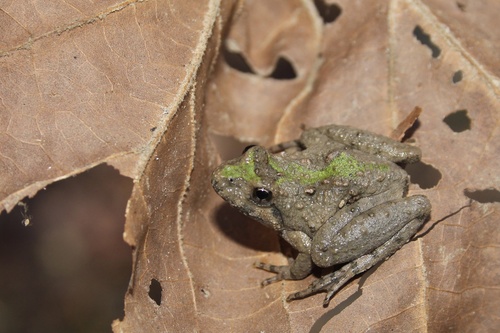
Delaware, US
You might spot Northern Cricket Frog, Fan Clubmoss, and Fowler's Toad.
View guide →

District of Columbia, US
You might spot Eastern Gray Squirrel, Duck, and House Sparrow.
View guide →

Illinois, US
You might spot Carolina Mantis and Goldenrod Soldier Beetle.
View guide →

Vermont, US
You might spot Japanese Knotweed and Red-Bellied Woodpecker.
View guide →

New Jersey, US
You might spot Common Mugwort and White-Tailed Deer.
View guide →

Illinois, US
You might spot Eastern Fox Squirrel, Amur Honeysuckle, and Poison Hemlock.
View guide →
Take the discovery with you
Snap it with Snappit to identify it, learn what makes it special, and add the discovery to your collection.




.jpg&width=800)






