





Juniper Geometer Moth
Patalene olyzonaria
The Juniper Geometer Moth is a small, colorful moth that loves to hide among juniper bushes. Its wings are often green and brown, helping it blend in with leaves.
Habitat: Forests
The Juniper Geometer Moth has mottled grey-brown wings that allow it to blend perfectly with tree bark or dead leaves. Its forewings often display faint, wavy dark lines. It is distinguished by its cryptic coloration, making it incredibly hard to spot.
Category
InsectsRarity
Common
Danger
1/5 · Very low
Snaps
6
Male Juniper Geometer Moths have feathery antennae to sniff out female pheromones from far away!
Some Geometer moths have tiny 'ears' on their abdomen to detect bat sonar.
Their name 'Geometer' means 'earth measurer' in Greek, referring to their inchworm movement.
These moths often produce several generations in a single warm year.
Juniper Geometer Moth caterpillars can perfectly mimic twigs, holding stiff poses that make them look exactly like parts of a plant, helping them hide from predators.
Juniper Geometer Moths have special eyes that help them see in very low light, allowing them to fly and find mates in the darkness.
The caterpillars have a unique 'looping' movement, using claspers at both ends of their body to 'measure' their way across surfaces, helping them move efficiently.
Adults may sip nectar, but caterpillars munch on the needles of juniper plants.
Age differences: Caterpillars consume juniper needles, while adult moths may sip nectar or water.

Juniperus virginiana
Caterpillars feed on the needles of these trees.
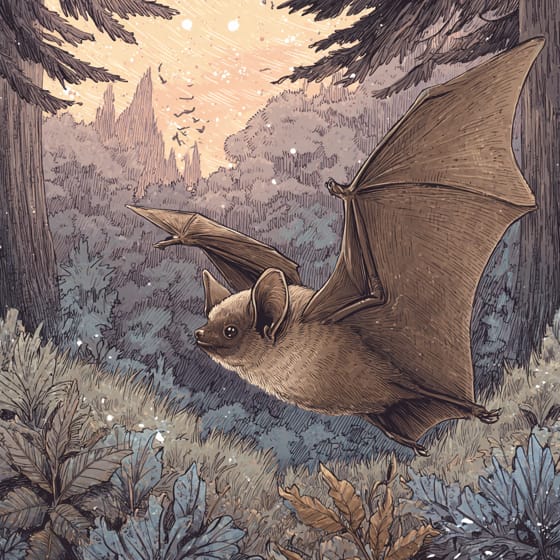
Myotis lucifugus
Adult moths are a food source for nocturnal bats.
.jpg&width=800)
Setophaga coronata
Caterpillars are often prey for insect-eating birds.

Monarda fistulosa
Adult moths visit certain flowering plants to sip nectar.
Solitary animals live alone for most of their lives, only interacting with others for mating or parental care.
Camouflaged describes organisms that possess coloring or patterns that allow them to blend into their environment.
Colorful describes organisms or objects displaying a wide range of bright and distinct colors.
This trait characterizes organisms whose diet consists entirely or primarily of plant material.

Forest habitats are terrestrial environments dominated by dense tree cover, supporting a high diversity of plant and animal life.

Nocturnal animals are primarily active during the nighttime hours, typically resting or sleeping during the day.

Describes organisms that transfer pollen, enabling the fertilization and reproduction of plants.
No aliases listed yet.
Danger
1/5 · Very low
Moths are usually safe to observe, but it's best to watch them from a distance.
The easiest way to identify Juniper Geometer Moth is to use the Snappit nature identifier app.
20-30 mm
10-15 mm
7-14 days
5 km/h
Adults may sip nectar, but caterpillars munch on the needles of juniper plants.
Forests
Foraging
Zoom in to split clusters and explore where this object has been snapped.

Delaware, US
You might spot American Toad, Eastern Tiger Swallowtail, and Red Fox.
View guide →

Tennessee, US
You might spot Monarch and Eastern Tiger Swallowtail.
View guide →

Pennsylvania, US
You might spot Lesser Celandine, American Robin, and Garlic Mustard.
View guide →

West Virginia, US
You might spot Common Merganser, Great Blue Heron, and Canada Goose.
View guide →

Indiana, US
You might spot Eastern Gray Squirrel, Eastern Carpenter Bee, and Monarch.
View guide →

Delaware, US
You might spot Red Fox and Citrus Flatid Planthopper.
View guide →
Take the discovery with you
Snap it with Snappit to identify it, learn what makes it special, and add the discovery to your collection.








.jpg&width=800)


