Eastern Gray Squirrel

Woodley Park is a vibrant, tree-lined neighborhood in Northwest Washington, D.
Woodley Park is a vibrant, tree-lined neighborhood in Northwest Washington, D.C., renowned for its historic charm and as the distinguished home of the Smithsonian's National Zoo. This picturesque urban enclave offers a unique blend of city life and natural beauty, with convenient access to Rock Creek Park and a charming commercial corridor. While Woodley Park itself provides serene streets and architectural treasures, its defining feature and primary draw for visitors is the world-class National Zoo, a sprawling 163-acre sanctuary dedicated to wildlife conservation and education.
The Smithsonian's National Zoo is a global leader in saving endangered species, housing over 2,000 animals representing nearly 400 different species. Visitors can explore diverse habitats like the Asia Trail, home to the celebrated giant pandas Bao Li and Qing Bao, and the majestic Elephant Trails, showcasing Asian elephants. Other highlights include the Great Ape House, where orangutans travel overhead on the "O-Line," the immersive Amazonia exhibit replicating a tropical rainforest, and the American Trail featuring North American wildlife such as gray seals and bald eagles.
A visit to Woodley Park, anchored by the National Zoo, promises an enriching experience for all ages, offering an unparalleled opportunity to connect with wildlife and learn about critical conservation efforts. The neighborhood's accessibility, combined with the zoo's free admission, makes it an essential stop for anyone exploring the nation's capital. Beyond the zoo, Woodley Park boasts attractive dining options and a tranquil residential atmosphere, making it a memorable destination for both nature enthusiasts and urban explorers. Enhance your adventure: download the Snappit app to identify the local species you encounter.
The Woodley Park neighborhood, primarily residential, developed as an uptown escape from the summer heat for 19th and early 20th-century Washingtonians, featuring historic architecture and grand hotels. The Smithsonian's National Zoo was established by an Act of Congress in 1889, driven by conservationist William T. Hornaday's concern over the near extinction of American bison. It officially opened to the public in 1891, designed by the pioneering landscape architect Frederick Law Olmsted, Sr., to blend naturally into Rock Creek Park. Initially focused on exhibiting animals, the zoo's mission expanded significantly by the mid-20th century to include research and species preservation, leading to the founding of the Conservation Research Center (now the Smithsonian Conservation Biology Institute) in 1975. The zoo became part of the Smithsonian Institution in 1890 and has since achieved numerous conservation firsts, including successful breeding programs for endangered species like golden lion tamarins and hosting the U.S.'s first surviving giant panda cub.
Beyond animal viewing, engage with zookeepers during daily talks, enjoy the Speedwell Conservation Carousel, or explore the varied food and gift shops. The zoo grounds themselves offer scenic, hilly walks through a wooded landscape.
Summer: Can be hot and humid; animals may be less active midday. Misters and splash pads are available. Consider arriving early.
Winter: Experience special events like "ZooLights," offering a unique nighttime viewing of the zoo illuminated, though it can be cold.
Peak Season: March-July generally sees more visitors.
The zoo is largely accessible for strollers and wheelchairs, with paths accessible throughout the grounds. Manual wheelchairs are available for loan free of charge on a first-come, first-served basis. The Smithsonian provides accessibility services for public programs and offers information in braille and large print.
Witness the iconic giant pandas, Bao Li and Qing Bao, a symbol of international conservation efforts. Pandas are often most active in the morning.
Observe the magnificent Asian elephants in their expansive habitat, designed for their care and enrichment.
See western lowland gorillas, orangutans, and other primates. Look for orangutans moving along the "O-Line" above visitors.
Immerse yourself in a tropical rainforest ecosystem, featuring a diverse array of fish, monkeys, sloths, and exotic birds.
Each card links to a full Explore page with photos, traits, and fun facts.
Start with the big picture, then zoom in to explore individual wildlife observations around this place.
Arrive early
Aim to be at the zoo shortly after opening (8 AM for grounds, 9-10 AM for exhibits) to see animals at their most active and avoid peak crowds.
Wear comfortable shoes
The zoo is 163 acres and built on a hill, so you will be doing a lot of walking.
Consider taking the Metro
Parking at the zoo can be expensive and lots fill quickly. The Woodley Park-Zoo/Adams Morgan and Cleveland Park Metro stations are both within walking distance.
Pack snacks and water
While food is available for purchase, bringing your own can save money, and staying hydrated is key on a long visit.
Check the daily schedule
Consult the zoo's website for daily animal talks, feedings, and any special events to enhance your visit.
Utilize the hills to your advantage
If arriving by Metro, consider starting at the Cleveland Park station (slightly uphill walk to the zoo entrance) and exiting via the Woodley Park-Zoo/Adams Morgan station (downhill walk to the Metro).
Jun 20, 2026
Photo attribution
(c) Martin Kalfatovic, some rights reserved (CC BY)
License: CC BY 4.0 ↗
Image may be shown cropped inside the card frame.
Jun 20, 2026
Photo attribution
(c) Martin Kalfatovic, some rights reserved (CC BY)
License: CC BY 4.0 ↗
Image may be shown cropped inside the card frame.
Jun 20, 2026
Photo attribution
(c) Martin Kalfatovic, some rights reserved (CC BY)
License: CC BY 4.0 ↗
Image may be shown cropped inside the card frame.
Jun 20, 2026
Photo attribution
(c) Martin Kalfatovic, some rights reserved (CC BY)
License: CC BY 4.0 ↗
Image may be shown cropped inside the card frame.
Jun 20, 2026
Photo attribution
(c) Martin Kalfatovic, some rights reserved (CC BY)
License: CC BY 4.0 ↗
Image may be shown cropped inside the card frame.

Maryland, US
You might spot White-Tailed Deer and Eastern Gray Squirrel.
View guide →
.jpg)
District of Columbia, US
You might spot Eastern Gray Squirrel, Duck, and House Sparrow.
View guide →

Illinois, US
You might spot American Robin, Canada Goose, and House Sparrow.
View guide →

Virginia, US
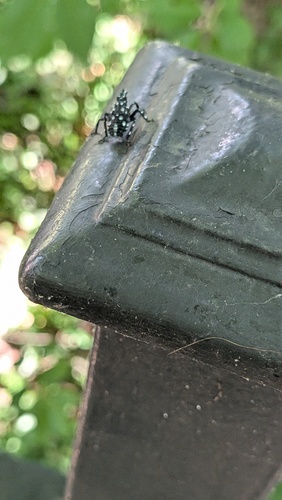
You might spot Spotted Lanternfly and Northern Cardinal.
View guide →
Take the discovery with you
Identify the wildlife you spot, learn as you go, and keep a collection of the adventure.