





North American Wheel Bug
Arilus cristatus
The North American Wheel Bug is a cool insect with a big, spiky wheel on its back! It is a predator that helps keep gardens safe by eating pests.
Habitat: Urban areas, gardens, and forests
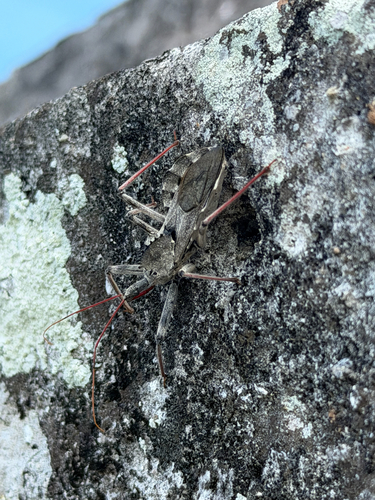
The North American Wheel Bug is a large, sturdy assassin bug, typically gray or brownish-gray, distinguished by a prominent, cog-like crest on its thorax. Its robust body and long legs give it a somewhat spiky appearance, setting it apart from other common insects.
Category
InsectsRarity
Common
Danger
2/5 · Low
Snaps
51
Their bite is surprisingly painful to humans, worse than a bee sting!
Their eggs are shaped like tiny brown bottles, laid in hexagonal clusters!
These bugs will sometimes eat other wheel bugs if food becomes very scarce.
Wheel bugs are silent hunters, often waiting patiently for prey to wander close.
North American Wheel Bug can inject venom with its needle-like rostrum that quickly paralyzes prey, allowing it to easily overpower larger insects.
North American Wheel Bug has a dull gray or brownish body that helps them blend perfectly with tree bark and foliage, making them nearly invisible.
North American Wheel Bug has powerful, spiky front legs that help them securely snatch and hold onto struggling insect prey, preventing escape.
These stealthy hunters use their sharp beak to paralyze and devour a variety of garden pests.
Age differences: Young nymphs prey on smaller, softer-bodied insects as they grow.
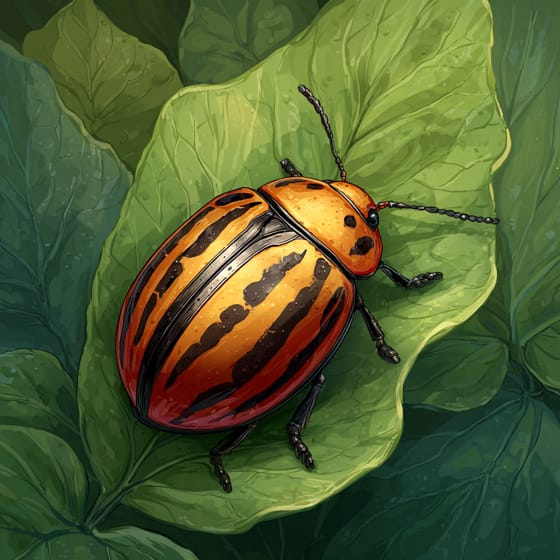
Leptinotarsa decemlineata
A major agricultural pest it helps control.
Manduca sexta
Feeds on these large, plant-damaging caterpillars.
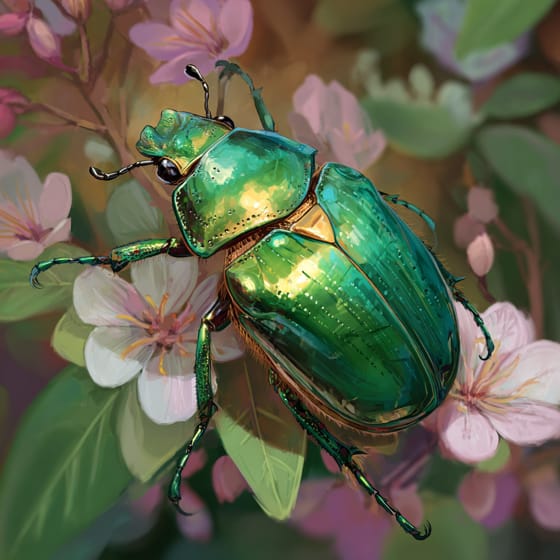
Popillia japonica
Preys on this invasive and destructive garden pest.
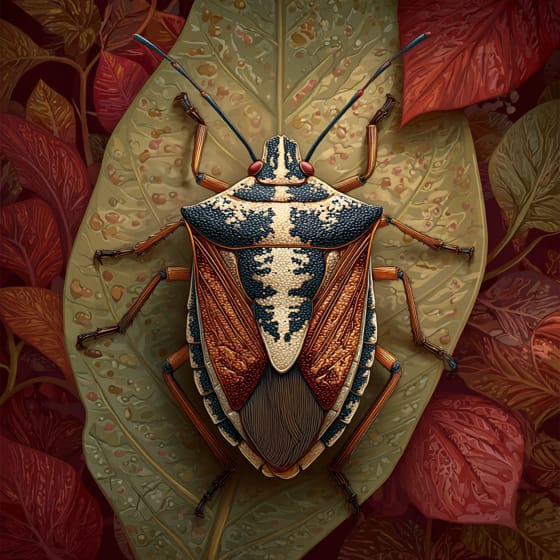
Halyomorpha halys
An invasive species often targeted by wheel bugs.
Solitary animals live alone for most of their lives, only interacting with others for mating or parental care.
This trait identifies organisms whose diet primarily consists of insects and other small invertebrates.
An ambush predator hunts by patiently waiting and concealing itself, then launching a sudden attack when unsuspecting prey comes within range.
Forest habitats are terrestrial environments dominated by dense tree cover, supporting a high diversity of plant and animal life.

Possessing sharp, pointed projections or spines on the body or surface.

This trait identifies organisms whose diet consists entirely or primarily of animal tissue.

Diurnal animals are primarily active during daylight hours, typically resting or sleeping at night.

This habitat trait indicates species that can coexist with humans in urban and suburban environments, utilizing man-made structures and green spaces.
No aliases listed yet.
Danger
2/5 · Low
Look but don't touch! Wheel Bugs can bite if they feel threatened.
The easiest way to identify North American Wheel Bug is to use the Snappit nature identifier app.
40-50 mm
25-38 mm
60-120 days
These stealthy hunters use their sharp beak to paralyze and devour a variety of garden pests.
Urban areas, gardens, and forests
Ambush
6
Zoom in to split clusters and explore where this object has been snapped.
Jun 18, 2026
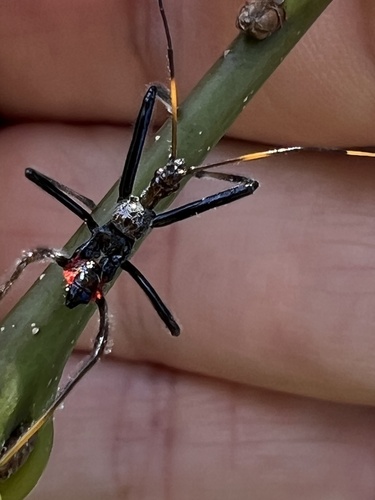
St. Augustine Town Plan Historic DistrictPhoto attribution
(c) Ryan McMinds, some rights reserved (CC BY)
License: CC BY 4.0 ↗
Image may be shown cropped inside the card frame.
Jun 16, 2026
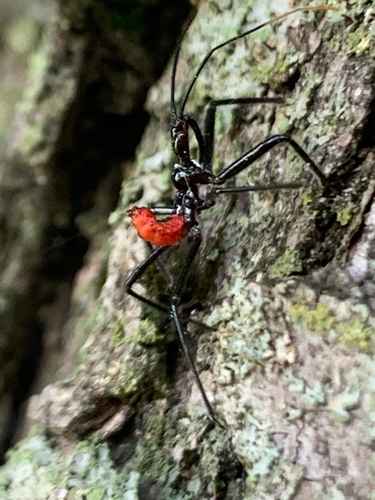
Chantilly ParkPhoto attribution
(c) Mark Richman, some rights reserved (CC BY)
License: CC BY 4.0 ↗
Image may be shown cropped inside the card frame.
Jun 6, 2026
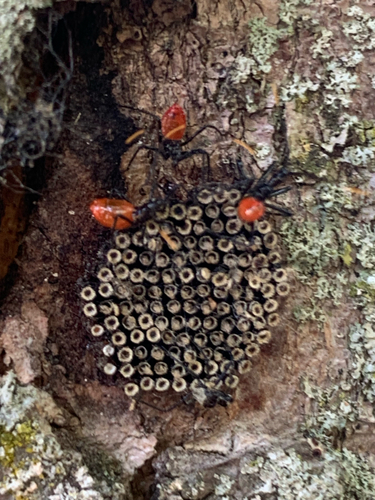
J. Edward Roush LakePhoto attribution
no rights reserved
License: CC0 1.0 ↗
Image may be shown cropped inside the card frame.
Jun 6, 2026
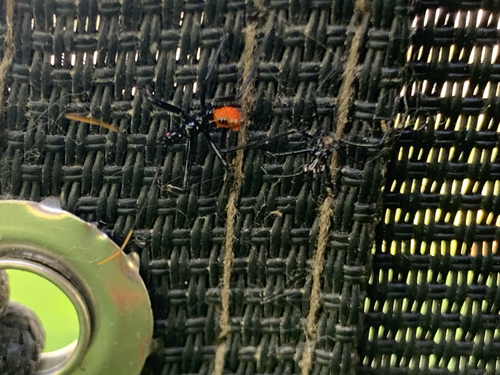
J. Edward Roush LakePhoto attribution
no rights reserved
License: CC0 1.0 ↗
Image may be shown cropped inside the card frame.
Jun 6, 2026
J. Edward Roush LakePhoto attribution
no rights reserved
License: CC0 1.0 ↗
Image may be shown cropped inside the card frame.

Virginia, US
You might spot Eastern Box Turtle and White-Tailed Deer.
View guide →

Virginia, US
You might spot Cope's Gray Tree Frog and Basilica Orbweaver.
View guide →

South Carolina, US
You might spot Anole, Green Treefrog, and Eastern Gray Squirrel.
View guide →

Maryland, US
You might spot Crane-Fly Orchid, Fragile Forktail, and Ebony Jewelwing.
View guide →

Virginia, US
You might spot Spotted Lanternfly and Northern Cardinal.
View guide →

Alabama, US
You might spot Anole, Bee, and Bristle Thistle.
View guide →
Take the discovery with you
Snap it with Snappit to identify it, learn what makes it special, and add the discovery to your collection.








.jpg&width=800)



