





Pacific rhododendron
Rhododendron macrophyllum
The Pacific rhododendron is a beautiful shrub with big, colorful flowers. It grows in forests and brings joy to everyone who sees it in bloom.
Habitat: Forests
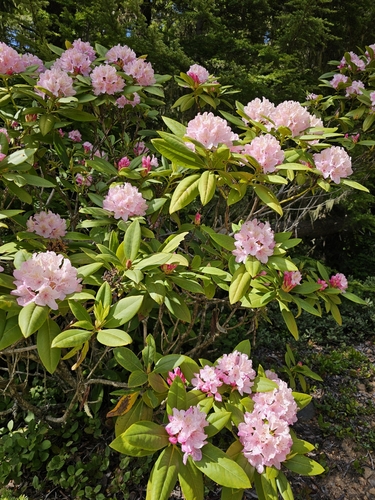
The Pacific rhododendron is a large, evergreen shrub featuring thick, leathery leaves. Its showy, bell-shaped flowers bloom in large clusters, typically vibrant pink to rose-purple, sometimes white. The impressive size of its flower trusses makes it stand out.
Category
PlantsRarity
Common
Danger
2/5 · Low
Snaps
3
It is the official state flower of Washington, chosen for its beauty.
Its nectar can create "mad honey" which can be toxic to humans!
Some wild Pacific rhododendrons have been known to live for over 100 years!
The name "Rhododendron" comes from Greek words meaning "rose tree"!
Pacific rhododendron has tough, evergreen leaves that help it photosynthesize and grow all year round.
Pacific rhododendron can attract bees and butterflies with its large, vibrant flower clusters to ensure reproduction.
Pacific rhododendron has leathery leaves that help reduce water loss, surviving drier conditions.
Bombus occidentalis
collects nectar and pollen

Papilio rutulus
visits flowers for nectar
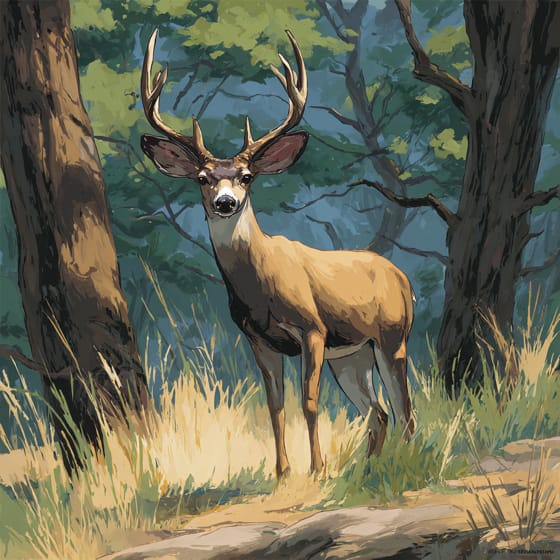
Odocoileus hemionus
may browse leaves, but it's toxic
Ursus americanus
uses dense thickets for cover
Flowering plants are any plants that produce flowers as part of their reproductive cycle.
A shrub is a woody plant smaller than a tree, typically with multiple stems branching from or near the ground.
Spring blooming plants produce their flowers during the spring season, often signifying the end of winter and the start of new growth.
Evergreen plants retain their foliage throughout the year, never shedding all their leaves at once.

Fragrant flowers emit a pleasant aroma, often to attract pollinators or for defense.

Colorful describes organisms or objects displaying a wide range of bright and distinct colors.

Describes plants that are particularly attractive and beneficial to a wide range of pollinating organisms.

Forest habitats are terrestrial environments dominated by dense tree cover, supporting a high diversity of plant and animal life.

Describes a species whose presence and role have a disproportionately large effect on its environment.
No aliases listed yet.
Danger
2/5 · Low
Do not eat any part of the plant, as it can be harmful.
The easiest way to identify Pacific rhododendron is to use the Snappit nature identifier app.
100-900 cm
100-700 cm
4-7 cm
Spring to early summer
No
High
Perennial
Zoom in to split clusters and explore where this object has been snapped.

California, US
You might spot Hilton's Aeolid and Opalescent Nudibranch.
View guide →

Oregon, US
You might spot Northern Phlox, Marbled Wild-Ginger, and Pacific Trillium.
View guide →
Washington, US
You might spot Cascade Oregon-Grape, Oregon Anemone, and Bride's Bonnet.
View guide →
British Columbia, CA
You might spot Pacific Rhododendron, Vanilla Leaf, and Pacific Trillium.
View guide →

Washington, US
You might spot Evergreen Huckleberry and Barrow's Goldeneye.
View guide →
Take the discovery with you
Snap it with Snappit to identify it, learn what makes it special, and add the discovery to your collection.







.jpg&width=800)


_001.jpg&width=800)



